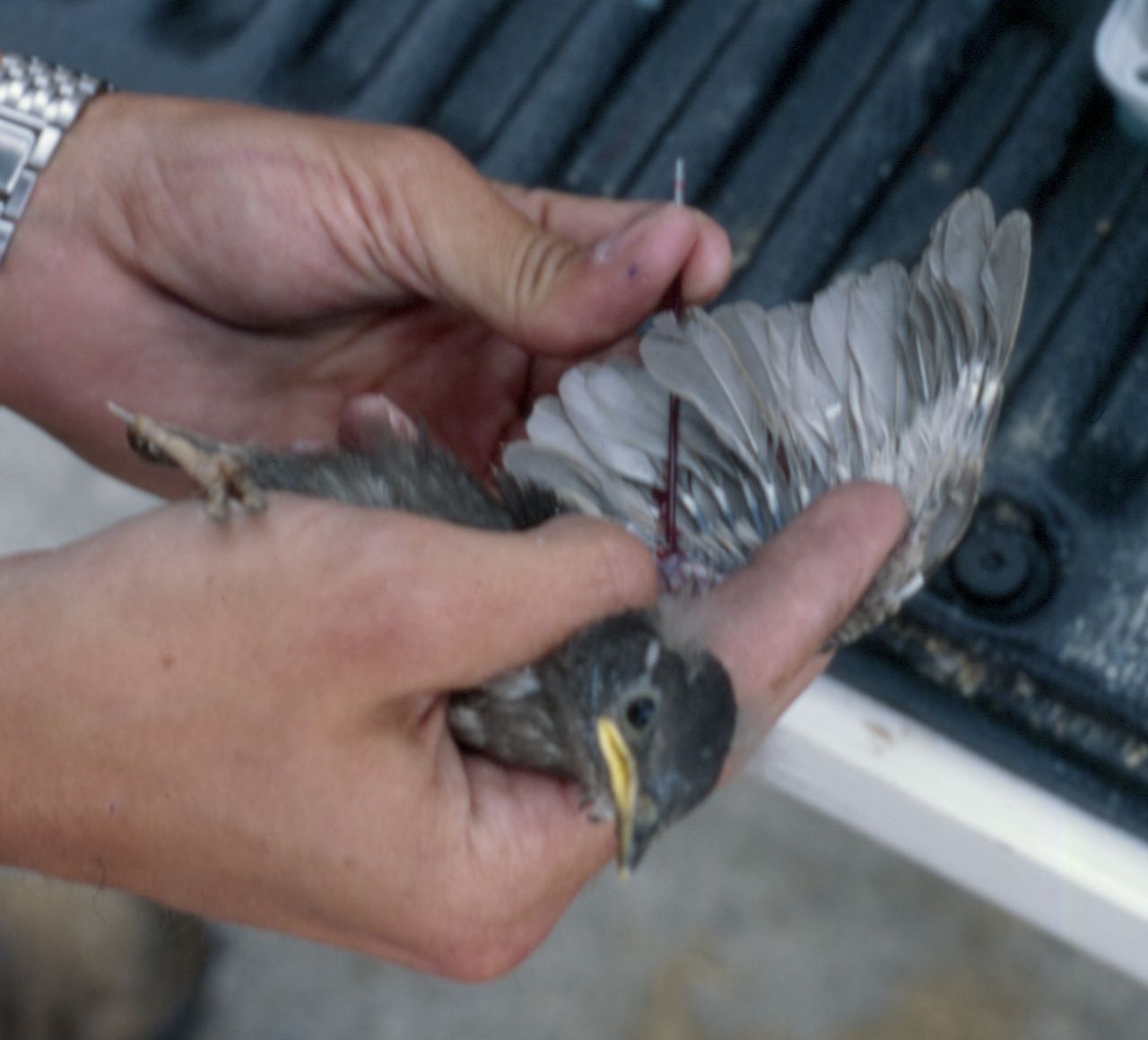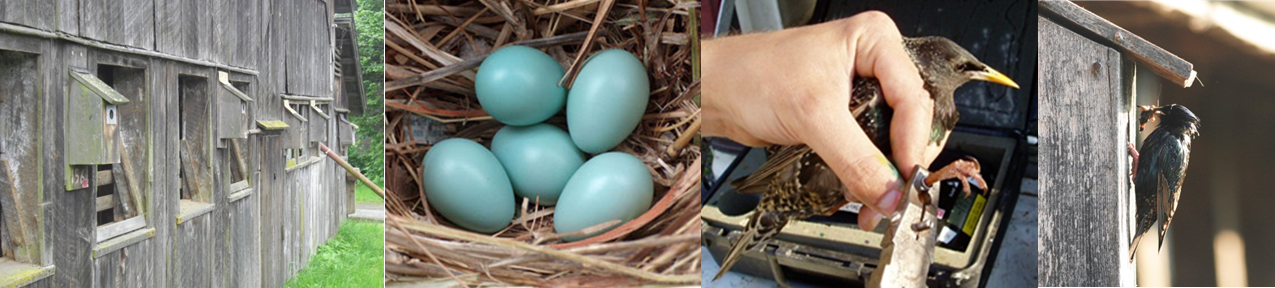
Our work mainly focus on avian reproduction (though not exclusively!) and specifically early stages of reproduction (e.g. timing of breeding and egg formation) since the importance of this phase of breeding has been neglected and underestimated. Research primarily combines laboratory studies, using captive breeding zebra finches (Taeniopygia guttata), with studies of a free-living, nest-box breeding, population of European starlings (Sturnus vulgaris) which are ideal for experimental studies in the field. However, we have been involved in other projects on a wide range of species including Arctic-nesting ducks and geese, seabirds, penguins, albatrosses (and even blue tits).
Williams T.D. and Groothuis, T.G.G. 2015. Egg quality, embryonic development and post-hatching phenotype: an integratedperspective. In: Deeming D.C. and Reynolds, S.J. (eds.) Nests, eggs and incubation: New ideas about avian reproduction. Oxford University Press, pp. 114-126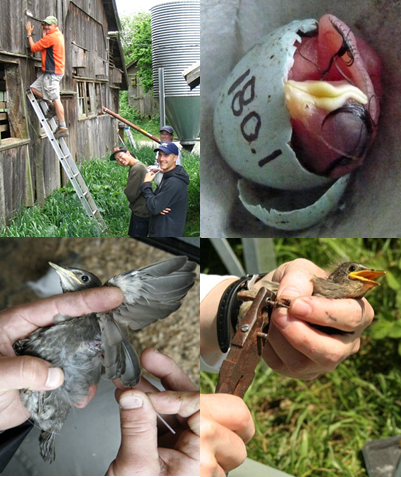
Cornell, A., Hou, J.J. and Williams,
T.D. In press. Experimentally-increased pre-breeding male social
behaviour has no effect on female breeding phenology and performance.
Animal Behaviour
Crossin, G.T. and Williams, T.D. 2016. Migratory
life-histories explain the extreme egg-size dimorphism of Eudyptes
penguins. Proc. R. Soc.
Lond. B 283:20161413
Cornell, A., Gibson, K. and Williams T.D. In
press. Physiological maturity at a critical life-history
transition and post-fledging flight ability. Functional
Ecology
Fronstin, R.B., Christians, J.K., and Williams, T.D. 2016. Experimental reduction of hematocrit affects
reproductive performance in European starlings, Sturnus
vulgaris. Functional
Ecology 30: 398-409.
Crossin, G.T., Love, O.P., Cooke, S.J. and Williams, T.D. 2016. Glucocorticoid manipulations in free-living animals: considerations of dose delivery, life-history context, and reproductive state. Functional Ecology 30: 116–125.
Williams, T.D. & Fowler, M.A. 2015. Individual Variation in Workload During Parental Care: Can We Detect A Physiological Signature of Quality or Cost of Reproduction? Journal of Ornithology 156 (Suppl 1):S441–S451.
Fowler, M.A. and Williams, T.D. 2015. Individual
variation in parental workload and breeding productivity in female
European starlings: is the effort worth it? Ecology
and Evolution 5: 3585–3599, doi: 10.1002/ece3.1625 (open access).
Ryan, C.P., Dawson, A., Sharp, P. and
Williams, T.D. 2015. Uncoupling variation in clutch size and plasma
prolactin using experimental egg removal. Gen. Comp. Endocrinol. 213: 1-8.
Williams, T.D., Bourgeon, S., Cornell, A.,
Ferguson, L., Fowler, M.A., Fronstin, R.B. and Love, O.P. 2015.
Mid-winter temperatures, not spring temperatures, predict breeding
phenology in the European starling Sturnus vulgaris. Royal
Society Open Science. 2: 140301.
Perfito, N., Guardado, D., Williams, T.D. and Bentley, G. 2015. Social cues regulate reciprocal switching of hypothalamic Dio2/Dio3 and the transition into final follicle maturation in European starlings (Sturnus vulgaris). Endocrinology 156:694–706 4.866
Ryan, C.P., Dawson, A., Sharp, P., Meddle, S.L. and Williams, T.D. 2014, Circulating breeding and pre-breeding prolactin and LH are not associated with clutch size in the Zebra Finch (Taeniopygia guttata). Gen. Comp. Endocrinol. 202: 26–34.
Tissier, M.L., Williams, T.D., & Criscuolo, F. 2014. Maternal effects underlie ageing costs of growth in the zebra finch (Taeniopygia guttata). PLoS ONE 9: e97705
Ryan, C.P., Dawson, A., Sharp, P., Meddle, S.L. and Williams, T.D. 2014. Circulating breeding and pre-breeding prolactin and LH are not associated with clutch size in the Zebra Finch (Taeniopygia guttata). Gen. Comp. Endocrinol. 202: 26–34.
Gorman, K.B., Williams, T.D. & Fraser, W.R. 2014. Ecological Sexual Dimorphism and Environmental Variability within a Community of Antarctic Penguins (genus Pygoscelis). PLoS ONE 9: e90081
Love, O.P., Bourgeon, S., Madliger, C.L., Semeniuk, C.A.D. & Williams, T.D. 2014. Evidence for baseline glucocorticoids as mediators of reproductive investment in a wild bird. Gen. Comp. Endocrinol. 199: 65–69.
Crossin, G.T., Phillips, R.A., Wynne-Edwards, K. & Williams, T.D. 2013. Post-migratory body condition predicts ovarian steroid production and breeding decision in female gray-headed albatrosses. Physiol. Biochem. Zool. 86: 761-768
Crossin, G.T., Phillips, R.A., Lattin, C.R., Romero, M. & Williams, T.D. 2013. Corticosterone mediated costs of reproduction link current to future breeding. Gen. Comp. Endocrinol. 193: 112–120.
Stein, R.W. & Williams, T.D. In press. Extreme intraclutch egg-size dimorphism in
Eudyptes
penguins, an evolutionary response to clutch-size maladaptation.
Amer. Nat.. 182: 260-270
Crespi, E.J., Williams, T.D., Jessop, T.S.
& Delehanty, B. 2013. Life history
and the ecology of stress: how do glucocorticoid hormones influence
life-history variation in animals? Funct. Ecol. 27,
93–106.
Zanette,
L.Y., Hobson, K.A., Clinchy, M., Travers, M. & Williams, T.D. 2013. Food use by songbirds is affected by the
experience of nest predation: implications for indirect predator effects
on clutch size. Oecologia 172:1031–1039
The
main aims of the Center for Wildlife Ecology's research in
ecological physiology are three-fold: 1) to obtain a better
understanding of the fundamental mechanisms underlying individual and
population-level variation in physiological traits in order to provide
a solid basis for predicting how animals might respond to
environmental change, 2) to determine more meaningful intra-specific
measures of body condition, quality and individual health for birds,
and 3) to develop and apply new physiological approaches and
techniques to conservation biology and ecotoxicology. We
approach these aims through a combination of studies on basic
physiology, often using tractable model systems (e.g. zebra finches)
as well as free-living birds (starlings, western sandpiper), coupled
with more applied, and more specific, goal-orientated projects (e.g.
addressing current ecotoxicological
problems). The following projects are on-going in the Williams'
lab at present:
1. Long-term
effects of early (in ovo or perinatal) exposure to xenobiotics in
birds: The objectives of this research are to determine the
long term effects of developmental exposure to environmentally
relevant sub-lethal levels of contaminants, with a current focus on
mercury (Hg). The rationale is that early life stages in birds are
sensitive to environmental conditions, and factors such as
anthropogenic xenobiotics can have permanent effects on the resulting
phenotypes at concentrations much lower than those required to affect
adults. In addition, these effects may not be seen until the
individual reaches reproductive maturity, which necessitates long-term
studies.
Yu, M., Elliott, J.E., Eng, M., Basu, N., and Williams, T.D. 2016.
Acute embryotoxic effects but no long term reproductive effects of in
ovo methylmercury exposure in zebra finches Taeniopygia guttata.
Environmental Toxicology and Chemistry 35: 1534-1540.
Eng, M.L., Elliott, J.E. & Williams, T.D. 2014. An assessment of
the developmental toxicity of BDE-99 in the European starling using an
integrated laboratory and field approach Ecotoxicology 23:1505–1516.
Eng, M.L., Elliott, J.E., Jones, S.P., Williams, T.D., Drouillard,
K.G., and Kennedy, S.W. 2014. Amino acid sequence of the AhR1
ligand-binding domain predicts avian sensitivity to dioxin like
compounds: in vivo validation in European starlings. Environmental
Toxicology and Chemistry 33: 2753–2758.
2. Chronic toxicity of petroleum hydrocarbons and other
contaminants in seabird sentinel species: This research will
focus on investigating the toxicity of petroleum, specifically oil
sands bitumen products, to birds on the Pacific north-west coast. At
this stage we envisage the project having a number of potential
components including: a) one or more field studies of avian marine
sentinel species (initially rhinoceros auklet) which will establish
baseline response of a variety of genes; and, laboratory dosing
studies of a representative wild species (to be determined), and c)
use of an avian lab model, the zebra finch; all involving use , and
further development, of gene array techniques: the Avian ToxChip
developed by our collaborators at the National Wildlife Research
Centre (NWRC) laboratory in Ottawa.