
















Home >> About IAG >> Governing Body >> Gary Andrews
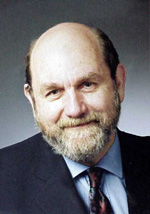
Gary Andrews, MB BS
Australia
Dr. Gary Andrews, President of the IAG from 1997 to 2001, is Hononary Professor and Director of the Centre for Ageing Studies, Flinders University of South Australia. Previous posts include serving as Health Commissioner of New South Wales (1976-1979); Professor of Community and Geriatric Medicine University of Sydney and Director, Department of Community Medicine Westmead Centre (1979-1983); Chairman and Chief Executive Officer South Australian Health Commission (1983-1986); Professor, School of Medicine, Flinders University (1986-1989); Director of Clinical Services Julia Farr Centre (1991-1994); and Special Advisor on Ageing to the United Nations (1998/99).
Dr. Andrews’ professional credentials include fellowships in the Royal College of Physicians of Edinburgh, Royal Australian College of Medical Administration, Royal Australasian College of Physicians and Faculty of Rehabilitation Medicine (RACP).
He is a past-president of the Australian Geriatrics Society, Australian College of Rehabilitation Medicine, Australian Association of Gerontology and was President of the International Association of Gerontology from 1997-2001. Currently, he is a member of the World Health Organization's Expert Advisory Panel on Ageing and Health; International Advisory Board Asia Training Centre on Ageing, Thailand; Board of Directors - UN International Institute on Ageing (INIA), Malta; Board of Directors, HelpAge International, and Board of Directors, Novartis Foundation for Gerontology.
Dr. Andrews is principal investigator for the Australian Longitudinal Study of Ageing, a multi-dimensional panel study of persons aged 70+ that has been conducted since 1991 in Adelaide, Australia. He has also been responsible for a series of studies of health and social aspects of aging in more than 16 countries in Asia, the Pacific and in the Middle East under WHO auspices. He has been extensively consulted by WHO, UNFPA, the UN and other international and intergovernmental and NGO agencies and has published widely in international journals and books.
Distinctions
- Special Testimonial presented by the Secretary-General of the United Nations for outstanding contribution to the United Nations Program on Ageing (1989).
- British Geriatrics Society 50th Anniversary Medal for contributions to international ageing research and geriatric medicine (1996).
- Medal of the Faculty of Rehabilitation Medicine (Royal Australasian College of Physicians) for contributions to rehabilitation medicine (1998)
- Life Membership of Australian Association of Gerontology (1998)
Recent Publications
- Andrews,G. R. (2001). Care of older people: Promoting health and function in an ageing population. British Medical Journal, 322(7288), 728-729.
- Andrews, G.R. (2001). The priority of basic research on ageing vulnerability in a comprehensive research agenda on ageing for the 21st century. Novartis Foundation Symposium, 235: 4-9; discussion 9-10.
- Andrews, G.R. (1998). Epidemiology and aging research. Aging, 10(2): 172-173.
- Andrews, G.R. (1989). Cross-cultural studies: An important development in aging research. Journal of the American Geriatrics Society, 37(5): 483-485
- Andrews, G. & Clark,M.J. (1999). The International Year of Older Persons: Putting aging research onto the political agenda. The Journals of Gerontology, Series B, Psychological sciences and social sciences, 54(1),7-10.
- Andrews, G.R. & Hennink, M.M. (1992). The circumstances and contributions of older persons in three Asian countries: Preliminary results of a cross-national study. Asia-Pacific Population Journal / United Nations,7 (3),127
- Anstey, K. J, Luszcz, M.A, Giles, L.C. & Andrews, G.R. (2001). Demographic, health, cognitive, and sensory variables as predictors of mortality in very old adults. Psychology and Aging, 16(1): 3-11
- Dolinis, J., Harrison, J.E. & Andrews, G.R. (1997). Factors associated with falling in a cohort of Adelaide residents. Australian and New Zealand Journal of Public Health,21 (5): 462