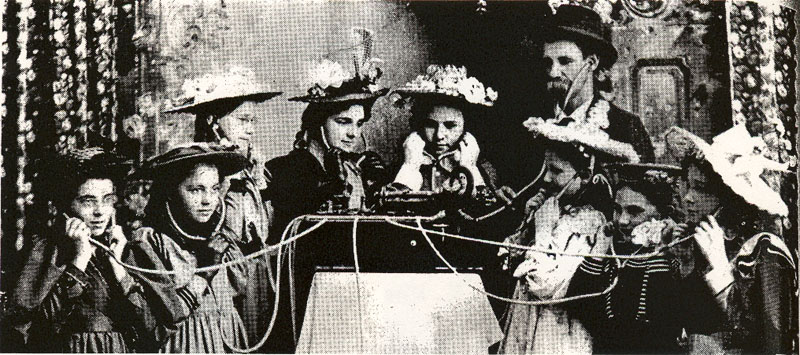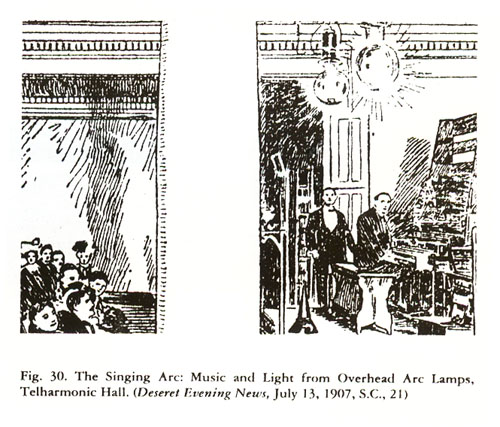
Telharmonium piped into New York restaurants, 1907
(from R.Weidenaar, Magic Music from the Telharmonium, Scarecrow Press, 1995)
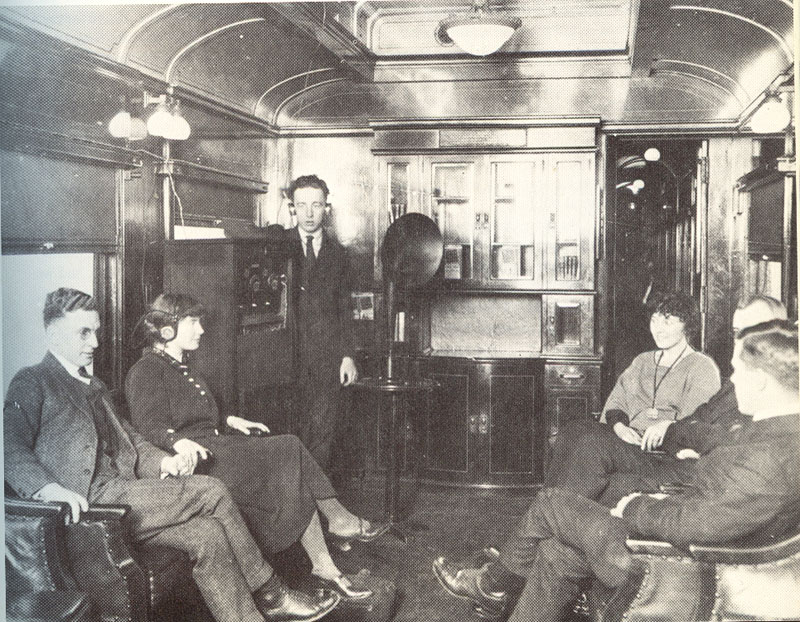
CNR radio in a lounge car, ca. 1923
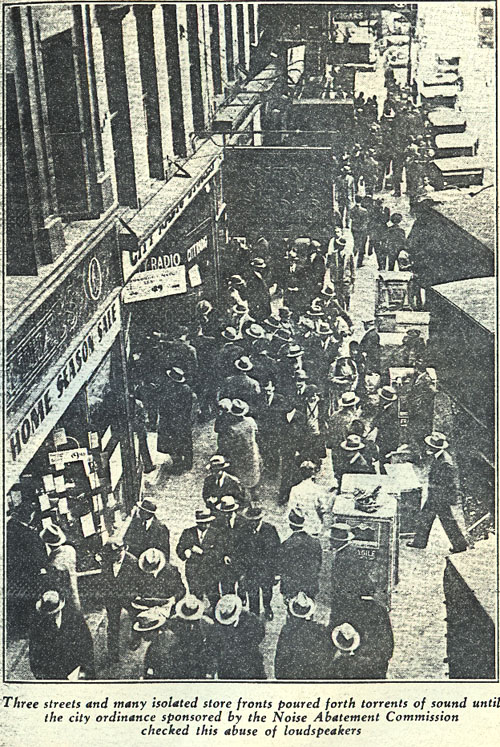
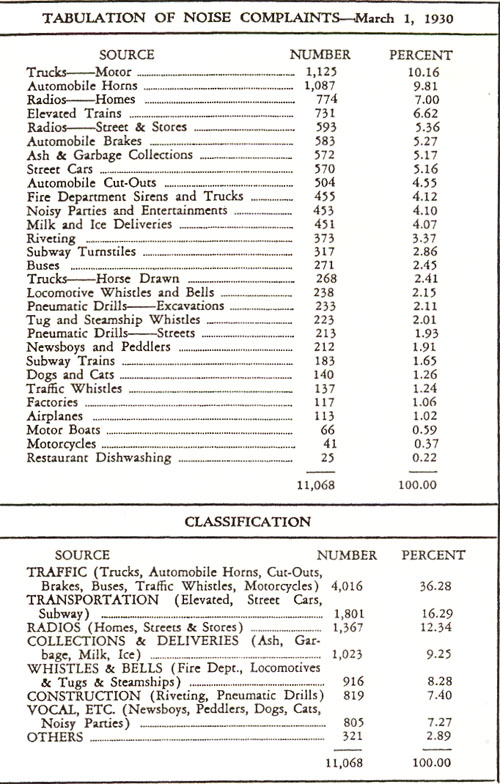
"Radio Row" in New York City, the source of many noise complaints, 1929
The balconies of the houses stood wide open and the voices of the radio sets poured through them. Every bar had its loudspeaker on. The people sitting on the terraces carried on their discussions in shouts and screams. Gossiping women were sitting in the doorways and flocks of children played and made a noise in the middle of the street. Taxis carrying members of the Worker's Militia on their rounds drove up and down the slope. Their brakes screeched when they stopped outside one of the bars. The loudspeaker bawled out the news, and the streets submerged in silence to listen and to hear... It was strange to hear the phrase proclaimed in a badly synchronized chorus along the street, from different altitudes. No two voices were the same. They reached one's ear clashing and repeating each other.Arturo Barea,The Clash, Faber and Faber, London, p. 89.
TIME: mid-1930's
PLACE: Madrid
CIRCUMSTANCE: Spanish Civil War
George Orwell, "Pleasure Spots", 19461. One is never alone2. One never does anything for oneself
3. One is never within sight of wild vegetation or natural objects of any kind
4. Light and temperature are always artificially regulated
5. One is never out of the sound of music
"The music - and if possible it should be the same music for everybody - is the most important ingredient. Its function is to prevent thought and conversation, and to shut out any natural sound, such as the song of bids or the whistling of the wind, that might otherwise intrude. The radio is already consciously used for this purpose by innumerable people. In very many English homes the radio is literally never turned off, though it is manipulated from time to time so as to make sure that only light music will come out of it. I know people who keep the radio playing all through a meal and at the same time continue talking just loudly enough for the voices and the music to cancel out."
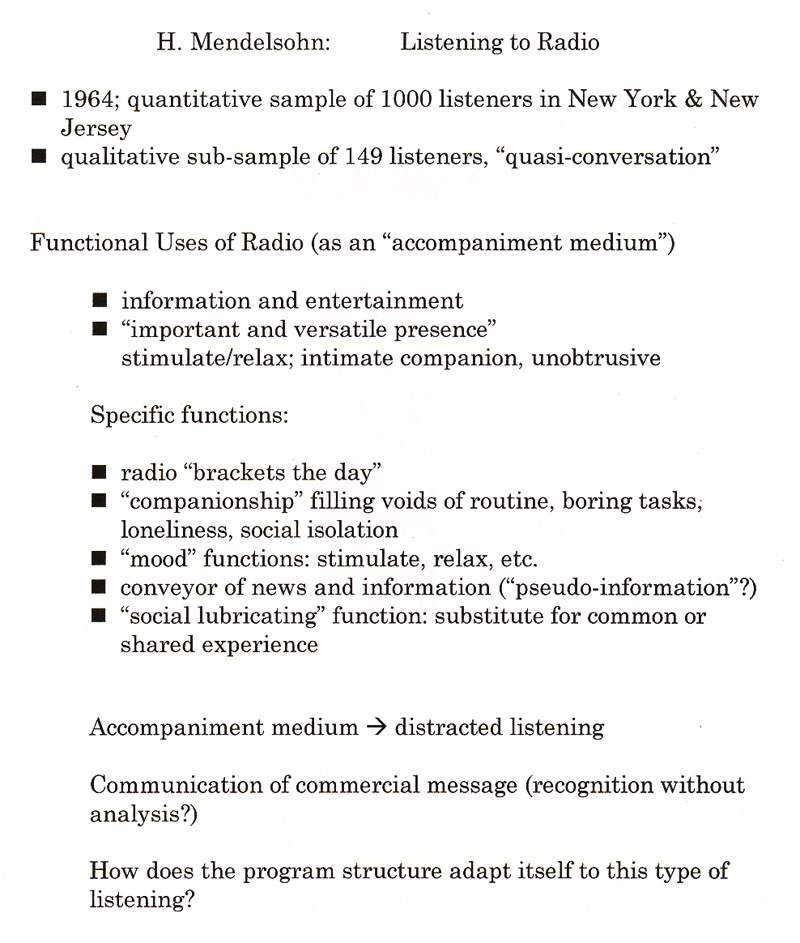
Harold Mendelsohn, "Listening to Radio", 1964.