
| Scenes: | The
Wheatfield |
The
Shed |
The
Windstorm |
| Production Score: | Prod1 |
Prod2 |
Prod3 |
| Time: | 0:00 |
4:30 |
6:45 |
| Audio: | Part 1 |
Part 2 |
Part 3 |
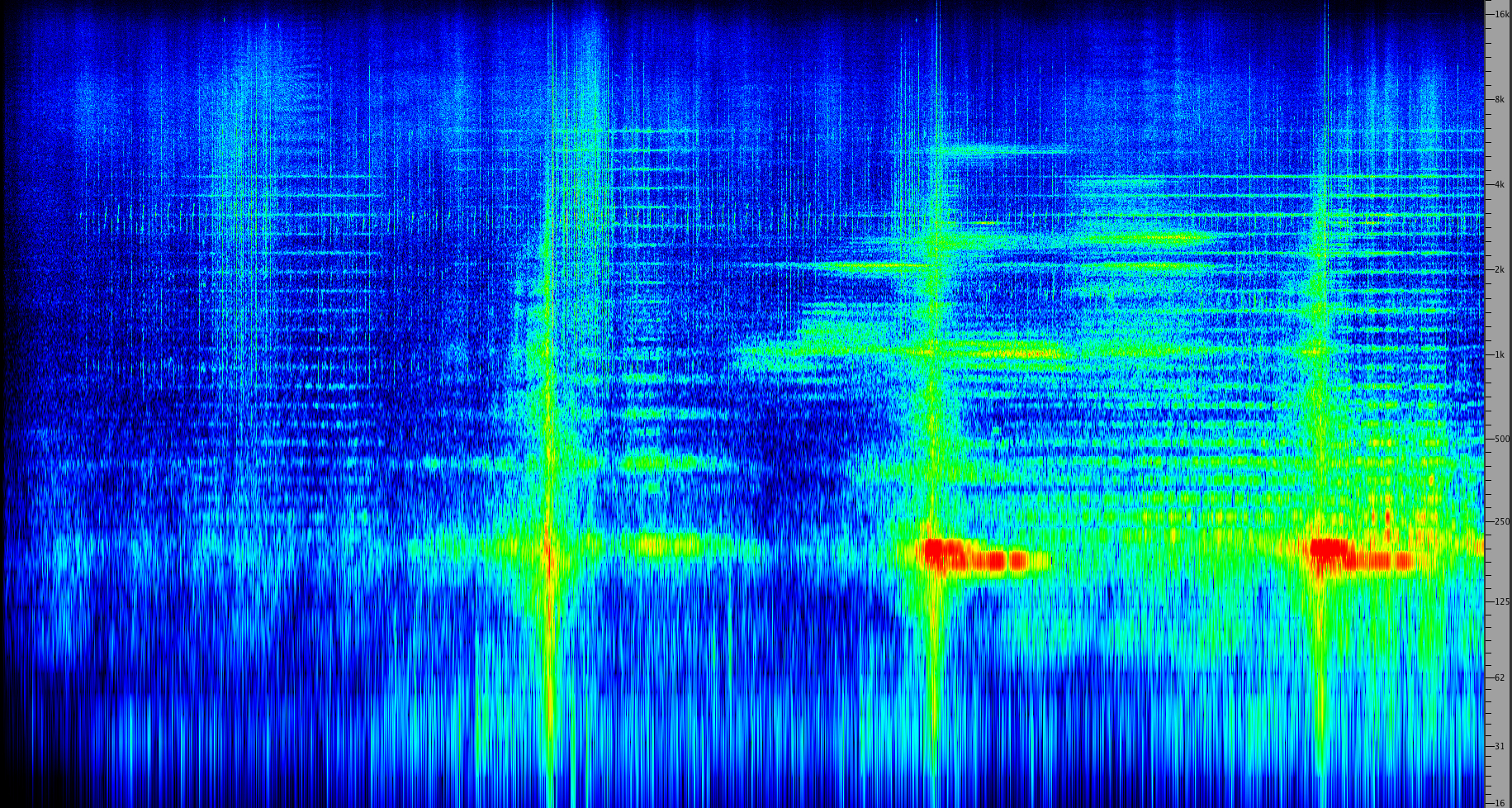
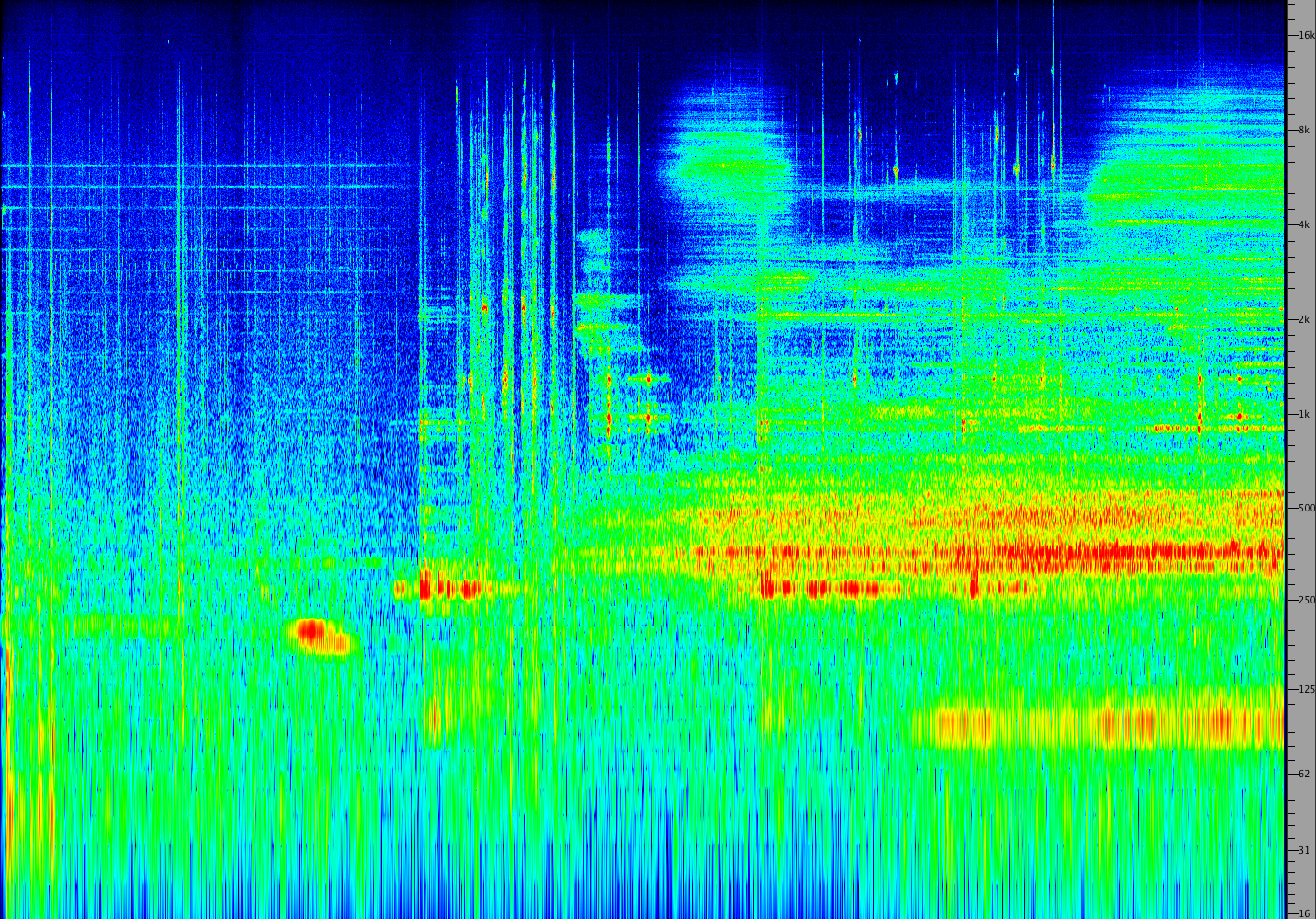
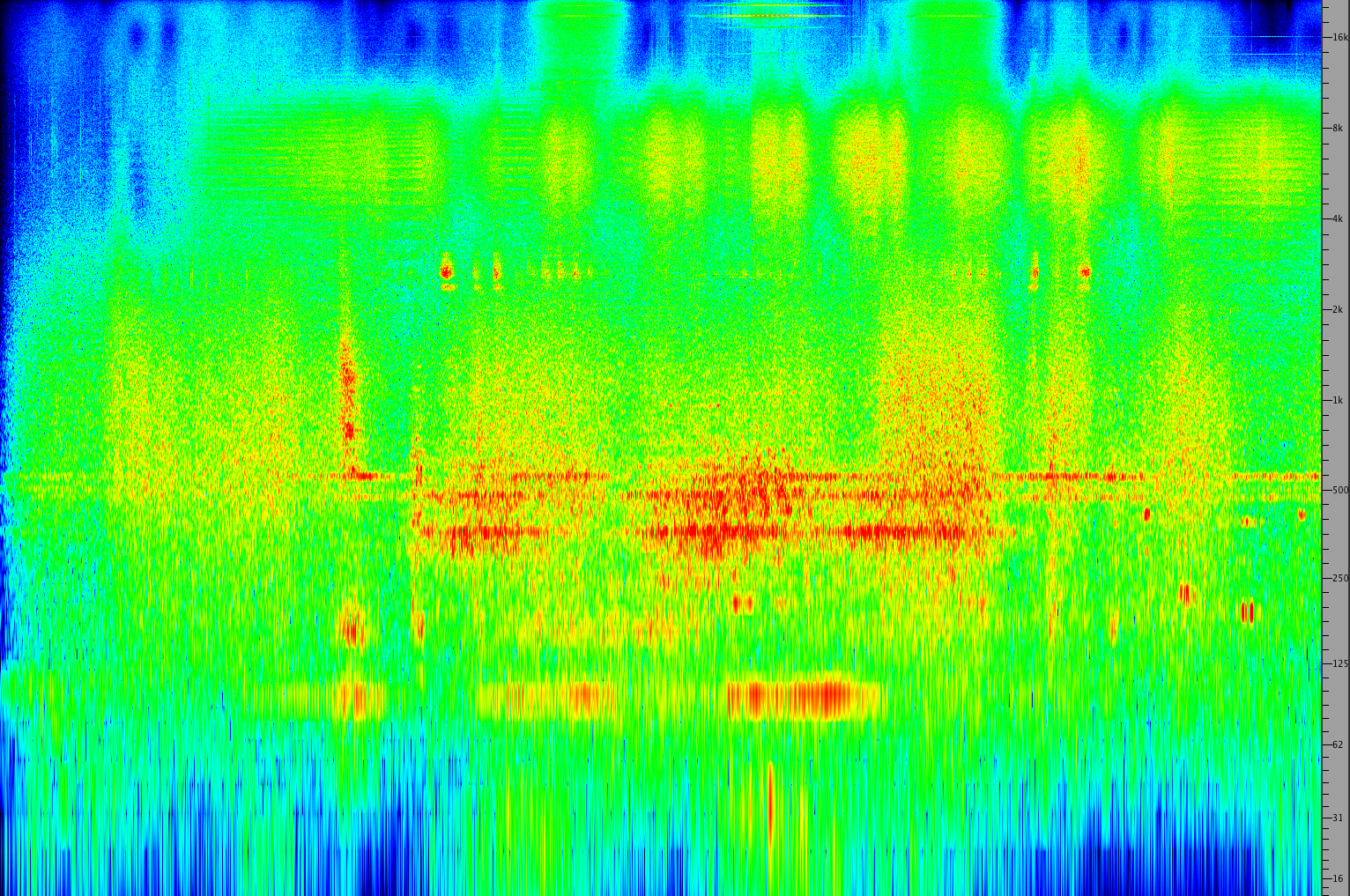
| Spectrogram: | Part 1a, Part
1b |
Part 2a, Part
2b |
Part 3a, Part
3b |



Materials:
All
sounds in the piece were recordings of wind in
various environments (e.g. forest, wheatfield), or
sounds activated by the wind (e.g. windmill pump, wind whistling through
a shed) or distant sounds that are being diffused by
the wind (e.g. bells, geese). Fifteen files,
consisting of various types of wind, were convolved with
themselves using SoundHack to produce various
hybrids, each normalized with high frequency boost,
and later EQ'd with fades added; granular time
stretching and digital resonators using Chris
Rolfe's MacPod were also used.
I. Wind Convolved
with itself or Resonated
| Original Source Materials |
|
|
|
|
Alberta Wheatfield |
|
Wind2B |
Wind2B*self |
|
Alberta Poplar Grove |
|
|
CombMix |
| Wind 4 Wind 4A Quebec Field Wind 4B Alberta Lodgepole Pines |
|
|
|
|
Nova Scotia Outhouse |
|
||
|
Saskatchewan Bushes |
Wind5B*self |
|
|
| Wind
6A Saskatchewan Window |
Wind6A*self |
||
| Wind7,
Wind7A B.C. Pine Forest |
Wind7*self Wind7A*self |
||
| Wind
8 Alberta Aspen Grove |
Wind8*self |
||
| Lake 1,
Lake 2 Alberta Mountain Lake |
II. Wind Activated Percussion
Convolved with itself, Stretched or Resonated; Car Passing;
Trees Creaking
|
|
|
|
|
|
Resonated**+Stretch |
Mix |
|
|
|
|
|
|
||
|
|
WindCry*self |
|
|
|
||
|
|
|
|
|
|
WindRattleResStretch |
|
|
|
|
|
|
 |
WindSlamMix |
|
|
|
|
|
|
|||
| WindWhistle2 |
WindWhistle2*self |
WindWhistle2*self*self |
WindWhistle*selfStretch WindWhistle*self*selfStretch |
|||
| Door
Slam (Yorkshire) |
DoorSlam*self |
DoorSlam*self*self |
DoorSlamMix |
|||
| Door Rattle |
DoorRattleRes |
DoorRattleResStretch |
||||
| Door Rattle short |
DRattle*self |
|||||
| Door Rattle 2 |
DRattle2*self |
|||||
| Car Passing |
Car*self |
Car*self*self |
Car*self*self*self |
CarPassingMix |
||
| Car Passing 2 | Car2*self |
Car2*self*self |
Car2*self*self*self |
Car2PassingMix.aif |
||
| Creak 1 |
Creak1*self |
|||||
| Creak 2 |
Creak2*self |
Creak2*self*self |
||||
| Creak 3 (short) |
Creak3*self |
Creak3*self*self |
Creak Sequence |
** Delay line resonators set to 5.6 and 8.4 ms for left and right channels, producing a pitch of approx. B-flat/F, with feedback varying from 70-90%.
III. Spatialization
All
of
the material in the work is spatialized with the TiMax2
SoundHub, developed by Harmonic Functions. Our version
uses it as a 16 to 8 matrix mixer where at every
cross-point in the mixer, an "image" describes how the
signal is routed to the 8 output channels in terms of
level (dB) and time delay (ms). In this particular work,
the images are all members of a family called DelRamp
(delay ramp) where one output channel is strongest (0
dB), and the neighbouring output channels drop off
sequentially by about 0.9 -1.4 dB and each adds a 10 ms
delay. Two subsets of the family are a Clockwise one
(e.g. DelRamp1) and a Counter-clockwise (e.g.
DelRamp1R). The aural effect of the use of these delay
ramps is that the signal is smeared over all of the
other speakers, a little like the trail behind a jet.
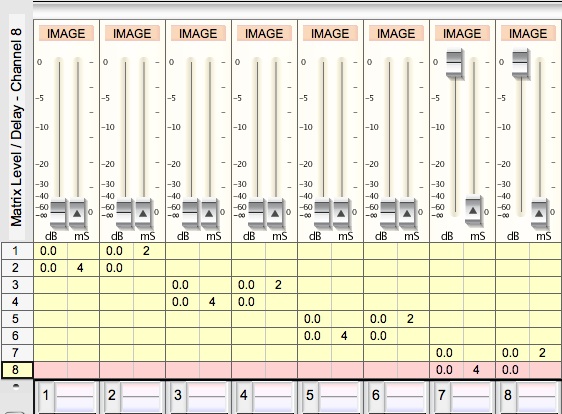
The visual and numerical representations of some sample
images are shown in the table below (with the relevant
numerical values marked in red, the amplitude
levels shown as faders, the delays shown with an up
arrow fader, and the output channels listed on the
bottom row).
| DelRamp1 |
DelRamp5 |
DelRamp8 |
 |
 |
 |
| DelRamp1R |
DelRamp5R | DelRamp8R |
 |
 |
 |
In
all
cases
a
Trajectory
is
created
by
placing
8
such
images
in a row, indicated in the Production Score, for
instance as DelRamp1 CW->8 which means that the
sequence of images goes clockwise around the ring of
speakers in the sequence DelRamp1, DelRamp2, ....
DelRamp8. Likewise, the notation DelRamp8R CCW->1 indicates that the
sequence is DelRamp8R, DelRamp7R, ... DelRamp1. In all
cases, the right hand channel is one speaker to the
right (e.g. when the left channel goes to DelRamp1,
the right goes to DelRamp2, etc.). Note that the speed
of the trajectory depends on the length of the file,
and in this work, one or more complete rotations
around the 8 speakers occur during the entire file as
noted, meaning that each file with its own duration
will be spatialized at different speeds.
At certain key moments, as noted, the trajectory will speed
up and slow down.
Other spatial patterns are also used in this piece such as DelV1, Echo1 and Comb1, as shown below.
Other spatial patterns are also used in this piece such as DelV1, Echo1 and Comb1, as shown below.
| DelV1 |
DelV5 | DelV8 |
 |
 |
 |
| Echo1 | Echo5 | Echo8 |
 |
 |
 |
| Comb1 | Comb5 | Comb8 |
 |
 |
 |