Norbert Ruebsaat recorded the poem in the Sonic Research Studio, S.F.U., on his own (the 4th and last reading was the one used), plus a fascinating improvisation on the words and phrases in the poem, giving the composer more than enough raw material to be used, as well as significant insights into the sonic images in the poem as conceived by the author. The reading clearly divided the poem into 5 sections, each with its own imagery and mood. The two bell sequences (Salzburg and Stockholm) were dubbed from the W.S.P. tape collection, having been originally recorded in 1975 during the group's European tour. The spectral richness of these sounds made them ideal material for use with the extensive filter banks in the studio, as well as suitably contrasting timbres to the voice. The original Salzburg recording, which featured the 10,000 kg Salvatore Mundi bell, was used in its entirety and hence determined the length of the first section, from the first ring to the last (heard in its muted filtered version at 5:50-6:00). The original recording of the Storkyrkan bells in Stockholm followed the recordist from outside the church as he approached the entrance, and then into the interior, thereby producing a strong peak in the spectrum at the closest distance. This sequence is not heard in its original version in the piece, but rather the heavily filtered version establishes the ambience of the last section of the piece.
Reading
Improvisation
Processed Materials
Mixing Score
| Source Material |
1st Processing |
2nd Processing | 3rd Processing |
|
Salzburg
Cathedral bells (original used in CD mix)
|
Bells
cross-faded
with
stereo
filtered
version
 |
||
|
Stockholm
Storkyrkan
bells
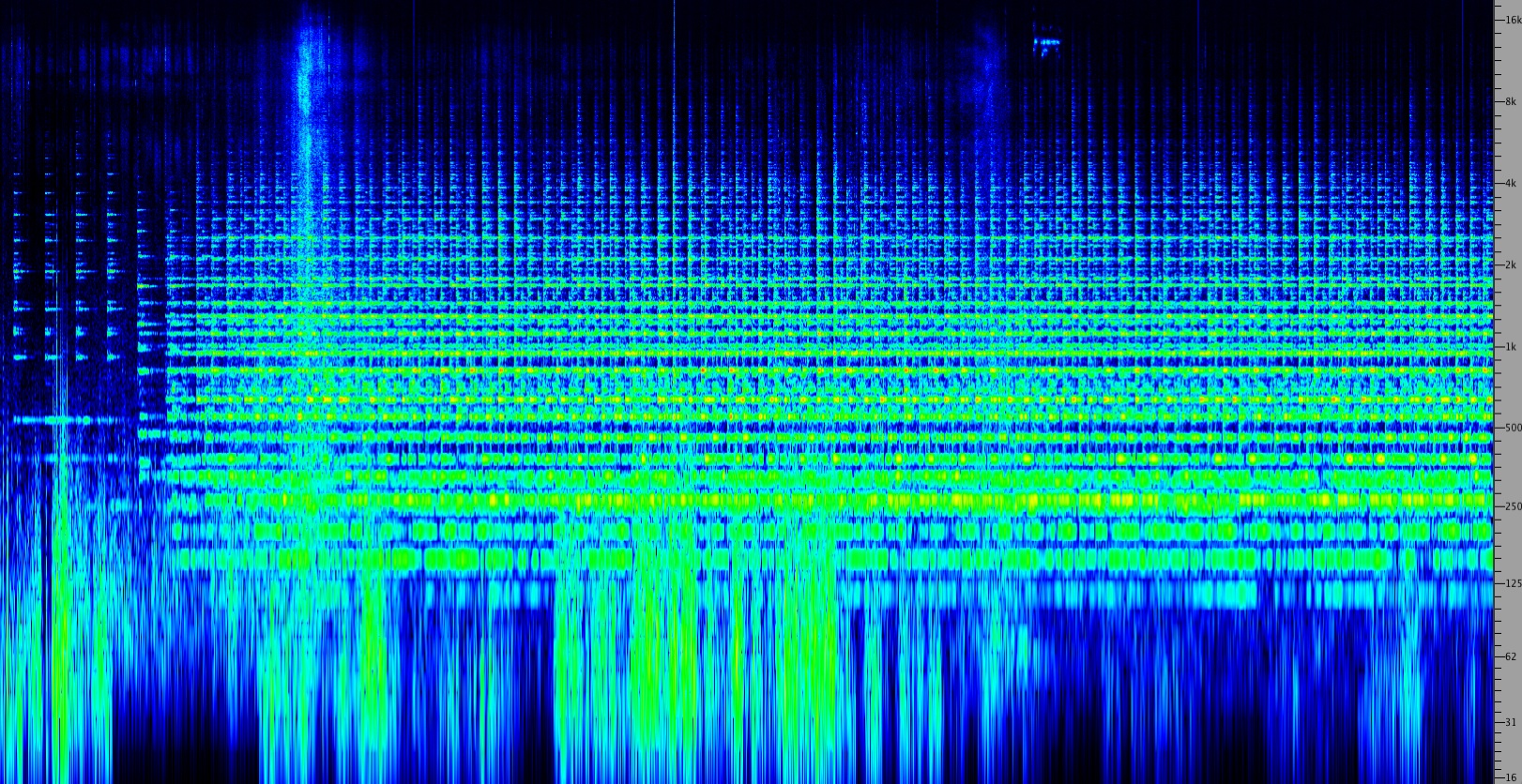 |
Filtered
bells
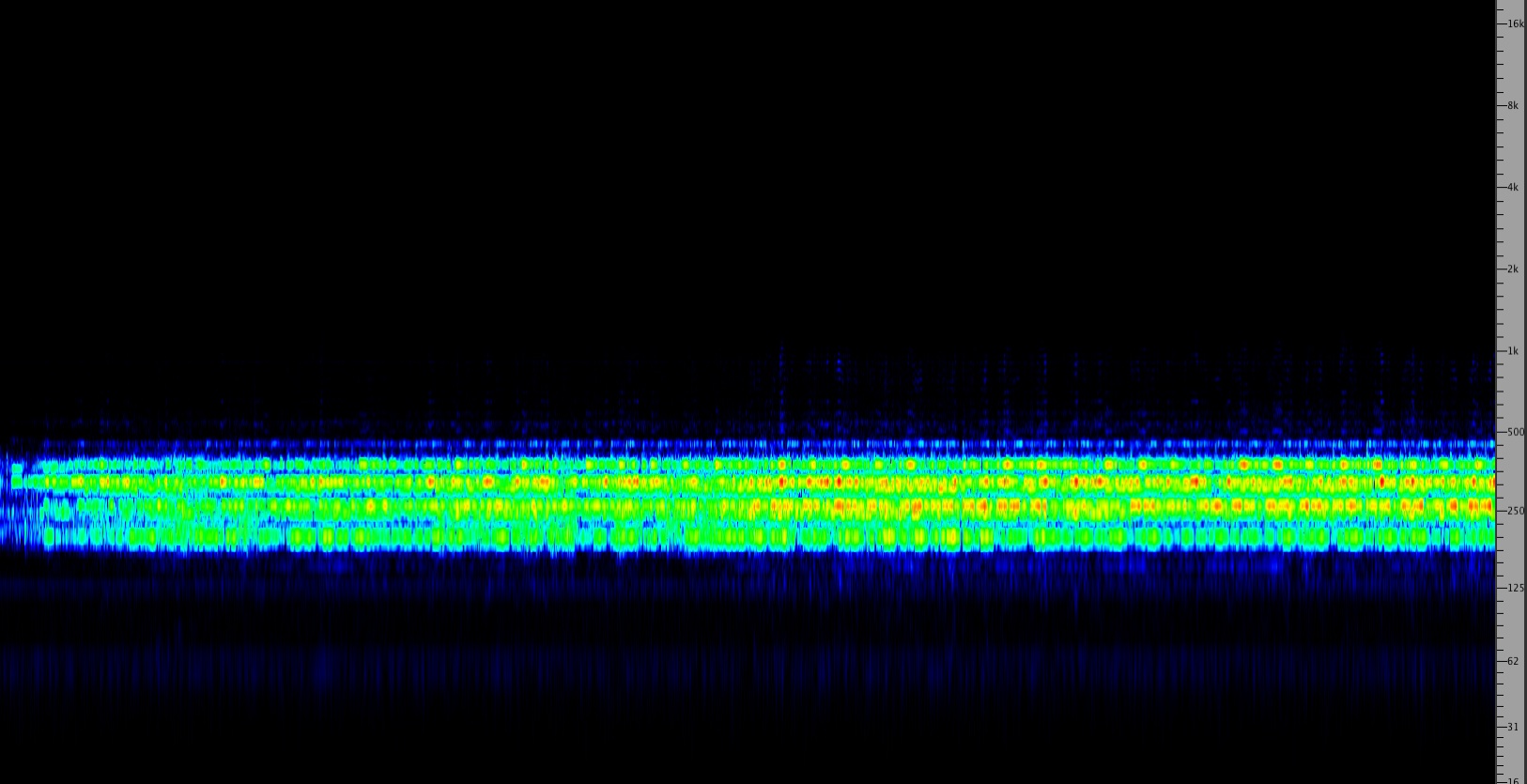 |
Filtered
bells
mixed
in
two
layers
(downward pitch at end)  |
|
|
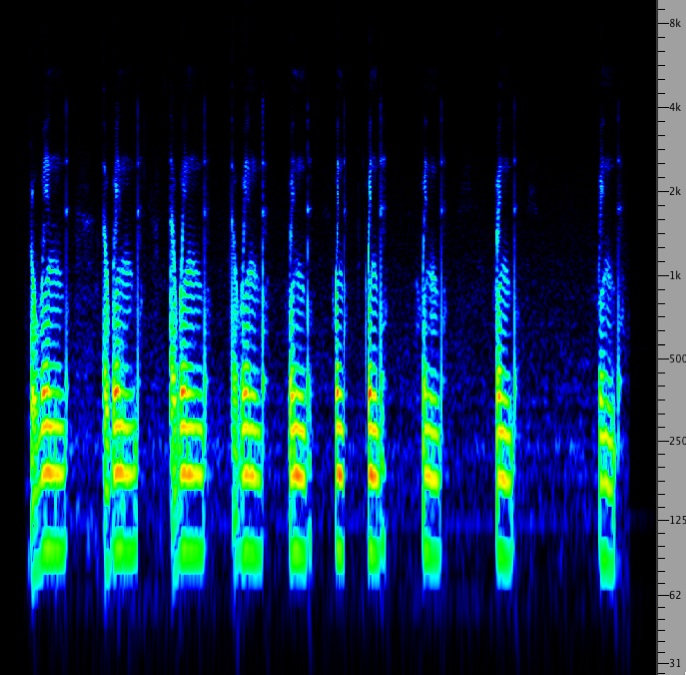
"the
wind"
source
loop
|
transposed down 1
octave and EQ'd
 |
Transposed
down 2
octaves and EQ'd
 |
|
|
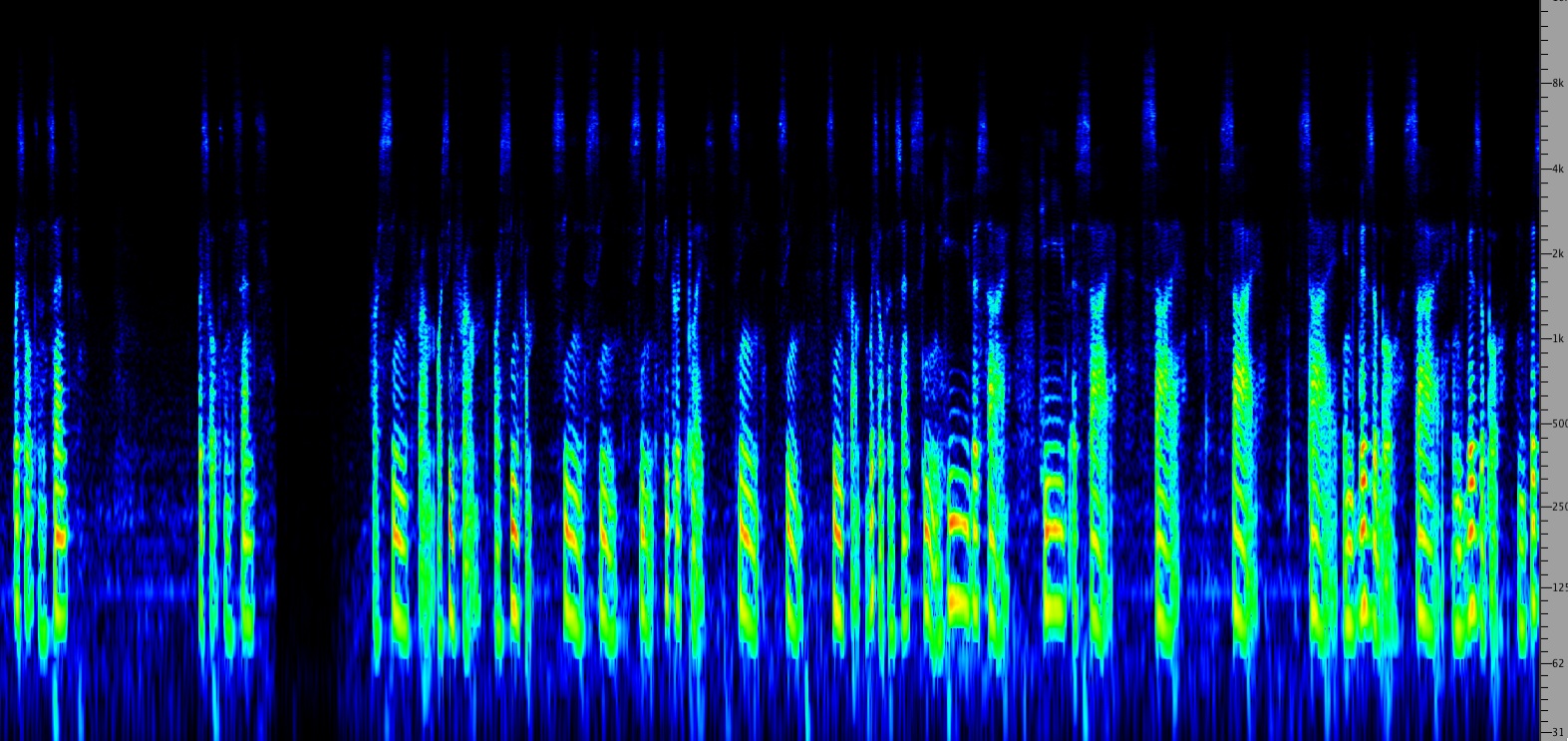
sibilant
text
(edited)
 |
sibilant
text (with
high freq. boost, band-pass filtered)
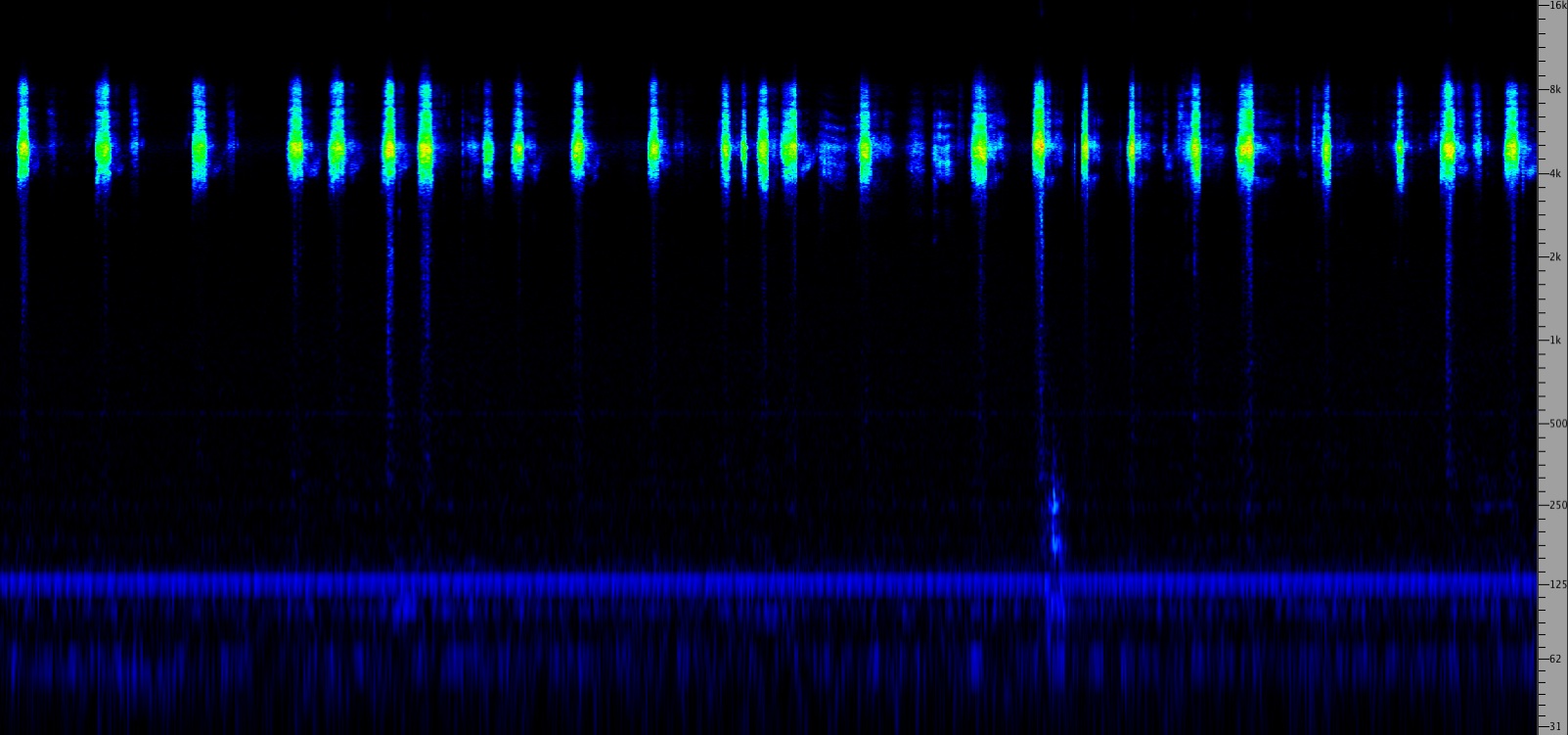
|
sibilant
text
(with
high
freq.
boost, band-pass filtered) transposed down 1 octave  |
sibilant
text
(with high freq. boost, band-pass filtered) transposed down 2 octaves 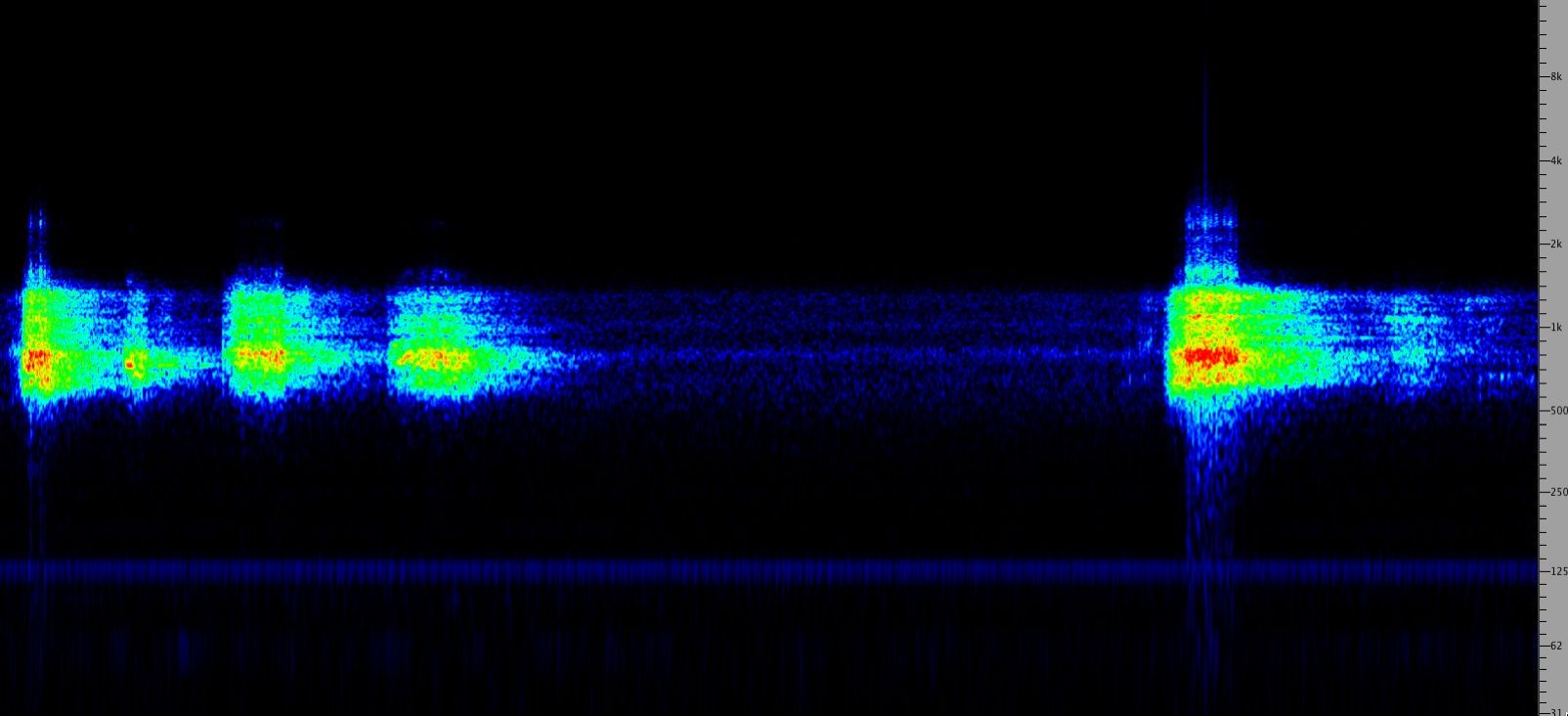 and
3 octaves

|
|
catcalls, tapping
his catcalls" loop
 "pick
up
his load" loop
"touch, touch ... tap, tap ... pick
...cat"
Mix of "touch, touch" sequence and
"tapping his catcalls" loop
|
consonants
from mix
extracted by high frequency boost and very fast gating (Kepex unit)  note: "touch" sequence on l.ch.; "tapping" loop on r.ch. |
consonants
transposed down 1 octave and re-gated
 |
consonants
transposed down 2 octaves
and re-gated and mixed with voice loop  |
|
"leaving
again ..
seen from the wind again"
"secret
place
... no one has ever heard"
two loops run in a phasing pattern |
two
loops
progressively
disintegrated
with
gating
 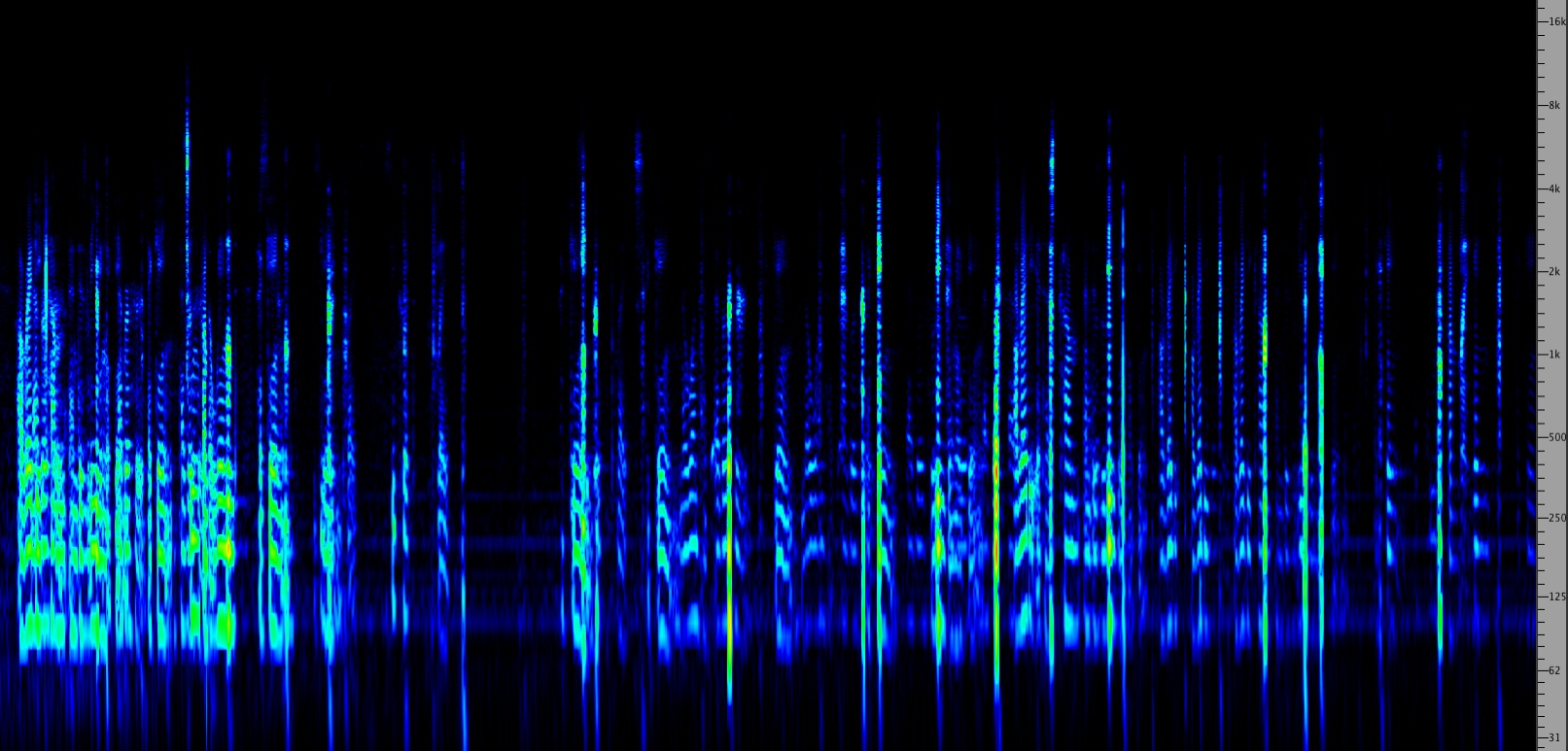
|
two loops
progressively disintegrated with gating
note: peaks are mixed to left or right channels during mix |
|
|
locks
and
doors,
original

|
locks
and
doors
heavily
gated

|
high
speed
version
(fast
forward)
of
locks
also
gated
 |
Mixing Score
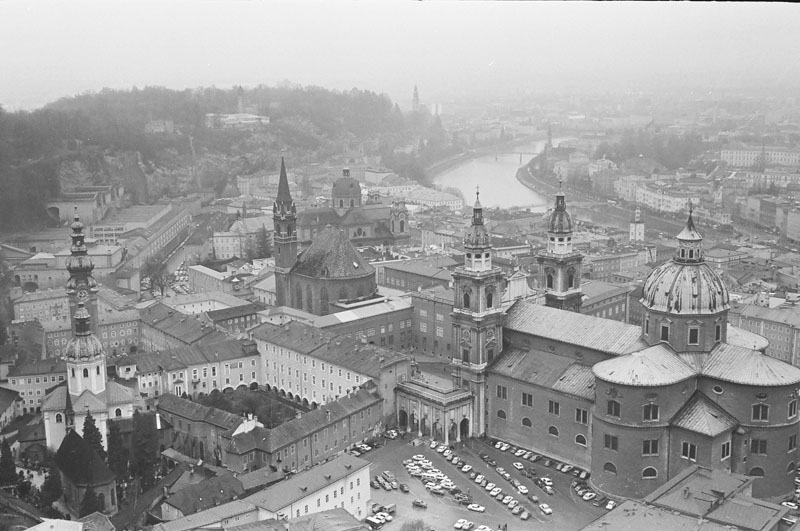 Salzburg Cathedral from Hohensalzburg Castle |
 Third-octave spectrum of the Salvatore Mundi bell, Salzburg. Peak intensities occur in the frequency bands centred on 200, 315 and 630 Hz, with a fundamental about 80 Hz. |
 Studio Charybde, G.M.E.B., Bourges, France, ca. 1979 |
 Control panel for selecting multiple filters per channel, G.M.E.B. |
 In front of the hotel in Bourges during the work on The Blind Man at the GMEB, 1979 |
 Performing with the GMEBaphone in the
Palais Jacques Coeur, Bourges
|
