

STAT 804: Lecture 1 Examples
Some time series
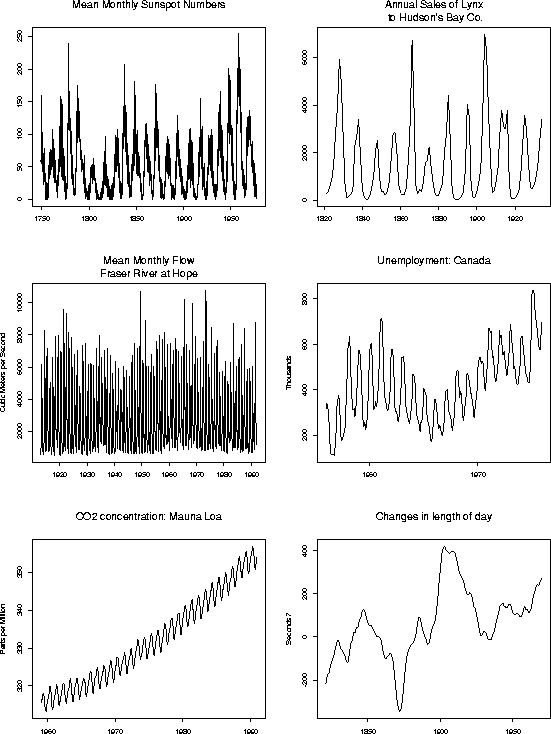
Comments on the data sets:
- Top left: Sunspot data. Each month the average number of
sunspots is recorded. Notice the apparent periodicity, the large
variability when the series is at a high level and the small variability
when the series is at a small level. This series is likely to be quite
stationary over the time span we have been able to observe it, though it
may have a nearly perfectly periodic component.
- Top right: Annual sales of lynx pelts to the Hudson's Bay Company.
There is a clear cycle of about 10 years in length. Might there be a longer
term cycle? Is the cycle produced by a strictly periodic phenomenon or
by a dynamic system close to a periodic system?
- Middle left: Mean monthly flow rates for the Fraser River at Hope.
There are signs of lower variability at low levels suggesting
transformation. There is a clear annual cycle which will have to be removed
to look for stationary residuals.
- Middle right: Monthly unemployment numbers in Canada. Notice the
probably presence of a slow upward trend; such a trend should be
present in the presence of a growing population.
This series is not stationary. The trend is not too linear with
some apparent long term cycles perhaps which produce an S shaped curve.
- Lower left: Carbon Dioxide above Mauna Loa (a Hawaian volcano).
There is a clear trend and an annual cycle but you might well hope
that after compensating for these the remainder would be stationary.
- Lower right: Changes in the length of the Earth's day. This sort of
very smooth graph with long runs going up and down suggests integration.
We will look at differencing as a method of producing a series with less
long range dependence.
-
I made these plots with S-Plus using the following code:
postscript("tsplots.ps",horizontal=F)
par(mfrow=c(3,2))
tsplot(sunspots,main="Mean Monthly Sunspot Numbers")
tsplot(lynx, main="Annual Sales of Lynx\n to Hudson's Bay Co.")
tsplot(flow, ylab="Cubic Meters per Second",main="Mean Monthly Flow\nFraser River at Hope")
tsplot(unemployment, main="Unemployment: Canada",ylab="Thousands")
tsplot(co2, main="CO2 concentration: Mauna Loa",ylab="Parts per Million")
tsplot(changes, main="Changes in length of day", ylab="Seconds?")
dev.off()
Richard Lockhart
Mon Nov 17 16:42:13 PST 1997