
Marek Hatala
Director, Learning Analytics Laboratory
Professor, School of Interactive Arts & Technology
Simon Fraser University
I lead research at the intersection of learning analytics, human-centred AI, and educational psychology. My group studies how learners interpret feedback in digital learning environments—and how we can design learning analytics dashboards that support motivation, persistence, and well-being, not just performance.
A central theme of my current work is personalization: combining learner modelling with theory-driven dashboard design so that feedback is adaptive to individual students. New directions include (1) using multimodal signals to model students’ achievement emotions and optimize dashboard feedback, and (2) understanding what motivates meaningful AI literacy development in higher education under rapidly changing norms and assessment practices.
Current Research Interests
Personalized Learning Analytics Dashboards & Learner Modelling
Learning analytics dashboards are everywhere in university learning systems, yet their impact is often modest. We study how dashboard elements and “frames of reference” shape what students notice, feel, and do next, and we build learner-model-driven approaches to personalize feedback for different students and contexts.
Emotion- and Motivation-aware Dashboards using Multimodal AI
We develop methods to detect and predict students’ achievement emotions (e.g., pride, disappointment, relief) as they view learning data, using scalable sensing such as webcams and wearables. The goal is a new generation of dashboards that adapt presentation and framing to balance motivation with well-being.
Motivation and Context in AI Literacy Development
Generative AI has changed how students write, code, and learn, but “AI literacy” is hard to define and even harder to motivate. We study how learner goals, instructional conditions, and assessment norms shape sustained investment in AI literacy—across course-embedded tasks and interest-driven pathways beyond class.
Temporal Learning Analytics, Self-Regulated Learning, and Timely Interventions
Learning unfolds over time. We use temporal and sequence-based analytics to model how self-regulated learning develops during authentic tasks, with the aim of identifying when support is most effective and how to deliver it through learning environments at scale.
Selected Publications
A selection of work from my recent research. For a complete list, visit Google Scholar.
- "An Immediate And Retrospective Analysis Of Stability And Change: Examining Students' Emotion And Motivation Profiles In Response To Outcome-Presenting Learning Analytics Dashboards."
- "Individual vs. Class-Performance Comparison: Impact of Frame of Reference on Students' Outcome Emotions of Pride, Disappointment, Relief, and Shame."
- "Linking Dashboard Elements and Retrospective Outcome Emotions in Dashboard Feedback: A Transmodal Analysis."
- "Exploring Eye-tracking Features to Understand Students’ Sensemaking of Learning Analytics Dashboards."
- "Associations between Students’ Standing Seen in Learning Analytics Dashboards and Their Following Learning Behaviours: A Study of Three Reference Frames."
- "Associations of Research Questions, Analytical Techniques, and Learning Insight in Temporal Educational Research"
Learning Analytics Lab
Current Members
-
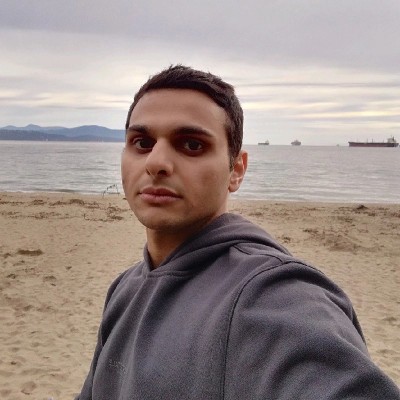 Arash Ahrar PhD Student Research topic: Arash's Ph.D. research focuses on understanding and modeling achievement emotions (e.g., pride, shame, relief, disappointment) that are experienced in the context of students’ interactions with learning analytics dashboards. Grounded in established educational psychology frameworks such as Pekrun’s Control-Value Theory, in his thesis, he explores how different forms of feedback and social comparison shape students’ achievement-related emotional responses. Methodologically, Arash's research adopts a multimodal learning analytics approach, using eye-tracking, biofeedback, and visual data (images and video) to study achievement emotions. It involves the development of models for facial expression recognition, valence and arousal estimation, and facial action unit analysis, alongside the design of a dedicated data collection protocol and a subsequent analysis pipeline. Overall, his research is a bridge connecting learning analytics, affective computing, and human-centered design. LinkedIn
 -
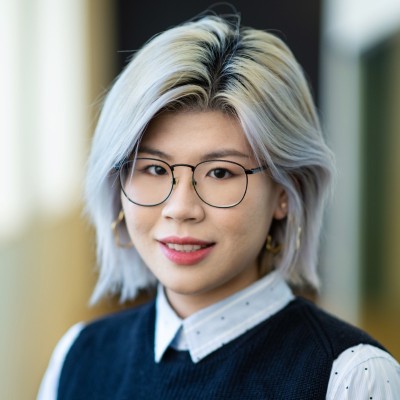 Jennifer Zheng PhD Student Research Topic: Jenn is designing a personalized, motivation-aware feedback system to support AI literacy in higher education. Her work examines how students and instructors engage with generative AI tools and how tailored feedback can promote responsible and sustained AI use. The project involves modelling AI literacy competencies and developing an AI-supported environment that delivers personalized, theory-driven feedback. LinkedIn
 -
 Tonya Wang MSc Student Research Topic: A Personalized AI Reading Agent that models learner to predict unfamiliar vocabulary and provide context-aware explanations. By leveraging gaze and emotion signals, the system regulates instructional support by increasing assistance during detected confusion and gradually reducing support during engagement. LinkedIn
Alumni
| Name | Degree (Year) | Current position | |
|---|---|---|---|
| Sina Nazeri | PhD (2024) | Senior Data Scientist/AI Engineer, IBM Toronto | |
| Fatemeh Salehian Kia | PhD (2021) | Assistant Professor, University of British Columbia | |
| Halimat Alabi | PhD (2021) | University Lecturer, University of British Columbia | |
| Varshita Sher | PhD (2019) | Senior Data Scientist, Haleon (UK) | |
| Srecko Joksimovic | PhD (2017, co-sup) | Professor, University of South Australia | |
| Vitomir Kovanovic | PhD (2017, co-sup) | Professor, University of South Australia | |
| Liaqat Ali | PhD (2016) | Computer Science Professional | |
| Mohsen Asadi | PhD (2014) | Chief Development Architect, SAP | |
| Bardia Mohabbati | PhD (2013) | Senior Design Technologist, Amazon | |
| Melody Siadaty | PhD (2013) | VP of Product – Workforce Planning, Visier | |
| Karen Tanenbaum | PhD (2012) | UX Designer, UC Irvine | |
| David Botta | PhD (2010, co-sup) | Social Media Designer | |
| Andy Law | PhD (2005) | Professor, Kwantlen Polytechnic University | |
| Mohammadreza Doroodian | MSc (2025) | Applied Machine Learning and Data Science | |
| Reyhaneh Ahmadi Nokabadi | MSc (2024) | UX Researcher | |
| Kimia Aghaei | MSc (2023) | Design Researcher, Lululemon | |
| Ladan Fathi | MSc (2019) | UX Researcher & Strategist, Medavie Blue Cross | |
| Sanam Shirazi Beheshtiha | MSc (2015) | Senior Data Analyst, Learning Analytics, University of British Columbia | |
| Samaneh Soltani | MSc (2012) | Senior Software Engineer, SAP | |
| Alireza Davoodi | MSc (2011, co-sup) | VP Research and Development, RxPx | |
| Shahin Sheidaei | MSc (2010) | Scrum Master, Scotiabank | |
| Ying Jiang | MSc (2008) | Senior Product Designer, Microsoft | |
| David Brokenshire | MSc (2007) | Engineering Manager, Apple Inc | |
| Shilpi Rao | MSc (2007) | Senior Consultant, Syvantis Technologies | |
| Ashok Shah | MSc (2006) | Solutions Architect, BCAA | |
| Ty Mey Eap | MSc (2006) | Senior Software Developer | |
| Jerry Li | MSc (2006, co-sup) | Educational Technology Specialist | |
| I-Ling Lin | MSc (2005, co-sup) | Business Development, Perfect Corp. | |
| Jurika Shakya | MSc (2005, co-sup) | Senior Software Engineering Manager, Veeva Systems | |
| Rui Wang | MSc (2005) | Senior ERP Product Specialist | |
| April Ng | MSc (2005) | ||
| Andrew Choi | MSc (2005) | BI Applications Developer, Themenos Software | |
| Kirt Noel | MSc (2005, co-sup) | Full Stack Developer, Bell | |
| Kate Han | MSc (2004) | Global Trade Services IT, HSBC |
Prospective Graduate Students
Working with Me
I am currently looking for MSc and PhD students interested in learner modelling and learning analytics dashboards, with a focus on how students interpret feedback, experience achievement emotions, and regulate their learning over time. My work examines how cognitive, emotional, and motivational processes interact as learners engage with feedback, and how these processes can be modelled to support emotion- and motivation-aware dashboard design. Current projects span human-centred, theory-driven research (social sciences, education) as well as data-driven and AI-based approaches (data science, HCI).
MSc thesis research is typically well-defined and embedded within ongoing projects in my lab, and carried out as part of a broader research program supported by external funding. As such, MSc projects are expected to directly contribute to the objectives of the grants that support the student’s thesis work.
PhD research allows for greater intellectual independence, but is likewise situated within the lab’s research program and funding context. In practice, PhD thesis topics are expected to align well with funded research directions, while still enabling the development of a distinct and original research agenda.
How to Apply / How I Evaluate Applicants
For Fall 2026 admissions, I make decisions about new graduate student admits in mid-April, once my research funding situation is confirmed.
Before contacting me, prospective students should carefully review my current research projects, publications, and the research areas of my current students to ensure a strong fit with my ongoing directions.
If, after doing so, you believe your interests align well, please contact me by email and include the following:
-
Statement of research interests (≈ 1 page)
For MSc applicants, this should describe your research interests and explain how they align with my current projects. For PhD applicants, the statement should articulate a more focused research direction or problem, clearly situated within the context of my research and relevant literature. -
Curriculum vitae (CV)
Including education, research experience, publications (if any), and relevant technical or methodological skills. -
Unofficial transcript(s)
From your most recent degree(s). -
Evidence of research potential (if available)
For example, a thesis, research paper, project report, or portfolio.
I review inquiries periodically and respond to candidates whose background and interests align with current projects and funding availability.
Contacting me does not replace the formal SFU application process, but it is an important first step.