Students requiring
accommodations as a result of a disability must contact the Centre for Students
with Disabilities (778-782-3112 or csdo@sfu.ca).
Biological Sciences 471:
Math Modeling in Biology
Fall 2006
Professor: Eirikur
Palsson B8267 291-4808 epalsson@sfu.ca
Pre-requisites: MATH 155 or 152 with minimum grade of B or better or permission by instructor.
Textbook: Mathematical Models in Biology, Leah Edelstein-Keshet, SIAM Books
Course Description:
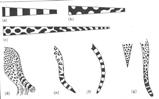
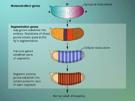
With the vast advances in the sciences, the information that we have available about various biological systems has grown tremendously, both in amount and in detail. We are constantly discovering new genes and their functions, we can automatically track population data, record changes in the environment and so on. This enormous increase in information available creates the need and at the same time allows us to develop models that can help us understand the mechanisms underlying the processes in biological systems. This includes among others, modeling how various genes interact (gene networks), how changes in the environment affect ecosystems and how to control spread of diseases. This course will introduce modeling of biological systems. The students will learn how to approach modeling and be taught some basic mathematical tools that are necessary, such as differential equations, simple stability analysis of a biological system and reaction diffusion mechanisms,. The topics that are covered include: How do the coat patterns of animals or sea shell patterns form? How does a virus infection spread and what can we do to prevent it? How could we operate sustainable fisheries? What mechanisms is responsible for the self-organization in the cellular slime mold?
This course is suited for biology students who want to be able to recognize when a model can be helpful and develop one when needed for their research, as well as for those who just want to understand models of biological systems. This course is also for physics, math and engineering students who would like to see how mathematical techniques are applied in biology. The need for these skills are very important, since models are being utilized more and more in biological research.
Mark distribution: (open
to discussion with class at start of semester)
Homework 35% (may include an independent project, required for grads)
Midterm 20%
Final 45%