The southern oscillation/El Nino phenomena is one of
the key drivers in the global climate system. In order to understand
the dynamics of our atmosphere, particularly in the face of global
climate change, it is crucial that we understand the global
connectedness of the system. El Nino events have the potential
to cause massive drought and famine in some areas, while causing
erosion through too much rain in others. They affect fish stocks and
disease transmission patterns. El Nino/La Nina events also have the
potential to affect hurricane distribution, freque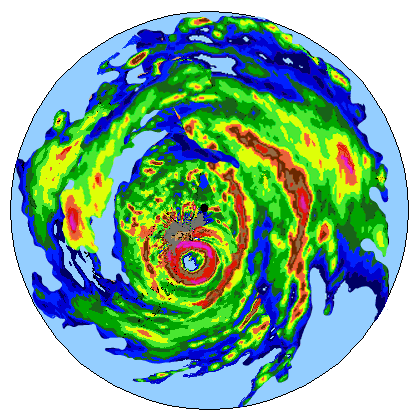 ncy, and intensity, both in the Pacific
and Atlantic Oceans. A current focus of much research today is the
search for probabilistic models that can incorporate long term
dynamic
change into hurricane forecasting techniques. In this project, I look
at a simple method for assessing the effects of El Nino and La
Nina events on Hurricane formation and distribution patterns in the
Atlantic Ocean, particularly regarding their effect on the
highly
populated East coast of the United States.
ncy, and intensity, both in the Pacific
and Atlantic Oceans. A current focus of much research today is the
search for probabilistic models that can incorporate long term
dynamic
change into hurricane forecasting techniques. In this project, I look
at a simple method for assessing the effects of El Nino and La
Nina events on Hurricane formation and distribution patterns in the
Atlantic Ocean, particularly regarding their effect on the
highly
populated East coast of the United States.
ncy, and intensity, both in the Pacific
and Atlantic Oceans. A current focus of much research today is the
search for probabilistic models that can incorporate long term
dynamic
change into hurricane forecasting techniques. In this project, I look
at a simple method for assessing the effects of El Nino and La
Nina events on Hurricane formation and distribution patterns in the
Atlantic Ocean, particularly regarding their effect on the
highly
populated East coast of the United States.