The production of chocolateIntroductionChocolate is a key ingredient in many foods such as milk shakes, candy bar, cookie and cereal. It is ranked as one of the most favorite flavors in North America and Europe (Swift, 1998). Despite its popularity, most people do not know the unique origins of this popular treat. Chocolate is a product that requires complex procedures which involve harvesting coca, refining coca to cocoa beans, and shipping the cocoa beans to the manufacturing factory for cleaning, coaching and grinding. These cocoa beans will then be imported or exported to other countries and be transformed into different type of chocolate products (Allen, 1994).
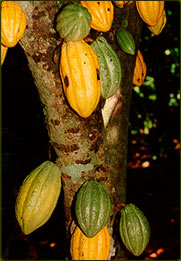
Harvesting Cocoa & Cocoa processingChocolate production starts with harvesting coca in a forest. Cocoa comes from tropical evergreen Cocoa trees such as Theobroma Cocoa that grows in the wet lowland tropics of Central and South America, West Africa and Southeast Asia (within 20 C of the equator) (Walter,1981) . Cocoa needs to be harvested manually in the forest. The seed pods of coca will first be collected; the beans will be selected and placed in piles. These cocoa beans will then be ready to be shipped to the manufacturer for mass production. Step #1: Plucking and opening the PodsCocoa beans grow in pods that sprout off of the trunk and branches of cocoa trees. The pods are about the size of a football. The pods start out green and turn orange when they're ripe. When the pods are ripe, harvesters travel through the cocoa orchards with machetes and hack the pods gently off of the trees.
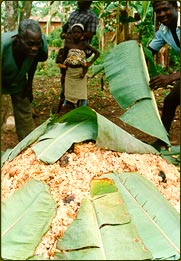
Description 1 Description 2 As machines could damage the tree or the clusters of flowers and pods that grow from the trunk, so workers must be harvest the pods by hand, using short, hooked blades mounted on long poles to reach the highest fruit. Step #2: Fermenting the cocoa seedsNow the beans are go to the ferment processing. They are placed in large, shallow, heated trays or cover them with banana leaves. If the climate is right, they may simply be heated by the sun. Workers come along periodically and stir them up so that all of the beans come out equally fermented. During fermentation is when the beans turn brown. This may takes about five or eight days long.
Description 3 Step #3: Drying the cocoa seedsAfter the fermentation, cocoa seeds must be dried before they can be scooped into sacks and shipped to chocolate manufacturers. Farmers simply spread the fermented seeds on trays and leave them in the sun to dry. The drying process usually takes about a week and results in seeds that are about half their original weight.
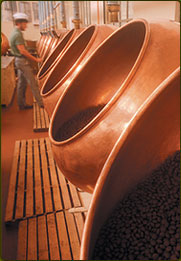
Description 4 Manufacturing ChocolateOnce cocoa beans have reached the machinery of chocolate factories, they are ready to be refined to chocolate. Generally, manufacturing processes differ slightly due to the different species of cocoa trees, but most factories use similar machines to break down the cocoa beans into cocoa butter and chocolate (International Cocoa Organization, 1998). Firstly, fermented and dried cocoa beans will be refined to roasted nib by winnowing and roasting. Then, they will be heated and will melt to chocolate liquor. Lastly, manufacturers blend chocolate liquor with sugar and milk to add flavors. After the blending process, the liquid chocolate will be stored or delivered to the molding factory in tanks and will be poured into moulds for sale. Finally, wrapping and packaging machines will pack the chocolates and then will be ready to transport. The diagram showing the manufacturing process:
Step #1: Roasting and Winnowing the CocoaThe first thing that chocolate manufacturers do with cocoa beans is roast them. This develops the color and flavor of the beans to what our modern palates expect from chocolate. The outer shell of the beans is removed, and the inner cocoa bean meat is broken into small pieces called "cocoa nibs."
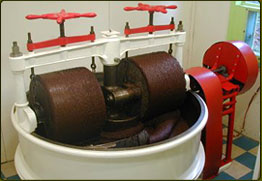
Step #2: Grinding the Cocoa NibsGrinding is the process which ground cocoa nib into " cocoa liquor" which is also known as the unsweetened chocolate or cocoa mass. The grinding process generates heat and the dry granular consistency of the nib, cocoa nib then turned into a liquid as the high amount of fat contained in the nib melts.cocoa liquor is mixed with cocoa butter and sugar. In the case of milk chocolate, fresh, sweetened condensed or roller-dry low-heat powdered whole milk is added, depending on the individual manufacturer's formula and manufacturing methods.
Step #3: Blending Cocoa liquor and molding ChocolateAfter the mixing process, the blend is further refined to bring the particle size of the added milk and sugar down to the desired fineness. The Cocoa powder or 'mass' is blended back with the butter and liquor in varying quantities to make different types of chocolate or couverture. The basic blends with ingredients roughly in order of highest quantity first are as follows:
|







Top of Page  My Link 1
My Link 2
My Link 1
My Link 2
Introduction
Production
Consumption
History
Local Flavours
Recipes
The Dark Side