British Columbia Prison Education Research Project
Final Report

Published May 1998
Institute for the Humanities
Simon Fraser University
Burnaby, B. C., V5A 1S6
CANADA
When this research project was first proposed to the Social Sciences and Humanities Research Council in 1992, the post-secondary education program in federal prisons in British Columbia was a going concern. In that application we proposed to investigate the "transformative capacity of education" when offered to people on the margins of society, in this case adult male prisoners. We suggested that instead of vague notions of attitude change or improvement on paper and pencil tests, the most transparent and easily measured transformation, effect, or outcome would be non-return to crime and imprisonment in the period of freedom following the educational experience. We proposed, then, to examine a classic issue of cause and effect and thereby to see if a case could be made for education being the primary cause of the hoped for effect. In doing so we were well aware of the objection many educators have with linking too closely the substance of their craft with behavioural outcomes, but in a public policy atmosphere increasingly conditioned by calls for accountability, especially in terms of support for the vulnerable and marginal, we felt the argument for the education of prisoners required this kind of solid evidence of effectiveness.
The
outcome was as we had hoped - indeed expected. Far fewer of the prisoner-students
were returned to prison after release than was the Canadian norm or than
was predicted for this particular group. To that extent the education program
would appear to be a ‘success’. But given our primary focus on cause and
effect, this was only the beginning of the argument. There could be many
reasons for the successes within this group, ranging from statistical accident
or aberration to a self-selection of motivated ‘winners’ from amidst the
pool of potential prisoner-students. Just as clearly the educational experience
could not be seen as a universal cause, or even given equal causal weight
across the group of students. Instead, we needed to discover more precisely
the degree to which we could establish a causal link between education
and the post-release success of specific groups of prisoner-students within
the larger group being studied. This process of discovery is the subject
matter of this report.
Stephen Duguid
Simon Fraser University
Burnaby, British Columbia
May
1998.
Principal
Investigator: Stephen Duguid, Humanities and Liberal Studies, Simon
Fraser University, Burnaby, British Columbia
Research Team:
Ray Pawson, Dept. of Social Policy and Sociology, University of Leeds
Margaret Jackson, School of Criminology, Simon Fraser University
John Ekstedt, School of Criminology, Simon Fraser University
Brian Burtch, School of Criminology, Simon Fraser University
Jery Zaslove,
English and Humanities, Simon Fraser University
Research Staff:
Wayne Knights
Maureen Nicholson
Research Assistants:
Diana Doherty
Bill Jeffries
Leslie Baker
John Hurlehey
The Prison Education Research Project was carried out under the auspices of the International Forum for the Study of Education in Penal Systems (IFEPS), a research group with centres in England, Australia, the United States, Canada, Spain and Holland.
Funding for the research was provided by the Social Sciences and Humanities Research Council (SSHRC) of Canada. Funding for the preparation of this Report was provided by the Institute for the Humanities at Simon Fraser University through the Joanne Brown Fund.
The research would not have been possible without the generous assistance of staff from the Pacific Region of the Correctional Service of Canada, especially Mr. Chuck MacInnes, Dr. Carson Smiley, and Ms Joan McCullagh. Also central to the success of the project were staff from the CSC National Headquarters in Ottawa, the Information and Identification Services of the Royal Canadian Mounted Police, and the National Archives of Canada Federal Records Centre in Burnaby, British Columbia. Appreciation is also due to the Registrars at the University of Victoria and Simon Fraser University for their assistance in obtaining student records.
Finally, we must acknowledge the contributions of the former teachers and administrators of the prison education program who generously gave of their time, insights and criticisms in helping us carry out this research.
The Research Project: Introduction
From 1973 to 1993 university liberal arts courses were offered to prisoners in several federal correctional institutions in British Columbia, Canada. Delivered first by the University of Victoria (1973-1984) and then by Simon Fraser University (1984-1993), well over a thousand individual prisoners were enrolled in courses taught by university faculty in traditional seminar settings within the prisons. Ranging from maximum to medium security, each of the correctional institutions contained a school or academic centre, a library and a sufficient level of support services to make possible the creation of relatively self-contained "learning centres" or "academic communities" behind the walls and fences.
While distinct from the more formally "medicalized" or treatment approaches to prisoner rehabilitation that had characterized correctional interventions in the previous post-war decades, the university program in British Columbia nonetheless was based on the premise that education could result in rehabilitative outcomes. This premise stemmed from the conviction that education in the liberal arts, if carried out properly, could trigger processes of individual reclamation, reformation, and in some cases transformation. This conviction was in turn built on a diverse set of theoretical foundations in adult education and psychology, focusing in particular on the role of humanistic study in encouraging cognitive and moral development and the subsequent impact of that development on behaviour. The university program thus made certain claims as to its efficacy in inhibiting future criminal behaviour on the part of its prisoner-students, and unlike many other such programs, operationalized the claim by insisting that it would be demonstrated by lower rates of recidivism (return to imprisonment for a new offence following release) on the part of its students. A small research study carried out in 1979 seemed to bear out this claim, reporting very low rates of recidivism for program participants. (Ayers, et al., 1980; Duguid, 1981; Ross, 1980)
In 1993, co-determinus but not linked with the cancellation of the university program by the Correctional Service of Canada as a cost-cutting measure, a major follow-up study was undertaken of the prisoner-students who had been participants in that program from 1973 to 1993. The study was funded by the Social Sciences and Humanities Research Council of Canada and was completed in 1997. The objective was, put simply, to test the claim made by the program staff over its twenty-year life span that it had been effective in reducing the rate of recidivism of its students. Finding early on in the research that recidivism was in fact lower for this group than the average rate in Canada, the more ambitious objectives became to: (a) establish the degree to which the education program could be shown to be the significant factor in this success; (b) identify specific groups of prisoner-students who seemed to benefit the most from participation in the program, and; (c) identify the specific mechanisms and circumstances intrinsic to the education program that were linked with the success of these groups.
What follows is a detailed examination
of the methodology used to meet these objectives and the results. It draws
from a series of papers published and in press, including Duguid (1997a)
(1997b) (1997c), Duguid, Hawkey and Pawson (1996), Duguid and Pawson (1998),
Duguid, Hawkey and Knights (1998).
The University Program: Theory and Practice
What is the link between knowledge and behaviour? Can a more developed moral understanding persuade a law-breaker to adopt a more law-abiding stance toward society and the other? Can virtue be taught? Do more highly developed critical thinking skills lead to better decision-making in the "real world"? Are thinking skills more important than employment skills in the preparation of offenders for returning to the community? Are thinking skills and values best taught directly or through Liberal Arts academic courses? Why should criminals be educated? These questions and others like them provided the basis for on-going intellectual debate within the prison education program in British Columbia and an on-going discussion of policy issues between that program and the Correctional Service of Canada (CSC). Indeed, it would appear after reviewing the twenty-year history of the endeavour that the dynamism of these debates and discussions played a large part in the program’s longevity.
The program began as a research project, the offering of courses in English literature to prisoners being the raw material of a Ph.D. dissertation by a Correctional Service administrator, Anthony Parlett. (Parlett, 1974) From this modest beginning in 1971 it expanded to a more extended experiment in 1972 and finally by 1973 into an on-going program at two institutions, the British Columbia Penitentiary in New Westminster and Matsqui Medium Security Institution in Abbotsford. In subsequent years program sites were established at the Kent Maximum Security Institution and the Mountain Institution in Agassiz and at William Head Institution near Victoria. During its 20-year life-span the university program in British Columbia was unique in its programmatic consistency coupled with explanatory and theoretical diversity.
The programmatic consistency makes it an ideal object for evaluation research in that the actual structure and educational content of the program did not vary significantly over the twenty- year period. In-person instruction in Humanities and Social Science university courses remained at the core, the staffing was remarkably stable over time while still allowing for variety, and extra-curricular activities were limited in scope by the very nature of the prison. There were, of course, important operational differences between sites in that the program existed in prisons at several security levels, each university administrator had a unique approach to operating in the prison, and the nature of the prisoner population changed over time as did administrative factors such as sentencing, release procedures and institutional rules. These were in turn somewhat mitigated by the relatively close proximity of the prisons which allowed for frequent movement of both staff and prisoners from one program to another thereby necessitating coordination and consistency within the overall university program.
Equally important for the evaluation exercise was the diversity of explanations for or understandings of the program by those who worked within it over the twenty-year period. Of the staff members who played particularly significant roles in the history of the program, each tended to stress a different dimension of the program in seeking to account for its success. These included a focus on value change and moral development, on critical thinking or cognitive development, on constructing alternative or democratic communities around the academic programs, on extra-curricular activities such as theatre productions or literary publications, on the courses themselves and the credits they carried, and on links with the community acquired by students through the program.
Like Orwell’s short story of the attempts to describe an elephant while blindfolded, each of the "stories" or "understandings" of the prison education program developed over the years by staff and outside commentators tended to obscure as much as reveal. The lack of a strong, centralized administrative control, the multiple and quasi-independent program sites, the inherently politicized nature of the task itself, and the varied disciplinary/theoretical backgrounds of the program staff all served to enhance the vigour with which each of these understandings were held and promoted. Viewed singly or simply accumulated, the result is more akin to the bizarre elephant in Orwell’s story than to an actual program. These various explanations do, however, provide the basis for identifying the more important components of the education program and lay the groundwork for theory-building at the start of the evaluation process.
These various "understandings" of the program staff, the published descriptions of the university prison education program, and the administrative records of the program - taken collectively - make possible a reasonable reconstruction of the activities that comprise the programmatic mechanisms and circumstances the effects of which are to be evaluated. The phenomenon/program/intervention, then, looked something like this:
1. At any one time over the twenty-years of its existence, the program operated at a maximum of four correctional institutions of varying security levels. Each program site was administered by a university on-site coordinator, sometimes with an assistant. Teaching staff, including the coordinators, often taught in more than one site and students frequently were transferred from prison to prison either as a result of "cascading" from higher to lower security or in the opposite direction for reasons related to punishment or protection. While removed from the urban centre of Vancouver, all but one of the institutions were within relatively easy commuting distance of each other.
2. The programs were administered centrally by a Director based at the university campus - the University of Victoria from 1973-1984 and Simon Fraser University from 1984 to 1993. The Director was responsible for the budget, staffing, contract negotiations, and relations with both university and correctional service administrations but had little involvement with the on-going operation of the individual program sites. The university on-site coordinators were responsible for admissions, curriculum, on-site administration, relations with prison staff and final selection of teaching personnel recommended by the academic departments at the university.
3. The credit courses offered at each site were the core of the program. All students enrolled in a minimum of two literature, one history and one social science course in their first year, after which they were allowed to specialize. Since many of the prisoners were only in the program for one or two semesters, these introductory courses in effect were a "core curriculum" for the program. The courses were offered in lecture/seminar format, class sizes averaging about 15 students. Readings, assignments, schedules and marking were all based on campus standards, with frequent checks to ensure the quality of the academic experience. Each instructor maintained links with his/her "home department" at the University. While a wide range of Arts courses were offered over the life of the program, the major disciplines involved were English, History, Philosophy, Sociology, Psychology, and Anthropology.
4. While some of the more influential figures involved in the program asserted that the academic courses, particularly in the Humanities, were particularly effective in promoting moral and cognitive development (referring in particular to the theories of Lawrence Kohlberg and Jean Piaget), the courses were neither designed nor taught with these theories in mind. This separation of theory from practice was made necessary by the fact that some of the teachers in the program rejected the theory while most others were only indirectly aware of its existence. The same separation held for those who felt that participation in democratic communities was the more powerful "change agent", or participation in theatre productions or student politics. In each case these theoretical understandings were the subjects of heated debates amongst staff (and some of the more senior students) but were largely held in check in terms of program operation.
5). John McKnight (1996: p.139) in his book on communities argues that "...treatment doesn’t work. Communities work. And working communities both prevent crime and heal criminals ". From its inception the university program in the prison claimed that a large part of its impact could be attributable to the creation over time of a dynamic alternative community within the prison. We know from research into the effects of higher education in general that the social and academic environment of the institution plays a major role in the impact of the educational experience on the student. This environment, then, is the context or source of the circumstances within which the academic mechanisms of education must function. Given the virtually antithetical relationship of the authoritarian prison to a liberal arts education, the creation of an alternative community was seen by some to be crucial if the experience of the academic courses were to have substantial impact.
In this program the alternative community consisted of an attempt to re-create elements of the university experience inside the prison, utilizing guest lecturers, visits from campus- based students, film series, political discussion groups, affiliation with student government, theatre productions and whatever other means the on-site university coordinator could imagine and implement. As well, each program attempted to foster a democratic, participatory community by establishing student councils, encouraging student participation in the administration of the program, creating employment positions in the school area, and sharing with the students discussions of long range goals and objectives. An attempt was made, therefore, to create as many points of student engagement as possible with the academic program, both inside the classes and outside. This was a conscious attempt, then, to shift the balance of allegiance of the student from his engagement with the criminal/prison world toward the realm of the university and its community.
6. The prisoner-students, while all male and grouped heavily in the 25-35 year old age group, were nonetheless a highly diverse group of individuals. Sentences ranged from life to two years (the minimum sentence for federal incarceration in Canada) for offences from murder to forgery. While most were high-school drop-outs, many had taken the GED (General Equivalency Diploma) in the prison or completed university preparatory courses offered by the program. Because of the variation in sentences, some men were able to remain in the program for several years, a few even completing BA degrees, while others were enrolled barely long enough to complete even one semester. Each site, then was composed of a relatively stable cadre of senior students and a constantly shifting larger group of newer students only some of whom would eventually move into the former category.
7. While attempts were made to establish a halfway house in the community for prisoner- student who were paroled, these efforts met with only mixed success. There was, nonetheless, a significant community dimension to the program. In addition to working closely with several established halfway houses, the program office on the main university campus provided assistance for the men who sought to continue with their education following release. Thus program staff they had come to know while in the institution were available at the campus to assist with transfer credit, registration, student loans, employment, etc. As well, a vibrant community theatre group emerged in the 1980’s as a result of the prison-based theatre activities. Most of the men involved in the program while in prison preferred, of course, to go their own way upon release but for those who wished for or needed a continued link with the program these structures along with personal connections with instructors provided that link.
The university prison education program
was, obviously, a complex, multi-faceted operation with a multiplicity
of mechanisms that might contribute to changed behaviours both in prison
and in the community. Courses, extra-curricular activities, literary publications,
instructors, politics, academic achievement, further education - any of
these or any combination might prove decisive for certain types of students.
Likewise there were a myriad of circumstances that could prove decisive,
such as program site, length of sentence, type of release, addictions and
family backgrounds, or previous criminal history. Our research goal, then,
was to sort through the circumstances of the subjects’ lives and their
interactions with the various mechanisms associated with the program in
order to determine which mechanisms were most effective with which type
or "sub-group" of students - what worked for whom in what circumstances.
Methodology: Realist Evaluation
In pursuit of this goal we employed a research methodology developed in England by one of the members of the research team, Ray Pawson. (Pawson and Tilley, 1997) The Realist evaluation methodology starts from the premise that in searching for the roots of program effectiveness the central starting place is theory; the set of suppositions behind the program being evaluated, the theories, ideas, and practices that might account for or explain its success.* These theories stem both from the experiences and insights of the practitioners within the program itself as well as from the literature and research in the relevant academic fields, in this case primarily higher education, criminology, psychology and sociology. It is expected that because programs are inevitably complex, the theories concerning "what works for whom in what circumstances" will necessarily be multiple and diverse. Nonetheless, they form, the basis for specifying how the various program interventions are expected to trigger varying causal mechanisms within the varying contexts of an initiative and so generate a range of outcomes.
In the case of the prison education program, we might presume that a higher education program could inculcate change in prisoners’ economic or personal or cognitive or moral outlooks, but whether such development or change actually takes hold also depends on their criminal history, their family background, and their educational and social achievements, as well as the myriad other circumstances of their imprisonment and the varying nature of their post-release environment. Programs thus offer a series of potential pathways for different subjects and, through detailed examination of the progress of sub-groups of prisoners, it is for the evaluator to determine what was it about the education initiative which worked for which types of offenders in which prison context and which survived through which parole and release circumstances. In the case of this research there were three specific ‘realist’ questions fundamental to the project:
2. Mechanisms - What did the program actually do to bring about change?
3. Context - Where, when and with wom did the mechanisms work best?
Our first methodological task was to find the yardstick by which we could measure success, both in absolute terms and in relative terms. The field of recidivism studies is plagued by definitional disagreements, with some insisting that recidivism include re-arrest while others argue that it must include some form of reincarceration. There are disagreements on time issues as well, with follow-up periods ranging from one to five years. We opted for the most standard approach and the one used by the Correctional Service of Canada, a recidivist being someone returned to prison for an indictable offence within three years of being released on parole. (CSC. 1993: 14) This is, admittedly, a somewhat conservative approach to the issue but it avoids the problem of arrests by over-zealous police and the problem of short-term revocations of parole for minor offences or violation of regulations. To be a "success" in this study, therefore, the former prisoner-students must remain out of prison for a minimum of three years.
There remained, of course, the issue of self-selection (the idea that a high percentage of men ‘fated to succeed’ self-selected into the education program) and our desire to measure the actual success (or failure) of the students against some standard or set of expectations. Both of these issues were dealt with by the inclusion of a recidivism prediction device as a central component of the research. Most criminal justice systems utilize prediction systems in order to assess risk factors in parole decision-making. (Gottfredson and Bonds; Hoffman and Beck; Nuttall) We opted for the Statistical Information on Recidivism Scale (SIR) developed in Canada in 1982 and used in all federal parole decisions after 1988. (see Appendix 1 for a description of the SIR and a copy of SIR form) The SIR Score is a numerical value assigned to an individual offender. It is calculated using indicators of risk levels such as marital status, type of offence, number of offences and age at first arrest. For example, as common sense might suggest, an offender who has stronger ties with his family, does not have a lengthy criminal record, and has a decent employment track record, constitutes less risk for re-offence than a long-term, transient, habitual criminal. The system has now been in use for fifteen years and recent validation exercises have found it to be "...temporally robust...retaining much of its predictive efficiency." (Haan and Harman, 1988: 9) The Correctional Service of Canada concluded in 1989 that "...the device has demonstrated an ability to forecast the post-release recidivism of federal inmates [and] the stability of the SIR over time and with different samples of offenders also appears to be established." (CSC, 1989: 7) The SIR has been used within the CSC to assess the success of a variety of programs from Cognitive Living Skills to vocational training and has been described as being "...central to sound correctional practice." (Cormier, 1997: 6) While many practitioners find such systems insensitive to individual differences between prisoners and express doubts as to their accuracy, like public opinion polls, they have proven to be much more accurate than any other attempts at prediction (Nuffield 1982: 14; Gottfredson 1993: 278)
The important point about systems like the SIR, however, is that they were not designed to predict individual behaviour. The SIR presents an historical pattern of the post-imprisonment record of former inmates in the aggregate. It is derived from an aggregate multi-variate analysis of risk factors and thus is intended to generate probabalistic predictions of the behaviour of prisoners within a particular SIR category. There are five such categories, ranging from A -- low risk to re-offend -- to E -- high risk to re-offend. The SIR puts the case positively, so that of any group of "A" category offenders, 80% are predicted not to re-offend within three years of release compared with any group of "E" category offenders, of whom only 33% are predicted not to re-offend.
With SIR, then, we had a means of calculating the predicted post-release behaviour of the former prisoner-students and could then in our follow-up research compare that prediction with their actual post-release behaviours. As well, we had a means of comparing the distribution of the student group across the SIR risk categories with the distribution of the Canadian prisoner population as a whole, thereby addressing the issue of self-selection at least in terms of risk assessment categories. If the distribution was the same or close to the national norm, it could be argued that self-selection was not a major issue. Indeed, Blumstein and Cohen (1979:584) argue convincingly that when instruments like the SIR are used the self-selection factor is in fact negated and "...the incremental effects of the treatment alone can then be estimated." To actually employ the SIR system meant that we would have to review manually the correctional files of each former student in order to gather the biographical details necessary to calculate the SIR score and scrutinize the parole period to determine success or failure.
The next component of the research design involved selecting the subjects who were to be followed-up. In the twenty-year span of the university prison education program over 1500 prisoners had been enrolled as students and several hundred more had completed high school equivalency or university-preparatory courses within the program. In discussing this question with former staff from the program it was clear that the operative "folk wisdom" put great stress on education needing some time to take effect, that it was not a "quick fix". As well, the staff felt that there needed to be some evidence of commitment on the part of the student for the educational experience to have any real impact. It was decided, therefore, to include in the student group to be followed-up only men who had completed at least two university courses for credit over a minimum of two semesters (eight months). After reviewing all 1500 university transcripts this gave us a "Student Group" of about 800 subjects. Of these, approximately 700 were eligible in terms of the timing of their parole (they must have been paroled by September 1993 in order to possibly complete three-years without incarceration by 1996, the termination date for the research) and we were able to acquire complete correctional service files on 654, which then became our "Total Group".*
Finally, the key component of the research design employed the particular attributes of Realist Evaluation methodology in seeking to identify the mechanisms and contexts within the education program which were particularly efficacious for rehabilitation. This constitutes the key purpose of the analysis which follows and it is worth spelling out precisely what is, and what is not, entailed by this objective. The point was NOT to determine whether subjects receiving the Prison Education Program treatment outperformed an equivalent control group of inmates in the standard prison regime. NOR was the task to determine whether participation in the Prison Education Program resulted in lower rates of recidivism compared with participation in other programs. Indeed, we are only minimally concerned with the overall performance of the program here. The SIR analysis does, of course, allow us to say that the group as a whole did in fact beat the odds in that they returned to prison at a rate considerably less than the historical norm for a group with their background characteristics. While this is good news, it leaves us somewhat short of evaluation’s true goal of learning the transferable lessons of a program.
To discover that an experimental group beats its controls, or that program subjects outperform a statistical norm is to discover nothing about how the program has worked. (Chen and Rossi 1981) Under such comparisons, the program and its subjects remain "black boxes" and the policy community remains in ignorance of what precise features of an initiative need to be replicated for its success to be replicated. Our central research objective, therefore, was that of examining the performance of particular sub-categories of prisoner-students in order to see how this sheds light on the efficacious processes within the program. By discovering which groups performed relatively well within the program and which groups remained untouched by it or even regress under it, we begin to understand what makes the program effective.
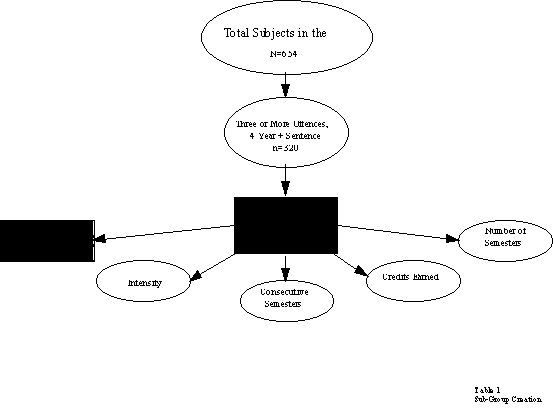
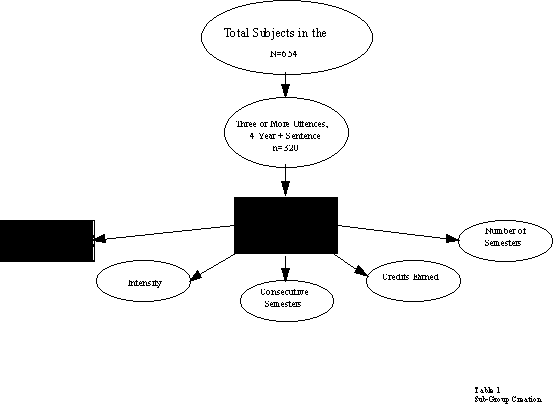
Tables 1 and 2 illustrate how these sub-groups are formed, the example starting with the Total Group, selecting a Working Group using in this case two variables (criminal history and sentence length), and then breaking down the Working Group by a third variable, in this case the program mechanism of academic achievement. For each sub-group, for instance the 75 "average" students with a "C" grade point average, we then calculate the SIR prediction for each member, note their actual performance and arrive at a "relative improvement over SIR" calculation.
The reconviction prediction method allows us to forecast the likely rate of return to prison of any sub-group of prisoners and a comparison with their actual rate of return gives us a measure of the progress of that group. What one soon discovers on examining the data is that the relative progress (the rate of "SIR-beating") varies widely between sub-groups. The key data point is the "relative improvement" a particular sub-group makes over its predicted post-release success. Once SIR-beaters within a sub-group were identified, the next step was to examine why and under what conditions they did so. Thus while it is spectacular to find a group of, say, thirty sex offenders who all succeed after release, this 100% success rate means little if we find that SIR predicted a 96% success rate for this same group. On the other hand, if only half of another group of thirty young "breaking and entering" offenders manages to keep out of prison for three years, this 50% success rate might well be significant if SIR predicted a success rate of only 30%.
The measure of effectiveness used throughout this research has thus
been action-in-the-world, in the case of these prisoner-students "improved"
action in the sense of a reduced rate of recidivism which in turn implies
a greater degree of engagement with the role of citizen rather than criminal.
That said, one must allow nonetheless for the ‘educated criminal’ scenario,
the idea that the liberal arts experience somehow transforms failed criminals
(i.e. prisoners) into successful criminals. While this may be the case
in some instances, the efficiency of the police in tracking previously
convicted felons, the supervision carried out by the parole service, and
the sheer numbers of "successes" in this group of 654 men indicates that
the educational experience is working to change the lives of a significant
number of these men - that maturation of character and civility of purpose
not just cleverness is the result.
Since the University program in the prisons was being shut down by the Correctional Service of Canada at the same time that the SSHRC awarded the research grant to evaluate its effectiveness, we were able to acquire the complete administrative and academic records of the program, including University of Victoria records from 1972-1984 and Simon Fraser University records from 1984 to 1993. As well, we acquired the administrative records kept by university staff kept within each of the four prison sites; Kent, Matsqui, Mountain and William Head Institutions.
This involved a truly massive amount of paper, much of it duplication, still more of it irrelevant to the project. Members of the research team and research staff had to sift through over fifty boxes of paper and organize the material in ways useful to the research, a process that is still going on. The files contained a wealth of information, including records of individual prisoner-students’ involvement with student councils and other program activities, minutes of staff meetings, enrollment data, letters of reference for students, course outlines, and budget information. We were also able to obtain academic transcripts from the two universities for all prisoners who had taken university courses for credit and by reviewing each transcript we were able to identify the students who fit the criteria for inclusion in the group. One research assistant then had to match transcripts with the other ephemera in the administrative files received in order to begin the process of creating a profile for each subject. The files were coded and each subject identified by a number to ensure confidentiality of any personal information.
In the first few months of the project we conducted a series of extensive interviews with former teaching staff from the university program, asking them to tell us if they thought their program had been successful and if so, what had made it successful? From these interviews, and from a general review of the academic literature on program effectiveness, we began to construct a series of hypotheses about why this program might be effective and with whom it might work particularly well.
2. The liberal arts education program will have a particularly powerful impact on students who are new to Canada or who for other reasons feel disengaged from the dominant culture. The acculturation hypothesis.
3. Students who show a steady improvement in their academic performance over the course of their enrollment in the prison education program are likely to be more strongly affected by the experience than those who find the courses easy. The improvers hypothesis.
4. Students with consistently high marks who, as a result of long sentences, are in the program for two or more years and who may as well play a prominent part in the 'politics' and/ or administration of the program, may not, in fact, be greatly affected by the experience because it came too easily for them. The high flyer hypothesis.
5. For men with poor educational backgrounds and from families with little or no experience with higher education, even modest academic success within the prison education program will result in significant growth in self-esteem and improve chances of successful community re- integration after release. The self-esteem hypothesis.
6. The existence of a vibrant 'learning community' as opposed to the mere offering of courses will significantly enhance the impact of the educational experience. The community hypothesis.
7. Because the 'ethos' and/or material conditions of specific prisons changes over time and because the character, vitality and strength of the university program in specific prisons likewise changes over time, certain 'eras' in the history of the UVic/SFU Program will be more effective than others in producing SIR beaters. The historicist hypothesis. (linked closely to the community hypothesis).
8. The university program will be particularly effective at insulating younger first offenders or men with minimal criminal backgrounds and without long periods of prior incarceration from the 'corrosive' effects of immersion in a prisoner sub-culture. They will be better positioned to use the experience and the credits earned in the academic program to resume or begin new careers after release. The Second Chancers hypothesis.
9. A broad acquaintance with the liberal arts will better serve students in the prison education program than a too early concentration in one discipline. Such a concentration may, in fact, be only a means to 'fly high' in an area in which one is particularly adept and thus avoid the challenge of more difficult undertakings. The breadth hypothesis.
10. A biography which predisposes one to desire or need identification with a criminal sub-culture will be resistant to any changes in attitude or life-plan that might logically grow out of participation in an education program. The subculture hypothesis.
11. Both chemical/drug dependency and psychologically-rooted sexual deviance present powerful obstacles to interventions that rest of cognitive, social or ethical foundations. The deviance hypothesis.
12. Men who commit crimes of violence that stem from misplaced notions of power or from identity/self-esteem problems (including rape) or property crimes are most likely to be affected by a liberal arts program that focuses on studying the 'relations' among beings and objects and on the factors that go into attitude formation and decision-making. The cognitive hypothesis.
13. Age or placement in a criminal career path can be crucial in affecting receptivity to changes in attitude or alternative life plans. Multiple offenders in their late 30's and younger first offenders have the best chances at being SIR beaters. The age hypothesis.
Each subject’s file generally consisted of one or more cardboard boxes and took at least two hours to review - often longer. They consisted primarily of information pertaining to the individual’s time in prison and on parole, though they often also contained trial information, police reports, and a variety of other documents. While virtually all the files had sufficient information to complete the SIR calculations, the amount of biographical data varied widely. Typically, a file would contain at least the following:
• record of rule infractions/institutional offences
• parole or transfer applications
• basic biography, including employment record and family background
• parole hearing documents, including application and response
• counsellor and psychologist/psychiatrist reports
• prison employment and education records
• weekly or monthly parole officer reports
• official criminal record sheet from RCMP
• pre-sentence reports with details of family background
• trial transcripts and misc information concerning the offence (e.g. newspaper clippings)
These prison and parole files of each subject were combined with the academic file on each subject obtained from the prison education program and this material was reviewed by a researcher in order to compile information on the fifty-five variables that were related to the hypotheses generated earlier. (See Appendix 3 for data sheet used to compile Variable book) The files from the education program itself included all the standard materials such as courses taken, semesters completed, academic grades and so forth as well as data on prisoner-student participation in extra-curricular affairs such as theatre or student councils, letters of reference from instructors, and correspondence from the students. Given the number of subjects and the sheer bulk of the files - both correctional and academic - this data collection took well over two years to complete.
In reviewing these files we were:
2. filling in a data sheet with specific information required to complete the collection of variables which in turn would enable us to create ‘sub-groups’ of subjects;
3. constructing a set of detailed case studies of about 50 of the subjects.
While this sounds like a fairly straight-forward process, it was filled with difficulty. In addition to coping with the massive amount of paper collected from the two universities, gaining access to the criminal history files was a slow, albeit steady, process. The calculation of the SIR score was more complex than we had first imagined, some of the categories requiring second visits to a file in order to firm up the data. To ensure consistency in calculating the SIR scores, an inter-rater reliability test on a sample of fifteen files was completed early in the research process. Staff from the CSC were consulted concerning queries on specific SIR categories (e.g. defining "escape", scoring juvenile convictions) and their clarifications were circulated to all members of the research team who were working with the files.
Especially problematic were the various means of defining success or failure for some subjects whose parole careers were particularly complex, sometimes consisting of multiple revocations, suspensions, and re-releases but no actual new indictable offence. However, because we were reading the detailed files for each subject it was possible for us to be at once more precise and more flexible concerning ‘success’. To achieve consistency in this area we relied on the judgment of one of the more experienced members of the research team who reviewed the parole records of each subject. Thus a parole revocation for a minor offence that did not lead to new charges might still allow an individual to be a ‘success’ if he went on to warrent expiry and did not return to prison for a new offence. On the other hand, persistent parole difficulties or obvious continued drug use might indicate the individual was better seen as a ‘failure’. As a final check, all the subjects were traced through the RCMP’s CPIC system, ensuring that even minor offences would surface that were either not evident in a parole file or commited after parole supervision was over but still within the three year period following release.
Much work remains to be done, especially
with the wealth of information compiled in the staff interviews and the
case studies, but the first phase of the research is now finished with
complete data sets on 654 subjects who completed at least two university
courses for credit over a minimum period of eight months and who had the
opportunity to complete at least three years on parole without being re-incarcerated
for a new offence. We are able, therefore, to employ the methodology outlined
above in an attempt to discover if in fact the educational experience while
in prison did have a "transformative capacity" and, if so, identify for
whom and why.
The starting point for our analysis of the data was the set of hypotheses generated in discussions with program staff and our review of the literature. These hypotheses were of two types, those which focused on "types" of subjects (e.g. High Flyers, Improvers, Second Chancers, High Risk men attached to the Criminal Subculture) and those which focused on program "mechanisms" (e.g. Engagement, Self-Esteem, Breadth). As will become clear, the more productive path into the data was via the first group of hypotheses, those which focused on the various types or groups of students found within the program, with the mechanisms being particularly useful in identifying sub-groups of "SIR-beaters". Thus no particular mechanism turned out to be a central factor in student success per se, but several different mechanisms were found to be particularly effective with different groups of students - just what the methodology was designed to discover.
Our first task, however, was to establish some baseline data, to get a picture of the Total Group of 654 subjects. Table 3 reviews some of the data collected on the fifty-three variables associated with each subject:
Table 3: Sample Profile (n=654)
Married/Common Law 255 39%
Grade 10 or Below Education: 297 5%
Post-Secondary Education: 142 22%
Juvenile Offender 217 33%
Substance Abuse: 508 78%
Violent Offender: 402 61%
More than 3 Convictions: 438 67%
Table 4: Comparison of Total Group to Canadian Prisoner Profile(1993)
1 to 3 years            27%             25%
3 to 6 years            34%             35%
6 to 10 years           14%             20%
10+ years                       25%             20%
Table 5 compares the SIR rankings of the Total Group of prisoner-students with the national distribution of SIR rankings as of 1990:
Table 5: Comparison of SIR Distribution
SIR Category All Federal Offenders Total Group of 654
A 25% 32%
B 16% 17%
C 17% 17%
D 21% 15%
E 21% 19%
There are some interesting differences between the Total Group and these "snapshots" of the Canadian prisoner profile. In part the differences may stem from the fact that the TotalGroup is a composite drawn from twenty years and hence reflects changing offence and sentencing patterns. As well, there are important regional differentiations within Canada in terms of both offences and sentencing, with the West Coast having a much higher number of drug offenders, a category that tends in the SIR system to be rated as lower risk. That said, there is no doubt a self-selection process at work here as well, with the university program attracting a slightly disproportionate number of prisoners from the lower risk categories, including for instance older prisoners with long sentences who saw the program as a stable place in which to spend several years, sexual offenders who comprised the entire prisoner population at one program site, and younger offenders incarcerated on relatively minor drug offences. For the Total Group this results in a higher than average predicted success (Table 6):
Table 6: Post-Release Success of Total Group (n=654)
SIR Predicted Difference over
Rate
of Success Relative Improvement Actual Rate Prediction
58% 75% 17% 30%
Table 7 breaks down this pattern of success by SIR category, showing the importance of risk levels in measuring success. Thus the almost perfect post-release success of the lowest risk prisoners (SIR category ‘A’) is less impressive statistically (and perhaps politically!) than the more modest successes to be found in the higher risk categories. Thus the greater importance in this research of the percentage of "relative improvement" - relative to risk:
Table 7: Predicted and Actual Rates of Parole/Release Success for Total Group
SIR Category in Category Success Rate Success Rate Difference Improvement
A (4 out of 5 will not re-offend) 214 80% 98% 18% 23%
B (2 out of 3 will not re-offend) 110 66% 82% 16% 24%
C (1 out of 2 will not re-offend) 108 50% 73% 23% 46%
D (2 out of 5 will not re-offend) 98 40% 57% 17% 42%
E (1 out of
3 will not re-offend) 124 33% 45% 12% 36%
Once ranked by the SIR, then, 58% of the Total Group of 654 prisoner-students were predicted to remain out of prison for at least three years after release on parole. Given that the mean SIR prediction for the Canadian federal system is for a post-release success of around 50%, it would appear that the self-selection factor has produced a group with somewhat better odds of rehabilitation or at least successful avoidance of further imprisonment than would have occurred with a random selection of prisoners. However, as shown in Table 4, when the parole files of the 654 men were examined it turned out that 75% of the Total Group were in fact successful in remaining free of incarceration for three years after release, a "difference " of 17% over their SIR prediction or a "relative improvement" over SIR of 30%.
While encouraging, this global figure tells us virtually nothing about the effectiveness of specific mechanisms within the education program nor about the circumstances that might have contributed to individual successes and failures. At this level of analysis the program remains a "black box". In attempting to get a better look inside this box, we examined the Total Group via 15 different variables, including a set of academic variables, community engagement variables, release process variables and biographical variables. In doing so we were looking for sub-groups - for instance, high achievers, intensely engaged students, or younger men - who would improve over their SIR prediction by significantly more than the 30% attained by the group as a whole. The results were predictably unsatisfactory for such a large and amorphous body of subjects, the variables revealing only minor shifts within the Total Group.
Nonetheless, the exercise did provide some important clues about what kinds of variables might produce more significant results when more coherent groups were examined. For instance, within the five academic variables utilized it was clear that "more was better", those sub-groups of students with more credits, more semesters, more consecutive semesters, higher grade point averages, and improving academic performance in every case out-performed their SIR prediction at a higher rate than their peers. While the variations at this level of analysis were not great, they did indicate possibilities. The most impressive of the academic variables was the comparison of academic performance (grades) at the start of courses and the end. Here, as Table 8 shows, the "Improvers Hypothesis" seemed to show considerable promise:
Table 8: Grade Point Comparison in Total Group (n=654)
| Sub-Groups |
|
|
|
Relative Improvement | |
| GPA Declines (146) |
|
|
|
|
|
| GPA Stable (389) |
|
|
|
|
|
| GPA Improves (119) |
|
|
|
|
Remembering that the Total Group improved over its SIR prediction by 30%, this 7% increase on the part of the Improvers indicates that factors such as improved self esteem or self confidence, possible by-products of success at academic work, could be important mechanisms in the education program.* The sub-group of 119 Improvers were generally younger than their peers in the other two sub-groups, were enrolled for more consecutive semesters, had higher grades, and were judged to be more intensely involved in the academic program. They became (see below) a group worthy of further study in order to locate sub-groups within the Improvers who surpassed SIR by even greater margins.
Because the university program made such a point of stressing the "community of learning" established in the various program sites, the level of student engagement with that community was seen as a potentially powerful indicator of success. To explore this "Engagement Hypothesis" with the Total Group, three variables were utilized: the degree of formal involvement in program affairs or activities, the level of "intensity of engagement" as judged by staff and student records, and the degree of participation in extra-curricular activities - in this case the theatre productions associated with the university program. Again, the "more is better" trend continued but without the emergence of any outstanding sub-groups. As Table 9 shows, those students seen to be more intensely engaged with the program did improve slightly on the performance of the Total Group, but perhaps more significant was the dismal showing of the 63 students who were seen to be virtual non-participants in the program.
Table 9: Intensity of Engagement in Total Group (n=654)
| Sub-Groups |
|
|
|
Relative Improvement |
| Below Average (63) |
|
|
|
|
| Average (284) |
|
|
|
|
| Intense (206) |
|
|
|
|
| Very Intense (101) |
|
|
|
|
Once again, some promising potential sub-groups emerge from this look at the Total Group - particularly the 63 under-achievers in terms of engagement. As well, the intensity measure emerges clearly an effective variable for differentiating levels of engagement within the student body, with the relative size of each sub-group being what one might expect in a ‘residential’ and community-oriented adult education program.
When we turned to the process of release from prison and the period on parole, long recognized in the literature as being the most crucial factor in successful re-integration with society, we used four variables: type of release (parole or statutory release); the gap in time between program participation and release; proximity to previous residence; and enrollment in further education. Neither type of release or the gap between program participation and release revealed any significant or very interesting sub-groups, but as the literature suggested proximity of parole destination to previous residence did prove important. Those men released in locations 50 or more kilometers from their previous residence beat their SIR prediction by 39%, compared with only 24% for men who returned to locations closer to their previous home. While this was expected, what was not expected was the number of subjects from the Total Group who completed education or training courses after release and their rate of success (Table 10):
Table 10: Participation in Further Education - Total Group (n=654)
| Sub-Groups |
|
|
|
Relative Improvement |
| No Further Ed. (378) |
|
|
|
|
| Enrolled &Withdrew (60) |
|
|
|
|
| Further Ed. (213) |
|
|
|
|
Once again, some interesting sub-groups emerged from this data. The 60 men who enrolled in further education but withdrew before completing any classes were a much higher risk group according to SIR and their post-release success fell far below that of the Total Group. Staff from the program noted that some students had defaulted on student loans after release and that there was some concern that a minority of men were using the possibility of enrolling in further education after release only as a means of acquiring these loans. On the other hand, the 213 men who did complete courses after release, even though they comprised a lower risk group, still improved on their SIR prediction by an impressive 42%, 12 points higher than the average for the Total Group. As will be shown, for many groups examined in more detail further education after release was to prove a particularly vibrant identifier of successful sub-groups, in most cases at rates much higher even than the 42% for this group.
The strength of this further education variable led the research team to develop a working hypothesis that some kind of non-correctional institutional affiliation after release might be an important contributing factor to successful avoidance of crime and incarceration and that colleges and universities, particularly those in which the former prisoner could locate a supportive person or office were well suited for this role.
Finally, in applying several biographical variables to the Total Group another assumption found in the literature and represented in this research by the Age Hypothesis seemed to be confirmed. Table 11 breaks the Total Group into five sub-groups based on Age at Current Conviction and the hypothesis that SIR beaters will be found at the lower and upper ends of the age spectrum appears to be confirmed.
Table 11: Total Group by Age at Current Conviction (n=654)
| Sub-Groups |
|
|
|
Relative Improvement |
| 16-21 Years (n=65) |
|
|
|
|
| 22-25 Years (n=127) |
|
|
|
|
| 26-30 Years (n=174) |
|
|
|
|
| 31-35 Years (n=132) |
|
|
|
|
| 36+ Years (n=156) |
|
|
|
|
The most encouraging item in this set of data was the success of the highest risk sub-group, the aged 16-21 years group who far surpassed their predicted rate of success. On the other hand, the success of the sub-group of men over 36 was anticipated by SIR, as was the rather dismal performance of men in their twenties. It was clear that as the literature and the program staff anticipated, these age differentials were to be important variables in the examination of sub-sets of the Total Group.
In this first round of anayzing the data by looking at the Total Group three things were accomplished:
2. The search, then, was for sub-groups of the Total Group which stood out in some way and the analysis of the Total Group data provided some important clues as to how such sub- groups might be located by pointing toward specific variables such as further education, academic improvement, intensity of engagement, and age. We were also aware, however, the size of the Total Group made it potentially insensitive to the workings of other variables and that in analyzing smaller cohorts from within that large group we would have to employ a wide range of variables in order to identify the specific program mechanisms and circumstances that contributed to the post-release success of sub-groups of prisoner-students.
3. Finally, the analysis of the data from the Total Group allowed for some differentiations amongst the original set of hypotheses that were driving the research. It was clear, for instance, that the limitations on the data available would make it difficult if not impossible to work effectively with at least four of the hypotheses (breadth, acculturation, self-esteem, and historicist). On the other hand, this first look at the data indicated that four of the original thirteen hypotheses (engagement, improver, second chancer and subculture) might be particularly powerful in identifying successful sub-groups and the mechanisms and circumstances that made them so.
Results: High Risk Offenders and the Education Program
This first set of Working Groups was constructed in response to a broad policy issue centering on those "incorrigibles", "recidivists", and "career criminals" who embody the major problem for corrections, the criminal justice system, for society and indeed for themselves. They leave our prisons daily, live out their criminal careers with remarkable consistency, recycle themselves through our increasingly inhumane prisons, and contribute mightily to endless social policy crises. While perhaps too chagrined to believe anymore in wholesale or even significant transformations of such selves, commonsense and persistent statistics do tell us that within this criminal cohort there are individuals and sub-groups of individuals who can be persuaded to alter these criminal careers, sometimes only in terms of longer intervals between incarcerations or lower levels of offence seriousness and at other times by total abstention from crime. Since it appears that this particular group of criminals accounts for a high percentage of crimes committed, it may be more cost effective and socially worthwhile to allocate resources to achieve even modest successes here rather than more spectacular successes possible with lower risk prisoners. How might a prolonged period of education break into this cycle of deprivation and criminality?*
Given the nature of the methodology
being used in the research, it seemed appropriate to start the search for
successful sub-groups by examining groups of prisoner-students who would
most likely be at a high risk to re-offend. For the past several years
within corrections the focus of rehabilitation efforts has been on high
risk offenders, the reasoning being that they are more likely than low-risk
offenders to respond to intensive treatment, their needs are greater and
that, indeed, treatment could do actual harm to the post-release prospects
of low-risk offenders. (Andrews, et.al. 1986; 1990; Webster, 1994) The
public as well has an interest in knowing whether correctional programs
are effective in preventing a return to crime.
In creating the working group of "hard cases" it was hypothesized that selecting for "delinquent" school "drop-outs" from "broken homes" would constitute a group of prisoners more hardened in their commitment to a criminal lifestyle, more estranged from society and hence more likely to re-offend. With these three criteria we arrived at a Working Group of 118 men with SIR predicting that only 42% of them would not re-offend (compared to the 58% for the Total Group). The criminal profile of the group was as imagined, with 100 of the 118 having had three or more convictions in their criminal careers, 51 described as being opiate addicts, 81 having violence in their offence pattern, and well over half being held exclusively in maximum or high medium security while in prison and denied any form of early release on parole.
And what of the effect of educational experience on breaking this sorry cycle? Interestingly, our discussions with the educational practitioners had not singled out a sub-group of this ilk for particular mention. "Hard Cases" were not seen, in the general course of program activities, as "special cases". This is borne out in the data. Like the Total Group which showed a "relative improvement" over its SIR prediction of 30%, the "Hard Cases" as a group showed a relative improvement of 31% (55% actual success rate compared to 42% predicted success rate). Education, then, seems to succeed for this group - but in much the same measure as the broad run of prisoners who enter the program. In trying to fathom how education might (or might not) penetrate these deeper-seated cycles of criminality, we had once again to look further inside the black box for any sub-groups within the "Hard Cases" whose relative improvement over SIR was significantly better than 31%, or significantly worse.
Turning first to the variety of measures of levels or intensity of engagement or involvement with the university program, no differences were found in the post-release success of those students deemed to be actively engaged compared with those less engaged. Likewise, men who worked in the school library or were employed in jobs such as clerks or tutors or who were members of the student council (23% of the total) - all indications of a more formal involvement in the education program - fared no better after release than their peers who merely took courses. Given the paucity of previous educational experiences, indeed the presumption that such experiences may have been decidedly unpleasant, it is perhaps not surprising that this group of men kept a relatively low and cautious profile within the university program.
More traditional academic variables revealed greater variation, but still very much as a mirror of the pattern of success and failure of the Total Group. As might be expected, those men who completed more courses did better than those who completed only a few. Thus the 31 men in the group of 118 who completed more than 30 credits (one full year of university study) showed a relative improvement over their SIR prediction of 42% while the 36 men who completed less than 10 credits showed a relative improvement of only 18%, well below the average for the group as a whole. Actual academic performance within the program, however, revealed a more complex picture. The 43 men who received the highest grades (in the "A" to "B" range) achieved only a 16% relative improvement over SIR while than their peers whose grade point averages were in the "C" and "D" range bested SIR by 41%, exactly the opposite of what might either expect or hope for. Such a result might be explained as a strong echo of the "High Flyer" and "Improver" hypotheses - the high grades coming too easy for some while for others even average grades are in fact a significant personal accomplishment. Looked at in terms of the movement of academic achievement over time, the case for the "hard slog" is confirmed for "hard cases", with members of this working group whose grades improved beating SIR by 38% (from 43% predicted success to 59% actual success), while those whose grades declined bested SIR by only 11%.
Since the "Hard Cases" remained after
this initial analysis a distinctly gray box, we looked next to processes
outside of attainment and achievement per se to search for pockets
of success within the working group. Several other features showed more
promise than the traditional academic benchmarks in differentiating the
Hard Cases and thereby offered some insight into programming policies which
might be important in dealing with this type of offender. While there were
indications of the importance of age in the analysis of the Total Group
and one of the hypotheses involved younger and older students possibly
doing better, the role of age emerged in full view with the Hard Cases.
Table 12 reveals a remarkably clear inverted bell curve, with once again
men in their twenties being strong losers in terms of post-release success:
Table 12: Hard Cases by Age at Current Conviction (n=118)
| Sub-Groups |
|
|
|
Relative Improvement |
| 16-21 years (32) |
|
|
|
|
| 22-25 years (29) |
|
|
|
|
| 26-30 years (34) |
|
|
|
|
| 31-35 years (14) |
|
|
|
|
| 36+ years (9) |
|
|
|
|
The 59% improvement over the SIR prediction for the 16-21 year-old sub-group provided a strong incentive to examine further the Second-Chancer hypothesis, with education possibly being a means to shift this group away from the fate that seemed to await them as they moved into their twenties. And, of course, the impressive accuracy of the SIR in relation to the twenty to thirty year old subjects made a deeper look into that category a top priority as well.
Another variable that proved significant
with this group of Hard Cases centres on the management of release and
what happens after release. Since the education program had as one of its
objectives encouraging the prisoner-students to re-integrate with society
as citizens rather than remain on the edge as outlaws, staff in the program
hypothesized that men released into the community as soon as possible after
completing their courses would do better than men held in prison for extended
periods after withdrawing from or completing the education program. To
test this hypothesis the Total Group of 654 men was analyzed on the basis
of the gap between last enrollment in courses and release date. As Table
13 indicates, the results somewhat opposed expectations, with men released
within the same year of completing their coursework doing the worst relative
to their SIR prediction, and those held in prison for five or more years
following coursework doing marginally better than their peers released
earlier.
Table 13:Gap between Prison Education Program and Release: Total Group (n=654)
| Sub-Groups |
|
|
|
Relative Improvement |
| one year (169) |
|
|
|
|
| two years (199) |
|
|
|
|
| 3-4 Years (165) |
|
|
|
|
| 5 or More (121) |
|
|
|
|
While interesting, we find once again
that in working with the Total Group the differentiations amongst sub-groups
are seldom decisive. When the same analysis is done for the group of 118
Hard Cases, the results as seen in Table 14 are much more striking:
Table 14: Gap between Prison Education Program and Release: Hard Cases (n=118)
| Sub-Groups |
|
|
|
Relative Improvement |
| One Year (29) |
|
|
|
|
| Two Years (32) |
|
|
|
|
| Three-Four Years (31) |
|
|
|
|
| Five or More (26) |
|
|
|
|
While a gap between program and release of two years and beyond seems to make little difference for the rehabilitation of ‘Hard Cases’, it apparently can be disastrous if men from this group are released immediately upon completing courses. What could account for this counter-intuitive pattern? Upon close examination we find that the group of 29 men who were released within the same year of taking courses contains a much higher percentage of mandatory supervision/sentence expiry cases (72%) than the total group of Hard Cases (56%). It would appear that most of these high risk (according to SIR) Hard Case prisoners tended to serve their full sentence within medium and maximum security institutions where the education program operated, rather than being "cascaded" through minimum security work camps, halfway houses and then full parole. In some cases they were simply held in the prison until their mandatory supervision date, but in most cases they were persistent failures on institutional passes and day paroles. The "system", via first-hand staff experience, had concurred with SIR in identifying this sub-group of 29 individuals as particularly dangerous and likely to re-offend. And the system was correct, 69% of this group - 20 of the 29 - did re-offend within three years of their release. The failure of the university program to counteract this particular set of massively loaded dice is, of course, instructive. Inmates spent only a fraction of their imprisonment on programs and an overall regime of sentence planning is thus vital to the success of any program.
The proof of this is again demonstrated in our data. Having identified a sub-group of "Hard Case" losers, it follows that the group will contain a phalanx of winners. And since the place of the program part within the rehabilitative whole seems vital, we might look again to the management of the post-release period for possible answers. As described earlier, following release a substantial number (33%) of the total cohort of prisoner students made the transition - albeit often for only a short time - to educational institutions in the community. Our expectation was that such a transition would have a beneficial impact on post- release success. In fact, this turned out to be the case, the 213 subjects who did manage to continue with some kind of education endeavour after release improved on the SIR predicted performance by 45% - one of the most dramatic indicators to emerge from the overall research data. Table 15 shows the impact of Further Education for this group of Hard Cases.
Table 15: Hard Cases and Further Education (n-118)
| Sub-Groups |
|
|
|
Relative Improvement |
| Further Education (26) |
|
|
|
|
| No Further Ed. (83) |
|
|
|
|
| Withdrew from Ed. (9) |
|
|
|
|
Our point in this instance is to
highlight the importance of this mechanism with this most fragile group
of subjects. While as might be expected, fewer of our Hard Cases (22%)
managed to make the transition to post-release education, but those who
did scored a triumphant 62% improvement over what SIR predicted for them.
To focus in further on the higher risk cases in our group of subjects, we next selected a group based on the two most obvious variables. First because both the literature in criminology and our work with the Total Group indicated that men in their twenties were highly likely to recidivate, we selected all men in the program who were in their twenties when they first enrolled in the education program. This gave us a list of 327 subjects out of the 654. We then selected from that list only those who fell within the SIR Scales two highest risk categories, "D" and "E", which gave us a final Working Group of 119 subjects, a group we named the "Worst Cases". They were a dismal lot, 78% having a grade 10 or less education, 62% with a record of juvenile incarcerations, 98% with three or more adult convictions, 77% currently incarcerated for robbery, theft or B&E, and 70% with violence on their criminal records.*
As one would expect, the SIR was pessimistic about this group, predicting that only 36% would manage to be successful after release. In fact, the group as a whole did only modestly better, managing a success rate of 45% for a 27% relative improvement over the prediction - encouraging, but slightly below the average for the Total Group and hardly numbers to trumpet too loudly. But in order to learn something about the mechanisms that promoted effectiveness we were after sub-groups within the 119 member working group which seemed to benefit in a more substantive way from their educational experience and demonstrated that by doing better than the 27% relative improvement over SIR managed by the Working Group as a whole. Given the group, the task would not be easy and the numbers likely less than spectacular, but any improvements here would be worth more than easier successes with low risk groups.
We first turned to a series of objective
variables related to the academic performance of the students in the program.
We hoped, for instance, to find that doing well academically increased
the odds of beating SIR. The initial results were not all that encouraging.
The number of university credits earned did not prove useful since men
who earned less than 15 credits (about one full-time semester of work or
five courses) did about the same in terms of SIR as did those who completed
more than 30 credits. Likewise the number of semesters completed failed
to yield any really interesting sub-groups, though the 40 subjects finishing
three to four semesters (12-16 months) did improve over SIR by 36%. Actual
academic performance proved more interesting. As Table 16 illustrates,
the men who received higher marks in their courses did substantially better
than poorer students and much better than the Working Group’s.
Table 16 - Worst Cases Grade Point Average (n=119)
| Sub-Groups |
|
|
|
Relative Improvement |
| A/B GPA (n=49) |
|
|
|
|
| C/D GPA (n=70) |
|
|
|
|
While a 53% success rate on parole is by no means outstanding given average success rates in North America of @50%, for this group of high risk but high achieving young men the relative improvement over their dismal prediction rate is quite definitely outstanding. In this sub-group of 49 individuals, only 18 were supposed to remain out of prison for three years after release. Instead 26 of them remained free of prison after release.
As one might expect, men who performed better on the various academic variables ended up with the higher grade point averages. The 49 A/B students enrolled in more semesters, earned more credits, took part in more extra-curricular activities and they continued their education after release at a much higher rate (43% compared to 16%) than their peers who earned more average marks. In terms of prior education the differences between the sub-groups were minimal, with 76% of the above average students entering the program with a grade 10 or less education compared to 80% for the other sub-group.
In another analysis of academic achievement we found that men whose grade point average improved over their time in the program (n=14 only) in turn improved over their SIR prediction by 36% while the 29 men whose grades declined managed only an 18% improvement on SIR, well below the average for the group. It would appear from this data that for this Worst Case group academic performance is an important component of post-release success. One could view this assumption in two ways. On the one hand it might be argued that amongst high risk subjects, high levels of academic achievement are a kind of self-selection indicator, identifying men who are in fact more likely to succeed than their pre-prison background might indicate. On the other hand, one could argue on the basis of this data that greater efforts should be made to promote high levels of academic achievement amongst high risk groups in order to enhance their chances of success after release. The former approach presumes a fundamentally passive role for education, it being merely an indicator, while the latter presumes a more active role with education being more in the nature of a cause than a reflection. Deciding between these two approaches would mean entering a number of black boxes for which mere data does not have the key. At this early point in the analysis we can only conclude that something is going on within this Working Group to cause important differences between sub-groups and that the quality of participation in the education program is the differentiating factor.
Shifting from the academic core to a more subjective set of variables associated with participation in various activities within and adjacent to the education program, we looked first at participation in theatre productions sponsored by the university. As in so many prison theatre programs, for many prisoners the stage experience was perceived to be decisive, whether as therapy via role playing, as esteem building public success or a means of under- standing the benefits to be derived from cooperative and social activity. Hard data in support of these theories is difficult to come by. For this group of high risk prisoners, however, the evidence seems clear. As with high levels of academic achievement, Table 17 shows that participation in the theatre program was highly correlated with post release success.
Table 17 - Worst Cases and Theatre Participation (n=119)
| Sub-Groups |
|
|
|
Relative Improvement |
| Yes Theatre (n=29) |
|
|
|
|
| No theatre (n=90) |
|
|
|
|
Who are these 29 men who improve so dramatically over their SIR prediction? On virtually every academic variable they out-perform the other 90 members of the Working Group. They take more courses, are in the program longer and achieve higher marks. They are, admittedly, slightly better educated to begin with only 72% having grade 10 or less compared to 80% for the others but this may be more than offset by the fact that there are more robbers and thieves in the group (86% compared to 72% for the others) and this is the highest risk offence group by far.
Moving from theatre to other examples of participation in program affairs, we turned to the intensity measure based on staff perceptions and documentary evidence it was discovered that the twelve men judged to be "very intensely engaged" with the program had a relative improvement over SIR of 86%, but the number of subjects seemed too small to be more than an indicator of the potential importance of this kind of engagement. Using another measure of engagement, there was a substantial 42% improvement over SIR for the sub-group of 30 men who participated in some formal way in program affairs, through such mechanisms as student councils, tutoring, or employment.
In reviewing the impact of these education program mechanisms, then, we may conclude that given a group of prisoner-students with biographies, ages and criminal records that place them in the high risk to recidivate category, there are a number of things an education program could do that might improve their chances of success. Most of these correlate highly with common sense or the intuitions common to most educators. Ensuring that the education program values and encourages academic achievement, works to facilitate improvement in academic performance, provides opportunity for extra-curricular activities, and creates a governance structure that provides for student participation will provide at atmosphere within which even the highest risk prisoner can maximize his opportunity to beat the odds and prove a success after release.
In the case of prisons there is, of course, another set of mechanisms that can be central to eventual success or failure, namely the elaborate procedures and decisions associated with release from prison and integration with community. While not program mechanisms, they nonetheless can potentially have a dramatic impact on the strength and durability of any process of change or development initiated during the period of incarceration. Our next set of analyses, therefore, sought out different sub- groups based on their experience of different release and integrative processes.
Perhaps the most intriguing variable within this set of analyses created sub-groups around the gap in time between the final enrollment in the prison education program and the time of release on parole or mandatory supervision. This gap is affected by a number of factors besides the program preferences of the individual student. The CSC, for instance, tends to cascade inmates from higher to lower security institutions as a means of facilitating integration into the community and since there was seldom if ever a post-secondary program at the minimum security settings (logging camps or very small institutions) students often spent a year or more still incarcerated but without access to education. This cascading policy worked best for low to medium risk offenders, with higher risk individuals often not eligible for a minimum security setting.
Our intuition told us that the smaller the gap between program and release the better, but as seen with the Hard Cases group this proved not to be the case and Table 18 shows, these high risk Worst Cases were no exception to the trend:
Table 18 - Worst Cases - Gap between Program and Release (n=119)
| Sub-Groups |
|
|
|
Relative Improvement |
| 0-1 year (n=37) |
|
|
|
|
| 2 years (n=34) |
|
|
|
|
| 3 years (n=22) |
|
|
|
|
| 4+ years (n=26) |
|
|
|
|
This is particularly useful data because the sub- groups are fairly evenly distributed and the trend is very clear as are the potential contributions to policy. The first sub-group’s disastrous performance on parole says something about the importance of the cascading principle and the importance of some kind of more gradual approach to release. Within this sub-group of 37 men, 25 failed to best their SIR prediction. What can we say about them? Unfortunately, as before the black box clouds over rather quickly when we attempt such a micro-analysis. As a group they did have a marginally lower pre-prison educational background, they completed fewer semesters, earned fewer credits, and were less formally involved in the program than the other 94 members of the working group. Also, as in the case of the non-theatre participants, there was a higher concentration of robbers and thieves (92% compared to 76%) in this first sub-group than in the remainder of the working group.
The performance of the other three sub-groups indicates that the impact of the education program, presuming it has any impact at all, can easily survive two or three years of various forms of incarceration but beyond that the impact may wear thin. Education is not, of course, akin to a vaccination that can easily be prolonged by booster shots. Neither is it akin to steroids that wear off quickly if not constantly imbibed. If it has in fact taken hold within an individual student it may indeed take time to have an impact, time for that individual to reflect on possible changes and to try out in familiar settings the set of social and intellectual tools that are inherent in any educational advancement. This data serves to reinforce, then, the long held belief that one of the central factors in the reduction of recidivism is the nature of the transition from prison to community.
To examine this issue further we looked at two additional release-oriented variables, constructing sub-groups around type of release and for those who were paroled to a halfway house and those who were not. It was assumed that the subjects who gained some kind of early release via parole would do better than those held in prison until their mandatory or statutory release date (after two-thirds of sentence completed) and that those paroled to halfway houses would do better than those released directly into the community. In neither case did this occur. Due to the high risk nature of this group, only 38 of the 119 were granted either day or full parole and they beat their SIR prediction by only 19% compared to 31% for the 812 men held until mandatory supervision. Likewise, the 39 subjects assigned to halfway houses on release did worse than those not sent to halfway houses. We are not sure what this data might mean, though it certainly calls into question the efficacy of the various correctional service theories about supervision after release.
By far the most outstanding finding with this working group concerned the fate of those men who chose to continue with their education after release. This variable surfaced in our examination of the Total Group, but not to the degree achieved by the 32 high risk individuals in this group:
Table 19 - Worst Cases and Further Education After Release (n=119)
| Sub-Groups |
|
|
|
Relative Improvement |
| Further Ed. (n=32) |
|
|
|
|
| No Further Ed. (n=86) |
|
|
|
|
Once again, as might be expected
the men who went on to some kind of post-release education and improved
so dramatically over their SIR prediction were better students in terms
of the academic variables discussed earlier, were formally involved in
the program at a higher rate, and contained a lower percentage of men convicted
of robbery or theft. The success of this sub-group hints at the importance
of putting emphasis on academic achievement within prison education programs
and as well the need for such programs to be highly participative, even
democratic, in structure in order to involve as many students as possible
in the actual administration of the program. Were this particular program,
for instance, still in operation the program administrators might reasonably
aim for high risk men in their twenties to: (a) place a higher cultural
value on academic achievement within the program; (b) expand opportunities
for student involvement or participation in program affairs; and (c) make
greater efforts to encourage continuing with education while on parole
in order to move even a few individuals from the larger sub-group to the
smaller.
As if the Hard and Worst Cases were not bad enough, we decided to dig deeper into the Total Group to find an even greater exemplar of the high risk offender, settling eventually on 160 men under the age of thirty whose last conviction had been for robbery or breaking and entering. This turned out to be the most intractable group yet, with SIR predicting a success rate of only 44% and the group managing only a 10% improvement on that with only 49% of the Young Robbers remaining free of prison for three years. These twenty-something robbers and thieves seemed immune to virtually any academic mechanism, indeed often showing perverse results such as sub-groups earning fewer credits and achieving lower grades having greater post-release success than their more academically successful peers. Fortunately the responses to the academic variables were chaotic enough that it was not possible to conclude that the education program had actually done harm. There were, for instance, some encouraging results in that the 33 men whose academic performance improved during their time in the program bested their SIR prediction by 18% and the 72 men deemed to be intensely involved with the program outperformed SIR by 13%. Still, compared to other sub-groups, these percentages were modest.
The Young Robbers proved perverse on other sets of measures as well. Contrary to most other groups, non-participants in the theatre programs did better than participants (12% improvement over SIR compared to 4%). Men from the group released on parole to halfway houses actually under-performed SIR by a -4% compared to a 22% relative improvement for men released directly into the community and parolees in general did considerably worse than those released on mandatory supervision. The SIR-beaters in the group only really emerge with the calculation for further education after release:
Table 20: Young Robbers and Further Education (n=160)
| Sub-Groups |
|
|
|
Relative Improvement |
| No Further Ed (95) |
|
|
|
|
| withdrew (21) |
|
|
|
|
| Further Ed (43) |
|
|
|
|
The 43 men in this sub-group are
interesting in particular because 31 of them are high school drop-outs,
two-thirds of them completing only grade 10 or less. Of these drop-outs,
21 or two-thirds end up ‘beating’ SIR. Something within their experience
of the education program had sufficient impact to persuade these exceedingly
difficult to reach young men to alter, at least temporarily, a life plan
that seemed firmly set on further criminal activity. Unfortunately, while
the box may no longer be black it remains largely opaque, the individuality
driving the choice of mechanisms and circumstances making it impossible
to find a simple answer to ‘what worked’ and ‘why’. As we will see with
other promising sub-groups, it is the self- selection by students from
amongst a variety of mechanisms and circumstances that accounts for successful
outcomes in education - not the isolation of a single factor.
In a last attempt to address the issue of education’s effectiveness in dealing with high risk and/or dangerous offenders we selected a group based on men convicted of a violent offence for which they received a sentence of at least four years. In the Total Group there were 216 men convicted of violent offences - homicide, attempted murder, manslaughter, sexual offences and "other" violent offences - but only 157 received a sentence of four or more years. While the general public may consider violent offenders to be high risk individuals, SIR generally does not agree, predicting that 63% of the group of 157 would not re-offend after release (five percentage points higher than the average for the Total Group). In fact, 89% of the group were successful after release, for a relative improvement over SIR of 42%. Given that rate of success, it seemed unlikely that we would find very many sub-groups that would dramatically out-perform the improvement of the group as a whole.
In examining the group in relation to the core academic variables the Violent Offenders responded in much the way that the Total Group had - more was consistently better. The sub- group that completed five or more semesters improved over SIR by 50% and most of those men took five or more semesters consecutively - a reflection no doubt of their longer sentences. As Table 21 illustrates because this sub-group and the sub-group of men who completed three to four semesters were rated a lower risk than the group that completed only two semesters, to achieve such a high relative improvement meant that 94% of both sub-groups had to be successful after release.
Table 21: Violent Offenders by Number of Semesters (n=157)
| Sub-Groups |
|
|
|
Relative Improvement |
| two semesters (37) |
|
|
|
|
| 3-4 semesters (49) |
|
|
|
|
| 5+ semesters (71) |
|
|
|
|
Predictably the same pattern held for the number of credits earned. On the other hand, the differences between the sub-groups based on academic achievement were not nearly as pronounced. Compared to the groups examined earlier, the Violent Offenders were generally older (40 of the group being over age 36 at the time of incarceration) and one could speculate that either: (a) high grades were more difficult to achieve given the greater adjustment required to return to school or; (b) grades were simply not as important to this group as they might be to a younger group. The Improvement hypothesis did hold up in that the sub-group of 28 men whose grades improved did enjoy a higher relative improvement over their SIR prediction, but it was only a modest lead (48% to 42%) over a similar sized sub-group whose grades declined.
In the area of engagement with the education program the Violent Offenders once more performed much as one might expect. Because of their longer sentences and perhaps as well due to the "prestige" or "status" their criminal record may have entailed, this group participated in program affairs at a greater rate than many other groups. Of the 157 men, 53 were in a sub-group of students "formally involved" in program affairs. Virtually all (96%) of this sub-group were successful after release. Measured in a different way, Table 22 shows the degree to which for some members of this group the university program was clearly their program:
Table 22: Violent Offenders by Intensity of Engagement (n=157)
| Sub-Groups |
|
|
|
Relative Improvement |
| Very Intense (39) |
|
|
|
|
| Intense (37) |
|
|
|
|
| Average (67) |
|
|
|
|
| Below Average (14) |
|
|
|
|
Given the varied means by which one could choose to become "intensely" engaged with the university program (e.g. courses, theatre, employment, extra-curricular activities) and the length of time many men from this group would have had to exercise those choices, high degrees of engagement are not unusual. What the data does suggest, however, is that within this group of Violent Offenders there was an impulse to engage with some kind of activity while imprisoned -whether school or weight-lifting - and that given this need the university program provided the requisite number of engagement options within which the mechanisms associated with improved post-release chances could operate. As is clear in the discussion of other groups of students and with the small sub-group of "disengaged" students here, not all of the men involved with the program felt this need and in many cases gained access to the program’s mechanisms by other means.
As with the first two sets of variables,
the Violent Offenders performed more or less as expected in terms of variables
associated with release. Unlike the Young Robbers, the sub-group paroled
to halfway houses improved in SIR at a much higher rate than those who
were not (48% to 33%) and those who were granted parole or conditional
release had more success than those who were not (47% to 34%). A higher
percentage of the Violent Offenders (37%) continued with some form of education
after release than was the case with the other groups reviewed above and
while that sub-group improved on its SIR prediction by 51%, the shift was
inevitably not as impressive in terms of percentage as the gains made by
the other more high-risk groups.
Results: High Flyers and the Education Program
The hypothesis for this group emerged during extended discussions with the teaching staff of the prison education program. They were unanimous in identifying a group of prisoner- students who were generally excellent students for whom academic achievement came easily, were key people in the politics and the administration of the education program, were personable and well-liked by staff and other prisoners alike, and had extensive criminal backgrounds. These "favorite students", high achievers in the classroom and in the public relations "face" of the program, were seen by some as possible spectacular failures after release - similar in a way to Norman Mailer’s experience with Jack Henry Abbott. When the staff talked about their experiences in and memories of the prison education program, these students were most often the reference point and in many cases they remained in contact with individuals of this type long after their teaching in the prison program ended.
To examine this group the research team developed the "High Flyer Hypothesis": "Students with consistently high marks who, as a result of long sentences, are in the program for two or more years and who may well play a prominent part in the politics and/or administration of the program may not, in fact, be greatly affected by the experience because it came too easily for them." In the recollections of the program staff these high flyers were very individualistic and complex, making the construction of a working group faithful to the concept a difficult task. To capture the type we selected variables that combined a steady record of high marks (an "A-B" grade point average and enrollment in a minimum of three consecutive semesters), an active role in program affairs (subjects judged to be intensely or very intensely engaged with the education program coupled with evidence of some formal role), and a serious criminal record (a current sentence of at least five years). This complex set of variables gave us 99 high flying subjects rated as somewhat lower recidivism risks by SIR than the Total Group (64% predicted success compared to 58%) with a resulting average relative improvement over SIR of only 28% (compared to 30% for the Total roup). Since the differences between the High Flyers and the Total Group were minimal in terms of relative improvement over the SIR prediction, once again the devil would lie in the sub-group details.
As found with other groups, age was a decisive indicator of relative improvement over the SIR prediction, with the trend continuing of younger men (17-21 years) doing well, men in their 20’s doing poorly followed by improvement in subsequent age ranges. Indeed, the U-shaped curve was almost identical with that of the Total Group as shown in Table 11 and the Hard Cases in Table 12. Likewise, the offence type was highly predictive, with property offenders barely meeting their SIR prediction while all 40 violent offenders within the High Flyer working group were successful after release:
Table 23: High Flyers and Type of Offence (n=99)
| Sub-Groups |
|
|
|
Relative Improvement |
| Violent Off. (n=40) |
|
|
|
|
| Robbery/Other (n=29) |
|
|
|
|
| Drug Offences (n=30) |
|
|
|
|
As can be seen from Table 23 and confirmed earlier in the discussion of "Young Robbers", property offenders are the primary problem. In the Total Group they also do poorly, but still show a relative improvement over their SIR prediction of 23%. Within the High Flyer working group, then, there is a particularly difficult sub-group of "robbers and thieves" who are in turn part of a larger cohort of low-success subjects. Looking for a moment further inside this particular black box at this sub-group of robbers and thieves, we find an even clearer picture:
Table 24: High Flyer Robbers by Age (n=29)
| Sub-Groups |
|
|
|
Relative Improvement |
| Under Age 30 (n=14) |
|
|
|
|
| 30 or Older (n=15) |
|
|
|
|
As can be seen in Table 24, half of this sub-sub-group of High Flyer robbers and thieves is under age 30, thereby combining two of the best predictors of post-release difficulty. To seal the case for these 14 individuals being the main source of difficulty for this working group, we also find that 13 of the 14 were abusers of opiates or other drugs. Education as an intervention aimed at even a minimal process of change or development, let alone transformation, has no observable impact on this sub sub-group despite the fact that they are admirably successful students. Our methodology only allows us to identify them in terms of the conjunction of half-a-dozen variables - they are highly intelligent and capable of leadership in their field, but at a stage in life conducive to building a career in property crime to support an addiction. Whether such a pathway is the result of individual psychopathies as some would suggest (Hare, 1993), or biological drives related to testosterone levels, or the social drives related to criminal careers, this research provides no answers. But it does serve to alert teachers and others to the presence in their programs of a particularly intransigent group of students who appear on the surface to be quite the opposite.
Our practitioner’s High Flyer hypothesis,
then, turned out to be due to the presence of particularly recalcitrant
sub sub-group of younger addicts, robbers and thieves. Removing them from
the working group leaves the remainder with a relative improvement of 38%.
It is not the case, then, that teachers or program administrators
should be necessarily suspicious of excellent students in prison or other
adult programs. The High Flyer group contained a disproportionate share
of men with some previous post-secondary experience (27%) and the large
sub-group (n=46) that continued with education following release did quite
well, improving on their SIR prediction by 37%. They should instead restrain
their Calvinist impulse to credit only hard slogging and appreciate the
pleasures of working with the very bright and energetic. But, within this
group lurk some students who epitomize the fears that generated the hypothesis
and whose almost inevitable failures in society can have catastrophic consequences
if a program or a sponsor relies too heavily on their success.
Results: The "Second Chancers" and Education
We knew that within the Total Group there were a significant number of younger men who had dropped out of secondary school as a result of early delinquency and dissatisfaction with education but who up to this point had only a limited commitment to a criminal life style. Their poor educational backgrounds, criminal records and the associations acquired in prison however put them seriously at-risk in terms of future criminal activity and, of course, their age and poor education meant the SIR considered them to be headed that way. On the other hand, their lack of a real immersion into a criminal life style meant that if the right opportunities were present they could possibly use their term of imprisonment to acquire the means for a ‘second chance’ at a ‘straight’ life. In generating the "Second Chancer" hypothesis, the staff of the university program were suggesting that post-secondary education might offer such an opportunity.
To identify a sub-group of Second Chancers we selected a group of 110 men who were aged 17-28 when they entered prison, had a relatively light sentence of less than six years and who had dropped out of secondary school at grade 11 or before. Inevitably, this turned out to be a high-risk group, with the SIR predicting that 55% would return to prison within three years of release (compared with 42% for the Total Group), thus reinforcing our assessment of this being an ‘at-risk’ group. In fact, 45% of these 110 men recidivated, a 22% improvement on the SIR prediction, but well below the success of the Total Group in outdoing SIR predictions. As with the earlier groups, we quickly moved inside this sub-group and find out who was doing well, what kinds of mechanisms might be responsible, and what kinds of circumstances were important in supporting those mechanisms.
In starting with the academic variables utilized with the earlier groups, the Second Chancers consistently confirmed the conclusion that ‘more is better’, a conclusion reached tentatively in examining the Total Group. Table 25 shows this in terms of the number of semesters completed and the same pattern holds for credits earned and semesters taken consecutively.
Table 25: Second Chancers and Number of Semesters Completed (n=110)
| Sub-Groups |
|
|
|
Relative Improvement |
| Two semesters (n=51) |
|
|
|
|
| Three semesters (n=29) |
|
|
|
|
| Four+ semesters (n=30) |
|
|
|
|
Once again, the negative results are as interesting as the positive. This data confirms that education is no ‘quick fix’ and that even eight months of schooling may have little or no impact on some individuals. The clear progression of the numbers gives credence as well to the argument that the education program is playing a decisive role in the post-release decisions of these men. There are no substantive differences between these three sub-groups, either in terms of age, background, addictions, or criminal records. They each contain roughly the same percentage of high risk individuals as determined by the SIR, so we cannot conclude that the more successful groups are made up of individuals "more likely to succeed". In the sub-group that completed four more semesters in the program, 20 men instead of the predicted 13 managed to remain free of incarceration after release - seven individuals making choices that would appear to have remained unlikely had they been members of the first sub-group.
To fine tune our "more is better" hypothesis we looked at the same data focusing on sub-groups who enrolled in the program in "consecutive" semesters, the hypothesis being that the impact or effect of the educational program would be greater with those students who took more semesters in sequence as opposed to a "dropping in/dropping out" pattern which can be quite common with adult learners whether in prison or the community. Once again (Table 26) the hypothesis was confirmed, with a sub-group of 26 individuals who enrolled in four or more semesters in a row besting their SIR prediction by 54%, while those who managed only a maximum of two semesters in a row showed only a 9% improvement over their predicted outcome.
Table 26: Second Chancers by Consecutive Semesters (n=110)
| Sub-Groups |
|
|
|
Relative Improvement |
| 2 consecutive sem (57) |
|
|
|
|
| 3 consecutive sem (27) |
|
|
|
|
| 4+ con. sem (26) |
|
|
|
|
Interestingly, there is an important increase in SIR-beating for the first sub-group compared to Table 23. While both sub-groups completed only two semesters of academic work, completing them consecutively does result in an increase in impact - important evidence that we were on the right track in insisting that tenure and consistency were important mechanisms in accounting for the effectiveness of this educational program. As one might expect, accumulating more credits was associated with doing well at roughly the same rate as semesters completed, the two variables being obviously inter-connected and many of the same individuals being in both sub-groups. Thus of the 25 students who earned more than 30 credits (i.e. completed more than one year of university), 20 were also members of the sub-groups which completed three or more semesters.
One could conclude from this data that for ‘at-risk’ adult learners who are re-entering education it is important that they be encouraged to stay with it for more than one or two terms, make every effort to enroll in sequence and finish their courses. Such a course of action, however, is no more a ‘magic bullet’ than is education alone, since the data from this research shows other variables to be equally significant in identifying successful sub-groups. One can turn, for instance, to what for many is the ultimate standard of success, academic achievement as measured by grade point averages. Here once again the progression is quite as might be imagined:
Table 27: Second Chancers by Grade Point Average (n=110)
| Sub-Groups |
|
|
|
Relative Improvement |
| D Average (n=20) |
|
|
|
|
| C Average (n=46) |
|
|
|
|
| A/B Average (n=44) |
|
|
|
|
In the sub-group with a GPA of between ‘A’ and ‘B’ there are 44 individuals, 30 of whom were not members of the sub-groups that completed three or more semesters or accumulated more than 30 credits. Amongst these 30 individuals were 16 ‘SIR-beaters’, individuals for whom academic achievement may have been a much greater factor in establishing the link between the education program and post-release behaviour. In effect, these 16 SIR-beaters self-selected into a category of students for whom achievement was most important, while other students self- selected into categories where accumulation of credits or greater exposure to courses was more significant. For administrators and educators the key issue is this fact of self-selection. One simply cannot predict which individuals will be most affected by which mechanism - the only sure thing being that because of self-selection the relationships will vary making the central programming task one of maximizing the potential range of interactions between individuals and mechanisms.
Examining the response to the academic core of the program from a different perspective we were able to add supportive evidence from our Second Chancers to the idea that individuals whose academic performance improves over their tenure in the program will benefit from a boost in self-esteem which may subsequently be translated into changed behaviour - the "Improver Hypothesis". Within the 110 Second Chancers there was a sub-group of 22 students whose grade point average rose during their time in the program and who improved on their SIR prediction by 41%, compared to an 18% improvement for those whose grades were stable and a 17% improvement for those whose grades declined. Interestingly, the "Improvers" sub-group contained a particularly high percentage of high risk individuals.
It was much more difficult to determine which if any specific academic course of study had a particular impact on post-release behaviour. Because so many of the students were in the program for only two or three semesters, they never had the chance to specialize or even to opt clearly for a Humanities or Social Science concentration. As well, because the number and variety of courses that could be offered at any given term was quite limited, students were often forced to take what was available as opposed to what they might have otherwise chosen. The data did indicate, however, that breadth in course selection was more likely to be linked to successful sub-groups and we were able to isolate one sub-group of 18 students who concentrated in the Social Sciences (mostly Psychology and Sociology) which turned out to be the most dismal group yet encountered in this research, "improving" on their SIR predicted outcome by a -26%. There are indications in the literature on education in prison that the social sciences do sometimes attract individuals who wish to in some way explain or rationalize their criminal behaviour and this last sub-group would seem to lend credence to that idea.
All of the academic variables, then, "worked" for this group of Second Chancers. More time in the program, more credits earned, more semesters in sequence, higher grades and academic improvement were all related to significantly improved performance after release. But different things worked for different individuals and some of the variables were closely inter-related (e.g. semesters and credits) while others were not (e.g. grades and length of tenure). The data offered a hopeful and a humbling lesson in that immersion in a liberal arts experience seemed to be highly correlated to enhanced life prospects, but the exact cause of that effect was a factor more of student choice than program design.
Turning to the "engagement" variables, the consistent, more-is-better pattern continued with SIR-beaters being in the formally involved sub-group, the theatre participants and, as illustrated in Table 28, in the intensely engaged sub-groups:
Table 28: Second Chancers by Intensity of Engagement (n=110)
| Sub-Groups |
|
|
|
|
| Below Average (n=12) |
|
|
|
|
| Average (n=59) |
|
|
|
|
| Intense (n=31) |
|
|
|
|
| Very Intense (n=8) |
|
|
|
|
Obviously there is not room in any given program for a great many more "very intensely engaged" people than the eight designated as such amongst the Second Chancers. In any community there are only so many leadership positions, so many clerks and librarians and a limited number of other means of intense engagement. What is interesting about these eight individuals is that, as might be expected, they all show up in the sub-group that completed more than three semesters in the program but none of them are in the sub-group that maintained the higher grade point average. So here we have eight high-risk-to-recidivate individuals for whom academic achievement is not as important as being a clerk, librarian, or involved with extra-curricular affairs.
Having experience now with quite a few of these groups of prisoner-students, one can begin to imagine now the potential inter-relationships between mechanisms like tenure in the program, academic achievement or formal involvement - each apparently highly correlated to program effectiveness - and the various mechanisms associated with the return to society. For instance, a gradual, supervised release process utilizing transfers to lesser security (cascading) and residence in a community-based halfway house might not by themselves have any appreciable impact per se on rates of recidivism, but they might be central to allowing the changes triggered in numerous ways by the education program to take hold and flourish outside that program. Likewise, an abrupt, open-the-door-and-let-them-out release might result in pressures on the individual that undermine whatever process of change might have been started in the education program. To explore this issue of transition we looked at four variables: the amount of time spent in custody after leaving the education program, the type of release, whether or not a halfway house was utilized, and whether the individual continued with education after release.
There are essentially two ways to leave prison alive, one is via parole and the other is at the conclusion of the mandatory sentence. In Canada the latter type of release for most prisoners comes at the end of two-thirds of their official sentence, at which they are simply released under a minimal level of supervision - in effect the door opens and they step out. The parole process is much more gradual, generally involving movement to minimum security institutions and then an extensive period of supervision in the community under the watchful eye of a parole officer. Amongst the Second Chancers, only about a third were released on parole and while they did do better in terms of SIR-beating than the others, the difference was not dramatic. This low percentage of parole release (33% compared to 54% for the Total Group of 654) is in large part the result of the number of higher risk individuals in the Second Chancers group and the fact that they had relatively short sentences.
The impact of the release process shows up as well when we examine the relative post- release success of groups which experience different time periods between final enrollment in the education program and release from prison. As seen earlier, the group released from prison in the same year that they were taking courses does very poorly in terms of beating SIR predictions, while men released even more than three years after taking courses do quite well. (See Table 29):
Table 29 -Second Chancers by Time Served After Enrollment (n=110)
| Sub-Groups |
|
|
|
Relative Improvement |
| Year or less (45) |
|
|
|
|
| two years (40) |
|
|
|
|
| three+ years (25) |
|
|
|
|
It is most likely that the first sub-group, the 45 men released within the year of taking classes, were released directly from prison on Mandatory Supervision rather than parole. It is likely as well that their release was not preceded by transfers to lesser security, day passes into the community or residence in a halfway house. Thus even if they had as individuals been in the education program for several terms, earned good marks, been formally engaged with the program and so forth, the abrupt method of release may have negated the positive impact of those mechanisms. The other two sub-groups likely do contain a higher percentage of parolees and men transferred to lesser security institutions where there was no university program. Especially gratifying for educators is the idea that the education effect was long-lasting and not linked to the immediacy of the experience.
These three sub-groups configure as one might expect. The group with three or more years between courses and release has the highest percentage of people enrolling in four or more consecutive semesters, the highest percentage of people earning more than 30 credits and the highest percentage of improving grade points and very intensely involved students. The sub- group released within the year of taking courses had the lowest percentage in all of these categories. Despite the prolonged release process, during which the individuals involved would have virtually no contact with formal education, the greater intensity or depth of their initial experience seemed to enable the effect to survive. What did not survive was the interest in continuing with formal education after release, with only 20% of this last sub-group of Second Chancers choosing that option after release, compared to 32% of those men released within two years of taking courses and 24% of those released within a year.
And what about those Second Chancers
who opted to embody that chance in further education. The percentage who
did so was no greater than for other groups, but as Table 30 shows, they
did well as a result:
Table 30: Second Chancers by Further Education After Release (n=110)
| Sub-Groups |
|
|
|
Relative Improvement |
| No Further Ed (n=65) |
|
|
|
|
| Withdrew (n=16) |
|
|
|
|
| Further Education (n=29) |
|
|
|
|
For the Second Chancers it seems
clear that combinations of ‘hard slogging’, academic success, engagement
with administrative and extra-curricular affairs, a mediated release process
and some form of continuing involvement with education are central factors
in student success. In all these variables the Second Chancers sub-groups
out-performed the comparable sub-groups drawn from the Total Group of 654.
In fact, no other group drawn from the Total Group has responded in such
a consistently positive manner to the academic mechanisms at the core of
the prison education program. As we have seen, more "hardened" criminals
tend to respond more positively to mechanisms like the theatre program
or the opportunity to play a role in program administration, the more academic
variables showing little differentiations amongst sub-groups.
Results: The "Improvers" and Education
The "Improvement Hypothesis" suggests that "...students who show a steady improvement in their academic performance over the term of their enrollment in the prison education program are likely to be more strongly affected by the experience than those who find the courses easy." This hypothesis flowed from a feeling on the part of some program staff that they may have paid too much attention to the brighter students (and High Flyers) to the neglect of those "hard sloggers" who steadily improved but were never particularly brilliant. As they had learned of the post-release fortunes of their former students, many had noted that it was the improvers who "made it" on the outside.
The Improvers working group of 119 subjects was selected by analyzing the academic records of the members of Total Group and selecting out those whose grade point average improved over their tenure in the prison education program.* Most of the students in the program (60%) had rather more stable grades and both they and those whose grades declined managed only a 28% improvement on their SIR prediction, just slightly below the average for the Total Group. The Improvers, on the other hand, improved on their SIR prediction by 37%. We have identified, then, a coherent working group of rather more successful students in the rehabilitation stakes, but not perhaps at the outstanding rate that we were led to expect from some prognostications.
In comparing the backgrounds of members of this group of 119 subjects to the norms for the Total Group, we find some important differences. They are, for instance, on average slightly younger with 60% of them being under 30 years old compared to 50% for the rest of the subjects. Their experience of the academic program in the prison was more "intense" or "applied" than the norm, with over half of them enrolling in four or more semesters in a row. This empirical measure of intensity is reinforced by 65% of the Improvers being rated as "very intensely" or "intensely" engaged with the education program while a majority of the other subjects were ranked average or below average on the same scale. Finally, the Improvers’ grade point averages, as one might expect, were much higher than the rest of the subjects.
In looking more closely into the "black box" that holds these 119 individuals we can begin to discern shades of gray as more demographic and biographic data is woven into the equation. Age, for instance, is always a highly significant indicator of offence risk. As with most other groups, the younger students were the most successful and the students in their twenties the most problematic. Table 31 examines the progress of improvers by age at current conviction.
Table 31: Age of "Improvers" (n=119) at Current Conviction
| Sub-Groups | Predicted % | Actual % | Difference | Relative Improvement |
| 17-21 Years (n=15) |
|
|
|
|
| 22-25 Years (n=29) |
|
|
|
|
| 26-30 Years (n=29) |
|
|
|
|
| 31-35 Years (n=24 |
|
|
|
|
| 36+ Years (n=22) |
|
|
|
|
Once again, the U-shaped curve is clearly evident, though with this group of generally lower-risk subjects the performance of men in their twenties is not quite so dismal. Still, they fall well below the average for the Total Group as well as the Improvers Group in their improvement over SIR. As with the other sub-groups it is important to remember that SIR already takes this issue of age into account in predicting post-release success, so that the differences we see in our data occur over and above the expected reincarceration patterns associated with the stage of life of the prisoner. What we might be glimpsing in this data is a contextual difference in the way "improvement" can trigger life changes. Presuming the Improvers to be "hard-slogging" students, such work seems to pay off for relatively young and relatively mature offenders. This might indicate that a slow march to educational success may provide an alternative for those who are not yet fully committed to a criminal lifestyle and also that the nose-to-the-grindstone approach may well be seized upon by those attempting to wean themselves off a life of crime. For policy-makers this indicates that the "problem" is not age per se, but rather may be tied to factors such as the stage of one’s commitment to alternate careers or lifestyles - in this case drugs and crime - and that special attention should be paid to younger students even if they appear to be reluctant learners or too culturally attached to their older peers.
We can deepen our interpretation
of the context in which "improvement" is particularly salient by considering,
as in Table 32, the educational background of this Working Group. Not surprisingly
most of the Improvers started from a low educational base, with 65% being
high school dropouts and most (46%) completing only grade 10 or below.
Table 32 :Education at Prison Entry for Improvers Working Group (n=119)
| Sub-Groups | Predicted % | Actual % | Difference | Relative Improvement |
| grade 10 or less (55) |
|
|
|
|
| grade 11/GED (22) |
|
|
|
|
| grade 12 (18) |
|
|
|
|
| post-sec (24) |
|
|
|
|
Those with the weakest educational backgrounds were, as one might expect, in the higher risk categories as defined by SIR and while their actual success on parole (65%) was much lower than any of the other sub-groups, their relative improvement (36%) was still equal to the norm for the Working Group. In terms of the "transformative powers of education", this modest success of the high school dropout sub-group is much more interesting than the predicted successes of the much lower risk high school graduates and college students.
Finally, as with the Second Chancers, one would expect men who enjoyed academic success while in the prison to be encouraged by that experience and perhaps continue with some kind of education or training after release. As in all the other groups examined, the results (Table 33) are impressive for the sub-group of Improvers who do follow this path.
Table 33: Improvers by Further Education After Release (n=119)
| Sub-Groups | Predicted % | Actual % | Difference | Relative Improvement |
| Further Ed. (52) |
|
|
|
|
| No Further Ed. (53) |
|
|
|
|
| Withdrew (13) |
|
|
|
|
Of the 52 subjects in the sub-group that continued some kind of education after release, 31 or 60% were high school drop-outs - 16 of whom had never gone beyond grade 10 - and all were in the SIR’s two highest risk to re-offend categories. And once again, the small sub-group of men who withdrew after signaling an interest in further education did particularly poorly, indicating most likely that the intention was suspect from the start.
In reviewing these results of this sub-group of continuing students it may be hypothesized that their capacity for improvement is being hardened into two further processes. On the one hand, they may be exercising what we have described as a "second chance", an opportunity to make a new start at a crime-free life by using education to improve their employability and perhaps their social standing. Secondly, the movement from prison to university or college provides these men with another institutional identity and affiliation, one that substitutes for the often pejorative "ex-con" or "parolee". For men with virtually no institutional ties beyond the criminal subculture and family connections shattered by prolonged periods in prison, the link with educational institutions may offer an essential bridge between the carceral world and the world of citizens.
We began the research with a set of theories or hypotheses derived from previous research and from extended conversations with staff from the prison education program. These hypotheses, coupled of course with the limitations of time and access, shaped the process of data collection and the organization of that data. In assessing the strength of these hypotheses inevitably they could not all receive equal treatment given the variations in the quality and extent of the data that became available during the research process. From the analysis of the Total Group and the seven Working Groups included in this Report it is evident that there is strong data for assessing the strengths and weaknesses of eight of the original thirteen hypotheses: Subculture; Age; High Flyer; Second Chancer; Improver; Engagement; Community; and Cognitive. On the other hand, the data available for assessing the remaining hypotheses was quite weak:
2. Breadth - The hypothesis that breadth was more important than depth in terms of choice of academic courses has some support in the data but the case is weakened by the large number of students who did not have an opportunity to choose to specialize because they were not in the program long enough or courses were simply not available. A more thorough analysis of student academic transcripts may yet bring this hypothesis to life.
3. Deviance - Information in the correctional files of drug and alcohol abuse and/or addiction was varied, often contradictory, and more often than not disturbingly subjective. As a result, while it was clear that a large proportion of the sample abused drugs and/or alcohol and many were no doubt addicted, it was extremely difficult to sort through abuse versus addiction and to delineate which specific drug was central to the individual. Hence while we did use various constructions from opiate addiction to soft drug use as variables with the Working Groups, we were never confident with the outcomes. Clearly, however, opiate addiction was a major impediment to doing well after release. As to sexual offenders, the SIR as a rule ranked them -accurately in most cases - as such low risks to re-offend that it was difficult given our methodology to link their post-release success with education.
4. Acculturation - There were so few aboriginals and immigrants in the sample that sufficient data was simply not available for an exploration of this hypothesis.
5. Self-Esteem - We found it difficult to arrive at a measure for low self-esteem and the correctional files had inconsistent information on the educational and economic backgrounds of the subjects’ families. The "Hard Cases" Working Group does attempt to address this hypothesis in a somewhat indirect manner.
What about the hypotheses that were central to our Working Groups? Each
of the eight hypotheses was supported by the data and each proved to be
effective in identifying mechanisms within the education program that were
associated with strong improvements in the post-release success of sub-groups.
While it is important that these hypotheses turned out to be validated,
the more significant findings centre on the mechanisms and their interactions
with specific group of students. Again, our task was to discover ‘what
worked for whom under what circumstances’ - what mechanisms associated
with the education program proved to be effective with what types of students
in what particular circumstances? As the analyses of the Working Groups
showed, the outcome - improving on one’s predicted success of remaining
free of prison - varied considerably with mechanisms having differential
impacts. Thus what we called "hard slogging" in the academic core of the
program, the actual university courses, proved to be associated with post-release
success for certain groups of younger prisoners, especially those who we
hypothesized might perceive education giving them a ‘second chance’ in
society. Likewise academic success in the form of improving grades may
have had an impact on the self-esteem of some men which in turn may have
contributed to success. For other students the mechanisms associated with
extra-curricular activities such as theatre or tutoring were more strongly
linked with success than was academic performance. In a surprising development
which did not stem from a research hypothesis, completion of even minimal
post-release education and training courses or programs was highly correlated
to post-release success in virtually every Working Group studied.
The methodology proved particularly effective in refining the sample, in singling out the various groups within the Total Group of 654 that were especially problematic in terms of risk and which were therefore priorities in terms of judging effectiveness. This allowed us to move beyond global questions such as "it works/it doesn’t work", or "it" reduces recidivism by X%, to find out instead whether the program was effective with the highest priority subjects and, if so, what was it within the program that was particularly effective with which group. Thus in our "Worst Cases", a high priority group to be sure, both from the perspective of Corrections and from the perspective of the public, we were able to conclude that for about a significant number of individuals in that group the education program made a decisive difference. The SIR predicted that only 43 men from that group of 119 would be successful after release, but instead 54 were successful. No doubt within those successful sub-groups identified in analyzing the data (e.g. above average students, theatre participants, and continuing learners) one would find many of the 43 men that SIR predicted would do well, but one would also find there most of the 11 individuals who had fallen on the wrong side of SIR and who made the shift to success as a result of interacting with one or more of the education program’s mechanisms. While 11 additional successful individuals may not seem a lot, given their age and records the social savings implicit in their abandoning a criminal career are no doubt substantial. Each high risk criminal deterred from further criminal activity, then, represents a ‘value-added’ component of effectiveness.
The risk issue surfaced in a somewhat different way in our analysis
of the High Flyer Working Group. This was not a particularly high risk
group, a group of older, experienced and generally prison-wise and achievement
oriented individuals. However, hidden within this group were a particularly
difficult group of 14 twenty-something robbers and thieves, 11 of which
returned to crime after release. They did well in the education program,
‘talking the talk’, so to speak but they did not ‘walk the walk’ when it
came to change, development or rehabilitation. Thinking of education as
a form of ‘treatment’ or ‘intervention’, one might very well advise a light
touch with these high flyers in general, but at the same time be aware
that there were individuals within that category who might be either impervious
to the intervention or indeed require a more direct dosage.
The Self-Selection /Control Group issue-
These two methodological issues have long plagued attempts to delineate the specific impact of correctional interventions. On the one hand, if admission to programs is voluntary and program participation is in any way linked (even if only in the kinds of participants) with release potential, then the motivation for participation is suspect. One either has a possible group of ‘born-to-succeed’ types, the so-called YAVIS (young, attractive, verbal, intelligent, successful) type or people who are expert at manipulating the system. Controlling for this by the use of a "control group" of non-participants has proved virtually impossible in the real world of the prison, the best researchers have come up with being the ‘comparison group’ in the quasi-experimental design. But in order to know that a quasi-experimental outcome is a genuine one, one has to match on every conceivable characteristic which could have influenced the outcome - but one can only know what these characteristics are if one has a complete knowledge of all the laws that govern that outcome. In the absence of this, matching always proceeds under common sense about what is a ’reasonable match’. And at the end of the day this always allows the critic to argue - but you failed to control for ‘Z’!
In this research the self-selection issue is blunted by the use of the SIR and its impact on the parameters of "success". We admit from the outset that as a voluntary and in the prison context somewhat elite, high status program, the university no doubt proved more attractive to some prisoners than others. This was not always an advantage, of course, since as a non-corrections program the university was perceived to have less impact on favourable parole, transfer or other prison-based decisions than would participation in more "in-house" corrections programs. Still, it is clear that prisoners self-selected into the university program. Some portion - though not all we would insist -of the Total Group’s improvement on their SIR prediction is due to this process of self-selection. That is, amidst the pool of offenders 50% of whom are fated to return to prison, the university program was not a random sample but rather consisted of a sample weighted toward the 50% of the whole who were on a path toward non return to prison. The SIR verifies this by showing our Total Group to have a 58% predicted success. But that still leaves the 17% difference between predicted and actual success since 75% of the Total Group in fact remained free of reincarceration. Neither this 17% nor the myriad other Relative Improvements within Working Groups can, therefore, reasonably be dismissed as an artifact of self-selection.
The subjects of this study were simply
fellow students along with at least 1,500 men who also enrolled in courses
from 1973 to 1993. They self-selected initially by choosing this program
over others and then self-selected again by successfully becoming part
of the 654 men who completed at least two courses and remained in the program
at least eight months. In these two decisions, then, by taking specific
actions while in prison these men set themselves apart from peers who shared
their history of family chaos, poor schooling and juvenile crime. These
qualificatory steps in gaining admission to our study are in fact a dramatic
emblem of how the program worked as a whole. What follows was a whole series
of further choices and selections - should I stay with the program for
a year? - and then a further year? - should I slog through the course on
the base of a poor start? - should I choose the theatre course? - should
I try for further education after release? It is the sum total of a myriad
such decisions which adds up to the big choice - should I quit crime? Here
lies a vital and uncomfortable message for policy-maker and evaluator alike
- it is not programs which work, but their capacity to offer resources
which allow subjects the choice of making them work.
But these choices are combinations, not a single choice nor a single magic combination of choices. For some students it is the combination of tenure in the program only that leads to success while for others tenure in the program serves to give them the opportunity to become intensely involved in some extra-curricular activity. For others the tenure can be short, but academic achievement high followed perhaps by continuing to take courses at a local college or university. For still others it might be the theatre program alone, or the theatre in combination with some other factor. Frustratingly for administrators, these combinations are the result of student self-selection, not assignment flowing from testing, interviewing, or professional prognostications.
Despite this, current thinking within Canadian Corrections seems to be going in quite the opposite direction, the opening salvo of its new credo being that "...offenders have needs that directly cause their criminal behaviour...and we can diagnose these needs accurately... ". (Stewart and Millson, p. 5) To be truly effective, however, this research study demonstrates that programs must cultivate several routes to success and be skeptical of any "magic-bullet" solutions. This in turn requires that we have the patience to give non-directive programs like education time to do their work and have the humility necessary to accept that when dealing with individuals we can neither diagnose with precision nor prescribe with surety.
Given the cautionary approach throughout this research report in linking cause and effect, we would be more than hypocritical to suggest that the results point to university liberal arts education being the panacea or ‘magic bullet’ so long sought after by corrections and by society. Still, the results are impressive and certainly indicate that for a perhaps surprisingly wide range of prisoners this intervention in their lives played a decisive role in shifting them away from further involvement with crime - at least for three years! It did not achieve this impact on only an ‘enlightened elite’ within the prisons, but was at its most impressive with the worst of the ‘Worst Cases’, the most disadvantaged of the ‘Young Robbers’ and the most fragile of the ‘Second Chancers’ - in other words, this program was particularly effective with a great many high risk offenders.
The results comprise a strong case,
we believe, for another look at not just liberal arts education, but also
for prison programs that allow for choice, variety, and a measure of control
on the part of the prisoner participant, and programs that are de-linked
from the hubris-ridden notions of experts who insist they know what is
good for the ‘other’ and prescribe accordingly. What the results of this
research illuminates is that within the boundaries of even this highly
structured university academic program there can exist a wide spectrum
of possible points of interaction and engagement, making it possible for
each participant to construct an authentic rather than prescribed path
toward individual development, change or transformation. While this may
imply a loss of ‘correctional control’, that control is most likely an
illusion and the performance of this group of prisoners after release points
toward the potential power of self-determination, opportunity, and choice.
Ayers, J.D., Duguid, S., Montague, C., and Wolowydnik, S. (1980). Effects of University of Victoria Program: A post-release study. Ottawa: Ministry of the Solicitor General.
Blumstein, Alfred and Cohen, Jacqueline. (1979). Control of selection effects in the evaluation of social problems. Evaluation Quarterly. 3:4 (583-608).
Chen, H. 1990. Theory-Driven Evaluation. Beverly Hills: Sage
Chen, H. and Rossi, P. 1981. The multi-goal theory-driven approach to evaluation: a model linking basic and applied social science, in H. Freeman and M. Soloman (eds), Evaluation Studies Review Annual, vol. 6. Beverly Hills: Sage. (38-54)
Cormier, Roger. (1997). Yes, SIR! A stable risk prediction tool. Forum on Corrections Research. 9:1 (3-7).
Correctional Service of Canada. (1993) Forum on Corrections Research. v.5.
Duguid, Stephen (1981). Rehabilitation through education: A Canadian model. In Lucien Morin, ed., On Prison Education. Ottawa: Canadian Government Publishing Centre. (43-54)
Duguid, Stephen (1997a). Confronting worst case scenarios: Education and high risk offenders. Journal of Correctional Education, 48:4. (153-159)
Duguid, Stephen (1997b). Cognitive dissidents bite the dust - The demise of university education in Canada’s prisons. Journal of Correctional Education, 48:2. (56-68)
Duguid, Stephen (1997c). The transition from prisoner to citizen: Education and recidivism. Yearbook of Correctional Education. San Bernardino: California State University
Duguid, Stephen, Hawkey, Colleen, and Pawson, Ray (1996). Using recidivism to evaluate effectiveness in prison education programs. Journal of Correctional Education, 47:2. (74-85)
Duguid, Stephen, Hawkey, Colleen and Knights, Wayne. (1998). Measuring the impact of post-secondary education in prison. Journal of Offender Rehabilitation. 27: 1/2 (87-106).
Duguid, Stephen and Pawson, Ray. (1998). Education, change and transformation: The prison experience. Evaluation Review. to appear.
Gottfredson, Stephen and Gottfredson, Don. (1993). The long-term predictive utility of the Base Expectancy Score. The Howard Journal. 32:4 (276-290).
Gottfredson, S. and J.A. Bonds. 1961. A Manual for Intake Base Expectancy Scoring . San Francisco: California Dept. of Corrections, Research Division.
Haan, Robert and Harman, William. (1988). Release risk prediction: A test of the Nuffield scoring system. A Report of the Parole Decision-Making and Release Risk Assessment Project. Ottawa: Ministry of the Solicitor General.
Hare, R. 1993. Without Conscience: The Disturbing World of the Psychopaths Among Us, New York: Pocket Books.
Hoffman, P. and J. Beck. 1974. Parole Decision-Making: A Salient Factor Score, Journal of Criminal Justice, 2. (195-206)
McKnight, John (1996). The Careless Society: Community and Its Counterfeits. New York: Basic Books.
Nuffield, J. 1982. Parole Decision-Making in Canada: Research Towards Decision Guidelines. Ottawa: Solicitor General of Canada.
Nuttall, C. 1977. Parole in England and Wales . London: HMSO.
Parlett, T.A.A. (1974). The Development of Attitudes and Morality in Adult Offenders. PhD. Dissertation, The University of Victoria.
Pawson, R. and Tilley, N. (1997). Realistic Evaluation. London: Sage.
Ross, Robert (1980). Socio-cognitive development in the offender: An external review of the Uvic program at Matsqui Penitentiary. Ottawa: University of Ottawa.
Stewart, Lynn and W. Millson. 1995. Offender motivation for treatment as a responsivity factor. Forum of Corrections Research, 7(3).
Webster, Christopher et al. (1994). The Violence Prediction Scheme: Predicting Dangerousness in High Risk Men. Toronto: University of Toronto Centre of Criminology.
Wormith, Stephen and Goldstone, Colin.
(1984). The clinical and statistical prediction of recidivism. Criminal
Justice and Behavior. 11:1 (3-34).
"The Recidivism Prediction
Score (RPS) [known more recently as SIR] was developed and validated on
a federal inmate sample of 2500 offenders. (Nuffield, 1982) It was constructed
by examining differential recidivism rates along a wide range of categorical
variables of the traditional legal and demographic nature. All predictions
were assumed to be independent. Recidivism rates associated with each value
category of each predictor variable were calculated. Variables that met
a discrimination criterion were included in the system. For every 5% points
that a variable category deviated from the success rate of the construction
sample (56.1% over 3 years), a weight of +1 was assigned. In this scheme,
high scores are predictive of recidivism. For example, on Current Offence,
B&E offenders had a success rate of 45.5% that translated to a score
of +2, while Homicide offenders, who had a success rate of 72.8%, received
a score of -3. Fifteen variables were identified in this manner and then
weighted accordingly with simple whole numbers. Individual scales ranged
in magnitude from a simple dichotomy (e.g. Employment Status) to a 9-point
scale (Current Offence). Scores on the 15 items were summed and the total
score was allocated to one of five prognostic categories, ranging from
Very Good with an 84% success rate to Poor with 33.6% successes." (Wormith
and Goldstone 1984: p.12)
Appendix
2. Example of the SIR Calculations
| Cohort: | Total Group (n=654) | |||
| Working Group: | Hard Cases: Broken Home/Juvenile Record/Dropout n=118 | |||
| SubGroup: | Participation in Theatre | |||
| Subjects | ||||
| SUBGROUPS |
|
Total in Sub-Group | PERCENTAGE | |
| No Theatre |
|
|
|
|
| Theatre |
|
|
|
|
| TABLE 1 | No Involvement with Theatre Program | |||
|
|
|
|
|
|
|
|
|
|
|
|
|
|
|
|
|
|
|
|
|
|
|
|
|
|
|
|
|
|
|
|
|
|
|
|
| SUMS |
|
|
||
| SIR PREDICTION PERCENTAGE FOR THIS CATEGORY |
|
|||
| TABLE 2 | Participation in Theatre Program | |||
|
|
|
|
|
|
|
|
|
|
|
|
|
|
|
|
|
|
|
|
|
|
|
|
|
|
|
|
|
|
|
|
|
|
|
|
| SUMS |
|
|
||
| SIR PREDICTION PERCENTAGE FOR THIS CATEGORY |
|
|||
| COMPARISONS | ||||
| Sub-Groups |
|
|
|
|
| No Theatre (88) |
|
|
|
|
| Theatre (30) |
|
|
|
|
Appendix
3. Data Sheet used to compile Variable Book.
Appendix 4. Example from Variable Book:
Variable name Enrolment intensity by consecutive semesters
Description A measure of enrolment by the highest number of consecutive semesters in which credit is earned.
Categories Fewer than two 0
Any two of three 1
Any three of four 2
Any four of five 3
Six or more 4
Hypothesis Engagement Hypothesis - SIR Beaters should be 2-4
Discussion "Research indicates that the longer one is engaged with education programs, the greater the effect on post release behaviour. Engagement is more effective when it is intense rather than intermittent."
Source(s) Calculated from university academic records
Recorded on the Academic History Data form
Comments • Some clarification of what constitutes enrolment. Are those semesters in which courses were successfully completed for credit? Semesters in which enrolment and possibly subsequent withdrawal took place?
• is there perhaps a peak period followed by a tapering off?
• Clearer definition of "engagement" needed.
- entered with some discretionary judgement. Transfers, ‘disasters’, final semester release anxiety, multiple releases, need to be assessed
References "In a study of 1800 men released from the Wisconsin State Prison from 1936–1941, it was found that "educational treatment was not associated with material reduction in recidivism until the men had been in school six months or more." Alfred Schnur, "The Educational Treatment of Prisoners and Recidivism," American Journal of Sociology, v. 54, 1948, p. 146. Glaser found that prison education was statistically related to low recidivism only when the education was extensive and occurred during prolonged confinement. In Morgan Lewis, Prison Education and Rehabilitation: Illusion or Reality?, University Park, PA: Pennsylvania State University, 1973." [For the former, type of education needs to be specified; for the latter, "extensive" and "prolonged" need clarified.