Exercise
10:
Exercise
10:Week 12
Answer Sheet
Exercise
10:
1. Draw a tree diagram showing the derivation of
- a) Do not slowly cut down the tree.
- Note: Neg causes a barrier at M, which blocks the copying of features of person to the main verb; it does so by making [+Imp] strong. Pay attention to the bracketing.
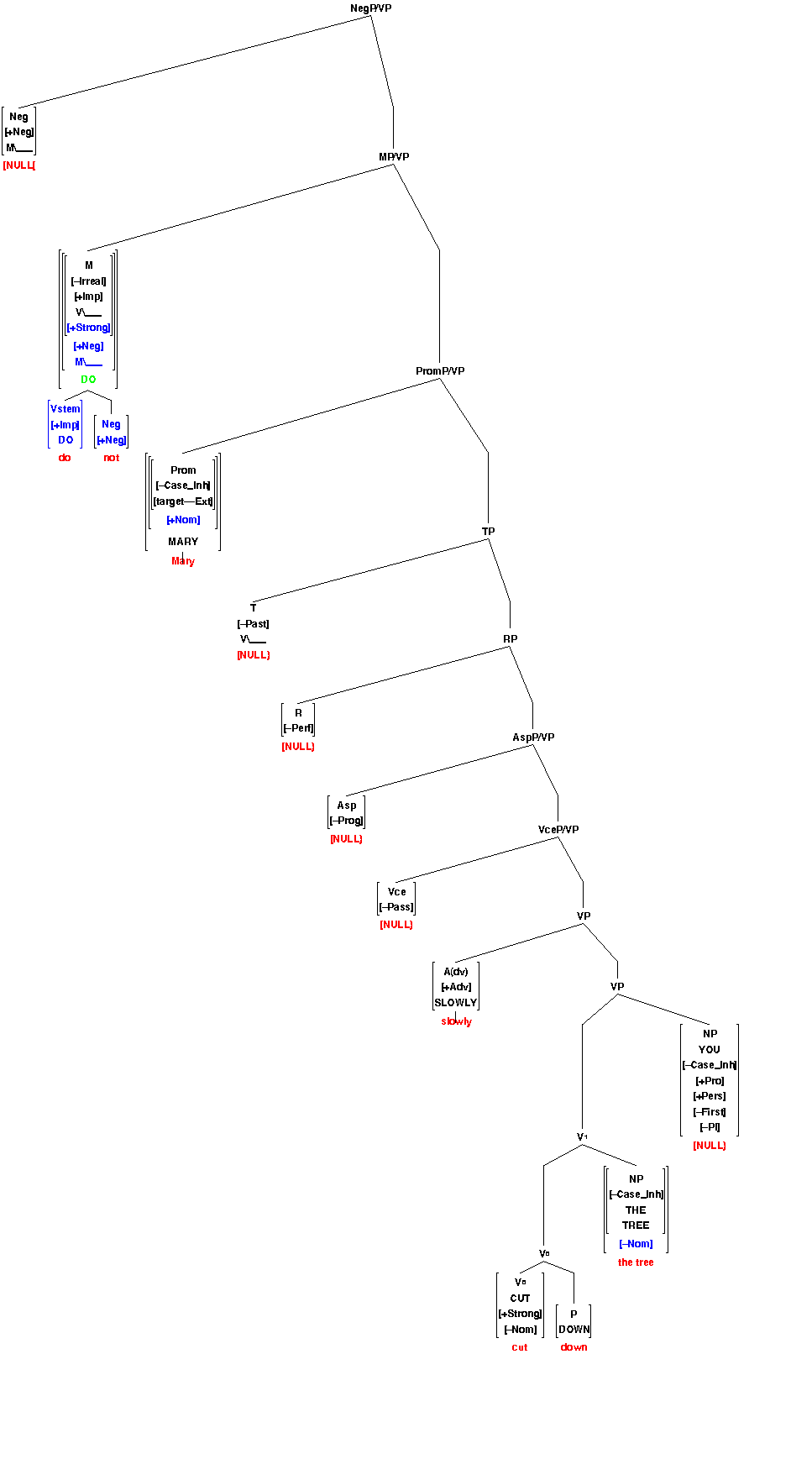
 verb. Hence, Imp becomers strong to force
the dummy verb insertion. Since it is strong, a barrier is set
up at M so that a chain can be formed linking Neg-M to M-V. This
blocks Neg from being copied to V.
verb. Hence, Imp becomers strong to force
the dummy verb insertion. Since it is strong, a barrier is set
up at M so that a chain can be formed linking Neg-M to M-V. This
blocks Neg from being copied to V.
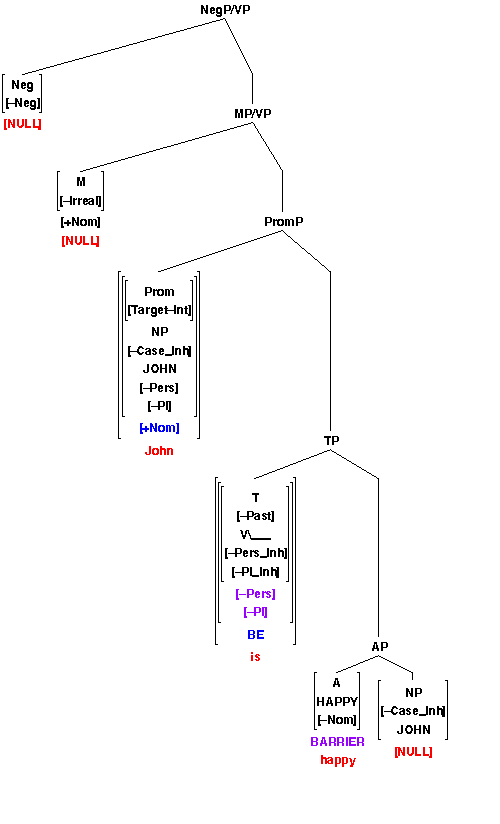
- b) John is happy.
Assume that the underlying form is the basic predicate HAPPY <JOHN>, modified by the appropriate operators. Here you may assume that the adjective licenses only T, though it won't be considered wrong to show all the verbal operators.
- Note : John is the only argument of the verb and is internal.
The task here is to explain the occurrence of the auxiliary verb, if the verb is not in the underlyng structure. It is inserted because T needs a verbal host, but happy is an adjective. Since it is obvious that the dummy verb is BE, you must extend the context for the insertion of this dummy verb: it is inserted when T governs a predicate adjective (and all predicate non-verbs). Note that a barrier is inserted at A, blocking the copying of [-Nom] to JOHN, the targeted internasl argument. Note also that there is but one argument, hence there is no need for any extra nodes between A and AP (i.e. no A').
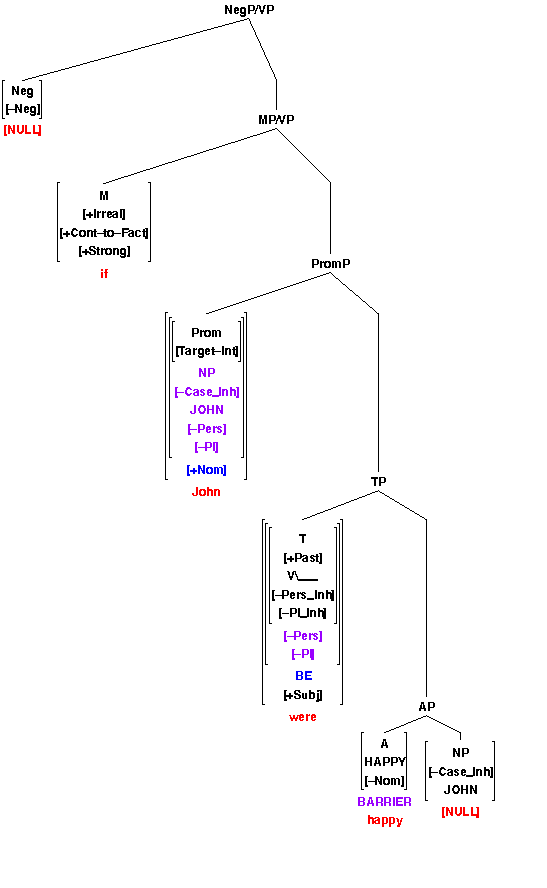
c) If John were happy, he wouldn't be taking syntax.
- Here the Contrary-to-Fact mood in the present time (semantically) must be spelled out in the grammatical past tense. In formal English and in the speech of many speakers, the verb must be marked with the subjunctive conjugation. The mood is spelled out as if , the same as for the conditional mood. The difference is in the use of the grammatical tense and relevance forms.
- You may abbreviate NPs in (1a & b), except, do indicate and mark the Case features, since it is relevant to the exercise. Be sure to indicate agreement Be sure to include any links that may occur, and barriers to them. Draw or indicate each step indicating which rule has been applied. In (1c) draw a complete diagram (except for the NPs) of the embedded sentence only.

This page updated 30 NO 2000.