The piece is an elaboration of a section of the composer's work Dominion (1991), for chamber ensemble and two digital soundtracks, which is based on soundmarks from all across Canada.
Basilica is available on the Cambridge
Street Records CD Song of Songs and sonus.ca
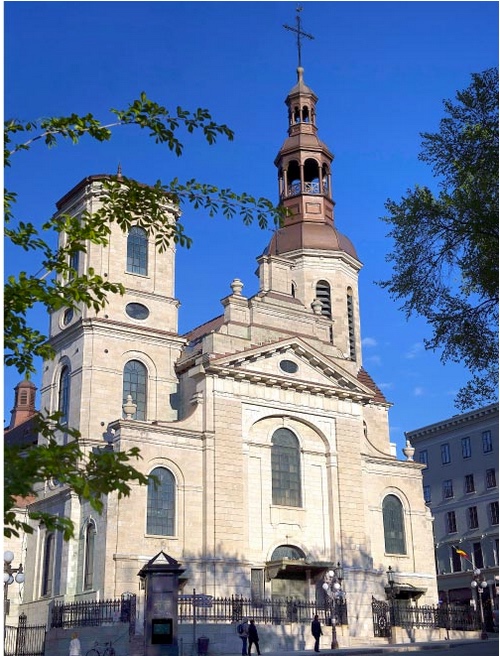
The Basilica of Notre-Dame de Québec in Quebec City
Finally, we exit the church, to return to the mundane world, symbolized by the way the original bells slow down and end, exposing more of the city ambience as they do. This is achieved by stretching two individual rings until they fade out.
Note:
the
8-channel
version of this work was created in 1997 with the DM-8 computer-controlled
diffusion
system which at that time was controlled by a Cue List with commands that directed
the input channels to specific speakers as well as allowing clockwise
or counter-clockwise movement. At that time, the front speakers were
numbered 5 & 6, the back corner speakers were 7&8, with "points
of the compass" speakers being 1-4. The basic model for the
spatialization is that we begin outside the church, and then move
inside it, with the surround sound channels gradually being added.
Around 2:50, all of the stretched bell sounds start moving clockwise
around the space.
For
more details, consult the Production Score,
as well as the pencilled Production Notes
and the Mixing Score that
was used for the original stereo mixdown.
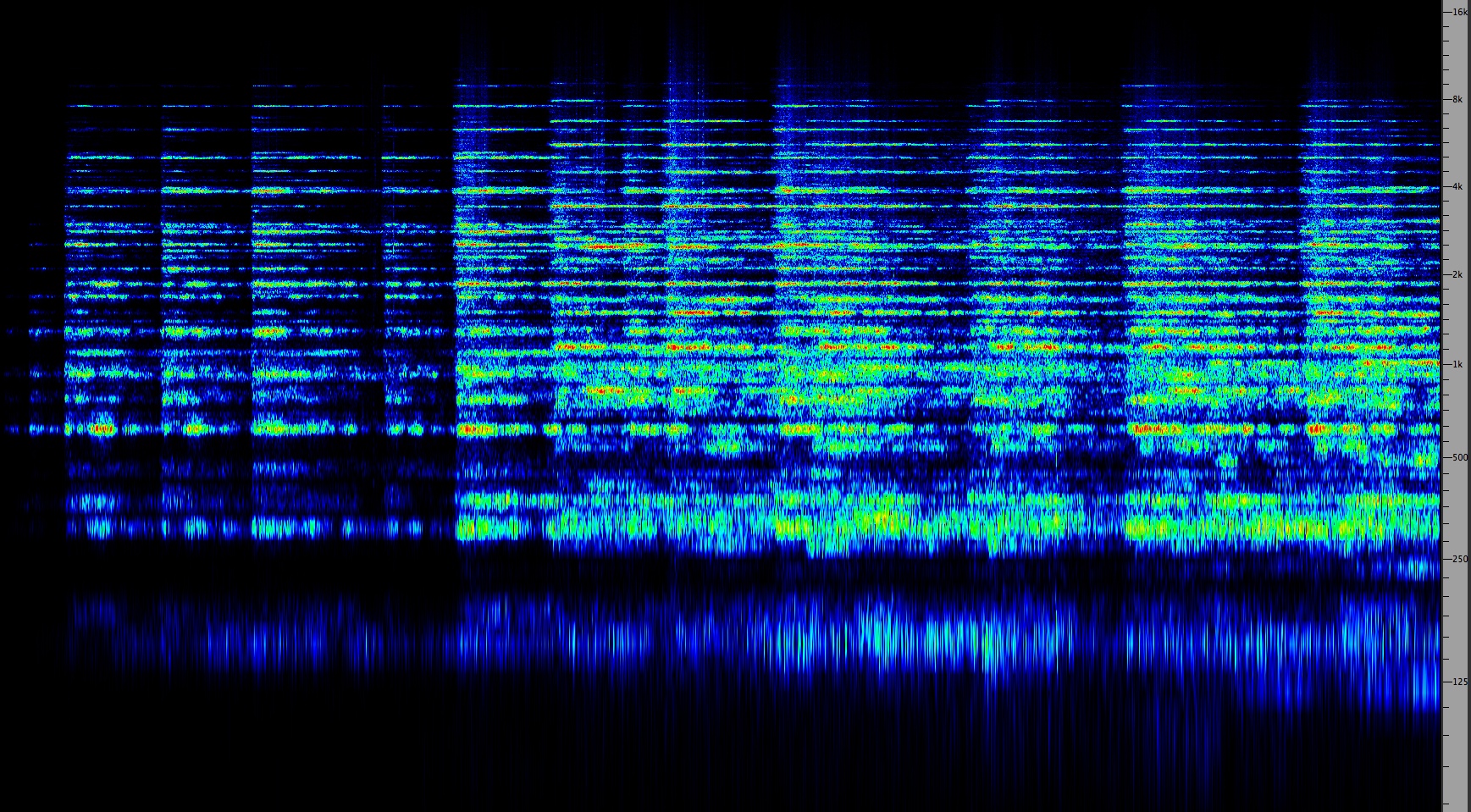
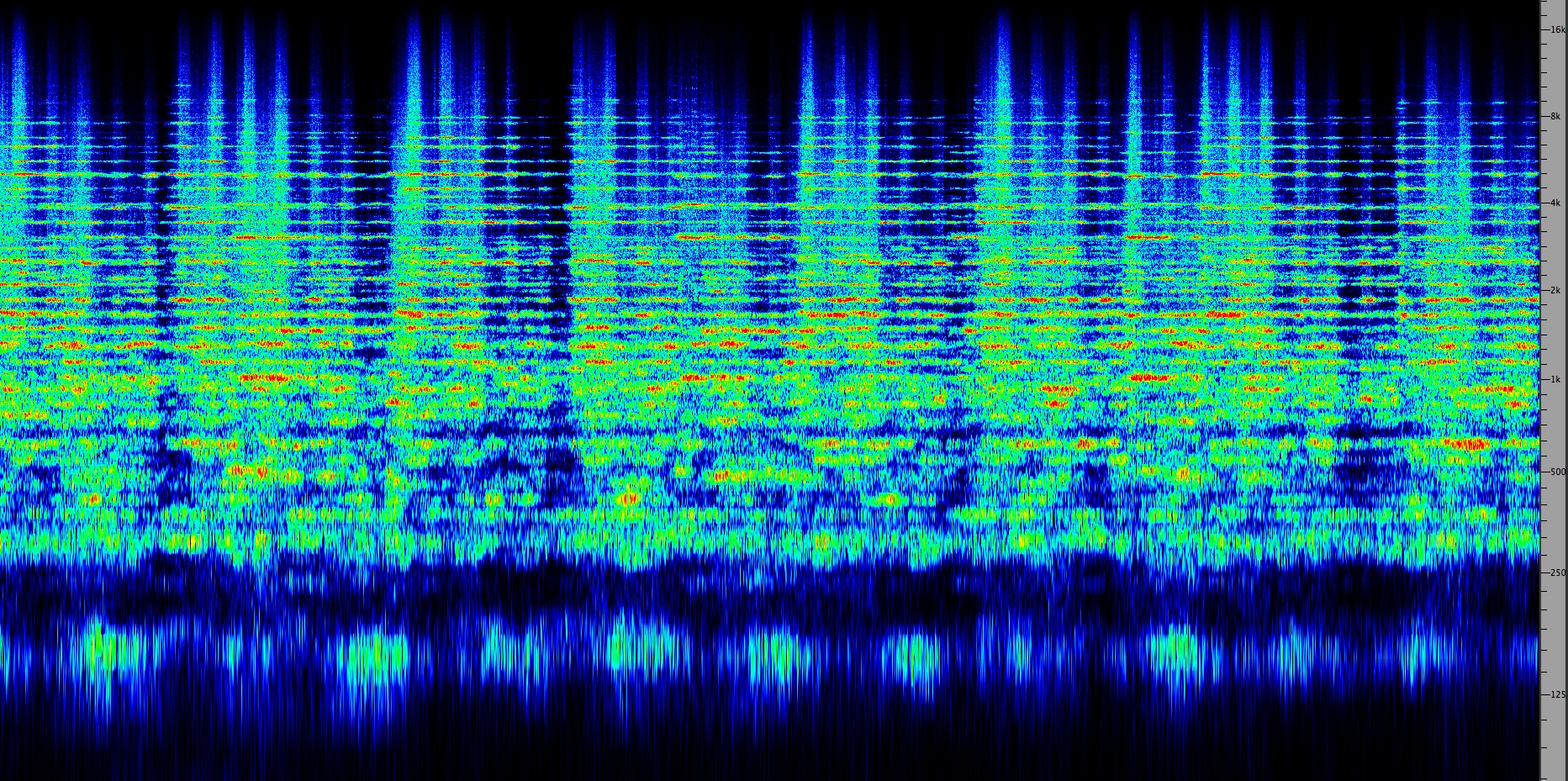
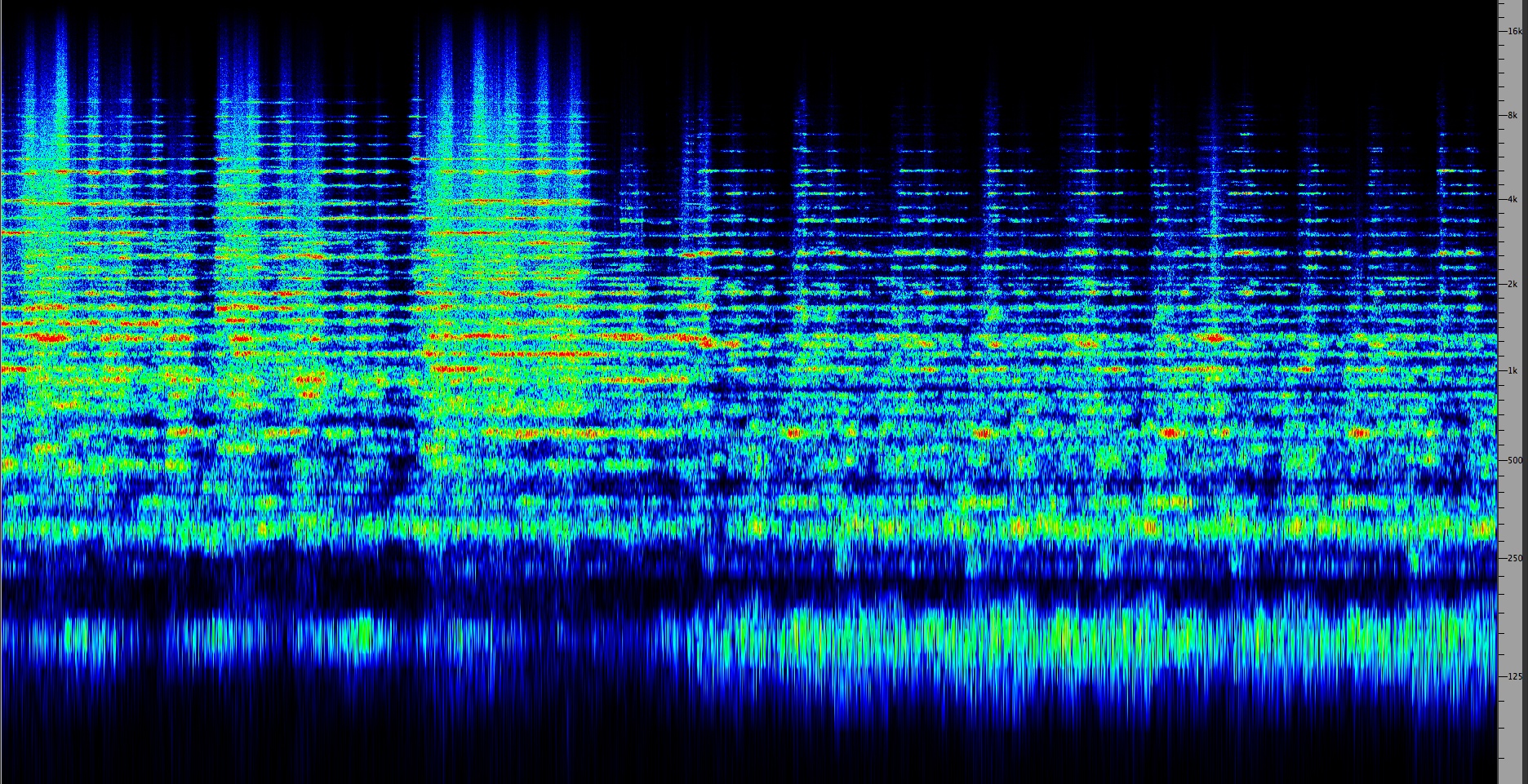
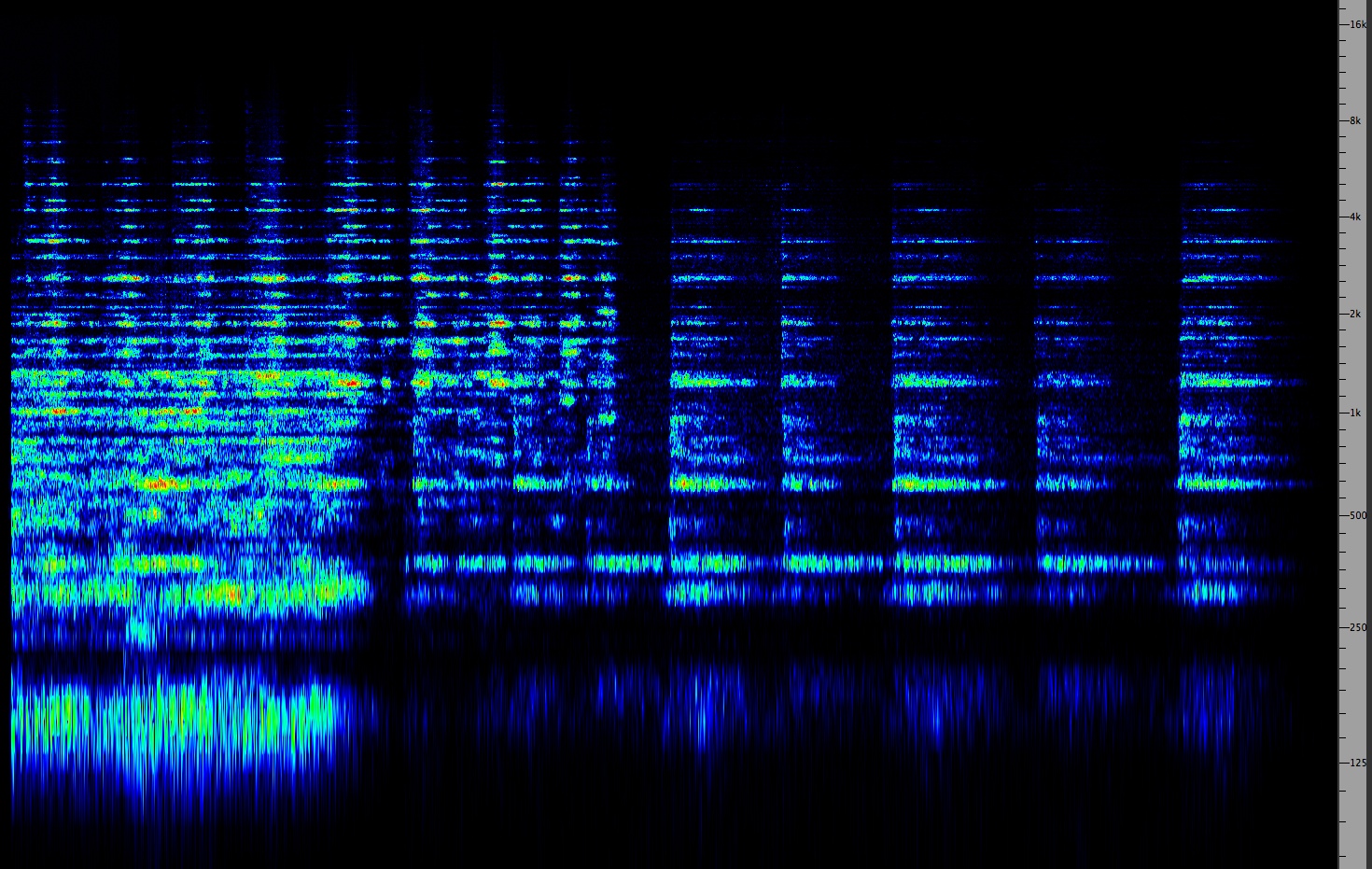
Spectragram: Part 1, Part 2, Part 3, Part 4
Technical note: The work was realized using the composer's PODX system which uses the DMX-1000 Digital Signal Processor controlled by a PDP Micro-11 computer. The principal signal processing technique involves time stretching of the sampled environmental sound with software for real-time granular synthesis GSAMX developed by the composer in the School for the Contemporary Arts at Simon Fraser University. Sound densities around 250 events/second were recorded on 8-track tape and mixed down in the Sonic Research Studio at SFU.