
Chapter Contents

Previous

Next
|
Chapter Contents |
Previous |
Next |
| XRCHART Statement |
| See SHWXR1 in the SAS/QC Sample Library |
In the previous example,
the OUTLIMITS= data set saved control limits
computed from the measurements in WAFERS.
This example shows how these limits can be applied
to new data provided in the following data set:
   data wafers2;
      input batch @;
      do i=1 to 5;
         input diamtr @;
         output;
         end;
      drop i;
      datalines;
   26 34.99 34.99 35.00 34.99 35.00
   27 34.99 35.01 34.98 34.98 34.97
   28 35.00 34.99 34.99 34.99 35.01
   29 34.98 34.96 34.98 34.98 34.99
   30 34.98 35.00 34.98 34.98 34.99
   31 35.00 35.00 34.99 35.01 35.01
   32 35.00 34.99 34.98 34.98 35.00
   33 34.98 35.00 34.99 35.00 35.01
   34 35.00 34.97 35.00 34.99 35.01
   35 34.99 34.99 34.98 34.99 34.98
   36 35.01 34.98 34.99 34.99 35.00
   37 35.01 34.99 34.97 34.98 35.00
   38 34.98 34.99 35.00 34.98 35.00
   39 34.99 34.99 34.99 34.99 35.01
   40 34.99 35.01 35.00 35.01 34.99
   41 34.99 35.00 34.99 34.98 34.99
   42 35.00 34.99 34.98 34.99 35.00
   43 34.99 34.98 34.98 34.99 34.99
   44 35.00 35.00 34.98 35.00 34.99
   45 34.99 34.99 35.00 34.99 34.99
   ;
The following statements create  and R
charts for the data in WAFERS2
using the control limits in WAFERLIM:
and R
charts for the data in WAFERS2
using the control limits in WAFERLIM:
   title 'Mean and Range Charts for Diameters';
   symbol v=dot c=salmon;
   proc shewhart data=wafers2 limits=waferlim;
      xrchart diamtr*batch / cframe   = bigb
                             cinfill  = ywh
                             coutfill = ligr
                             cconnect = salmon;
   run;
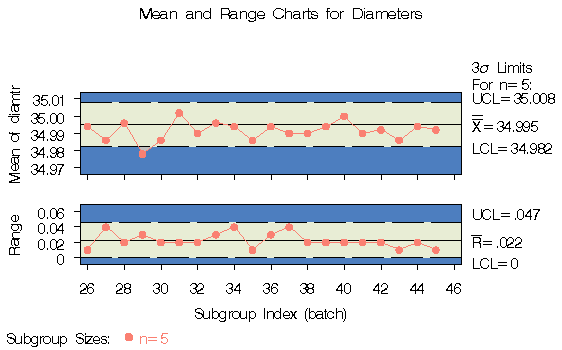
The charts are shown in Figure 43.9.
The LIMITS= option in the PROC SHEWHART statement specifies the
data set containing the control limits.
By default,*
this information is read from the first
observation in the LIMITS= data set for which
|
and R Charts for Second Set of Wafer Data
Note that the mean diameter of the
29 th batch lies below the lower control limit
in the chart, signaling a special cause of variation.
In this example, the LIMITS= data set was created in a previous run of the SHEWHART procedure. You can also create a LIMITS= data set with the DATA step. See "LIMITS= Data Set" for details concerning the variables that you must provide.
|
Chapter Contents |
Previous |
Next |
 Top |
Copyright © 1999 by SAS Institute Inc., Cary, NC, USA. All rights reserved.