
Chapter Contents

Previous

Next
|
Chapter Contents |
Previous |
Next |
| The EXPAND Procedure |
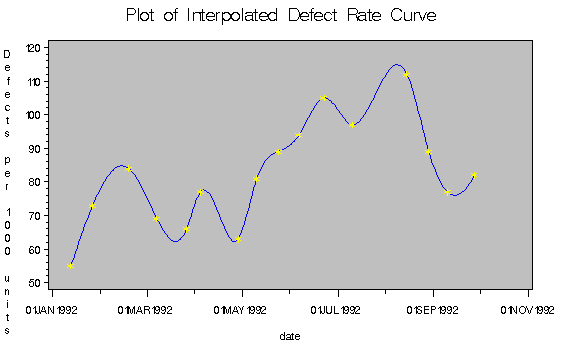
This example shows the interpolation of a series of values measured at irregular points in time. The data are hypothetical. Assume that a series of randomly timed quality control inspections are made and defect rates for a process are measured. The problem is to produce two reports: estimates of monthly average defect rates for the months within the period covered by the samples, and a plot of the interpolated defect rate curve over time.
The following statements read and print the input data, as shown in Output 11.2.1.
   data samples;
     input date : date9. defects @@;
     label defects = "Defects per 1000 units";
     format date date9.;
   datalines;
   13jan1992    55    27jan1992   73    19feb1992   84    8mar1992   69
   27mar1992    66     5apr1992   77    29apr1992   63   11may1992   81
   25may1992    89     7jun1992   94    23jun1992  105   11jul1992   97
   15aug1992   112    29aug1992   89    10sep1992   77   27sep1992   82
   ;

   title "Sampled Defect Rates";
   proc print data=samples;
   run;
Output 11.2.1: Measured Defect Rates
   proc expand data=samples out=monthly to=month;
     id date;
     convert defects / observed=(beginning,average);
   run;

   title "Estimated Monthly Average Defect Rates";
   proc print data=monthly;
   run;
The results are printed in Output 11.2.2.
Output 11.2.2: Monthly Average Estimates
|
   proc expand data=samples out=daily to=day;
     id date;
     convert defects = interpol;
   run;

   data daily;
     merge daily samples;
     by date;
   run;

   title "Plot of Interpolated Defect Rate Curve";
   proc gplot data=daily;
      axis2 label=(a=-90 r=90 );
      symbol1 v=none i=join;
      symbol2 v=star i=none;
      plot interpol * date = 1 defects * date = 2  /
           vaxis=axis2 overlay;
   run;
   quit;
The plot is shown in Output 11.2.3.
Output 11.2.3: Interpolated Defects Rate Curve
|
|
Chapter Contents |
Previous |
Next |
 Top |
Copyright © 1999 by SAS Institute Inc., Cary, NC, USA. All rights reserved.