Sunquest Mobility
Web & Multimedia Design

I was tasked with developing a new website for Sunquest Mobility and furthering their brand identity.
Our target audience was composed of seniors and medical professionals seeking a variety of solutions like scooters, wheelchairs, home care products, and medical garments.
View Website! (Jan. 2025 Development Version)Timeline
March - December 2024 (live from June 17th 2024)
Tools
Framer (web development)
Figma (ideation)
Shopify (e-commerce)


OUR CONCEPT
How Do We Fit Into the Overall Industry?
From the very start, Sunquest Mobility's identity differed from its competitors with its playful and consumer based outlook. The website needed to also diverge away from existing mobility brands on the web.
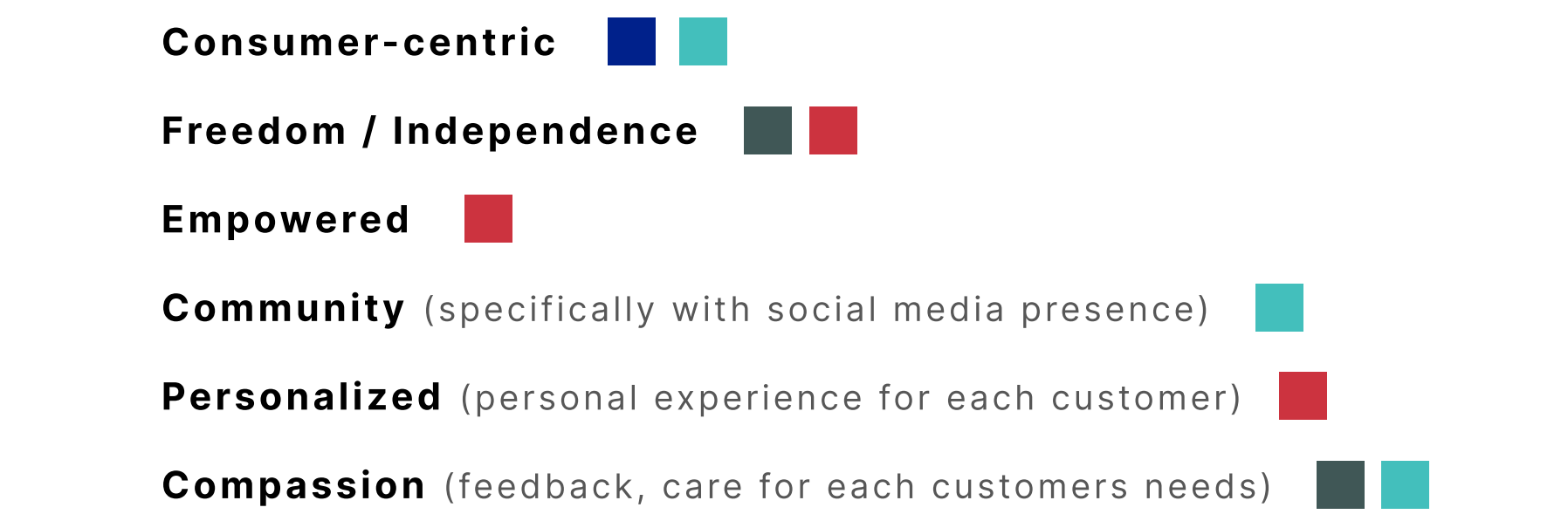
To understand this goal, I isolated a selection of key terms that help to embody the facets of the brand, assigning new design colours to each of the terms:
CREATION
Overview
The early development phase consisted of learning to use Framer (a web design tool) and creating wireframes to outline how I wanted to represent the brand. Understanding my audience became crucial in my decision making because of the needs of our older demographic. The website became more streamlined over time to simplify the steps of online shopping.
Shopify was a recurring component later on in the development because as I added more products over time, the needs of representing these products grew and I looked to create more engaging and interactive product pages.
Inspiration


Our initial inspiration was Apple’s online website. With a clean and dynamic structure, it is easy to distinguish the section headline and everything is vertically scroll-able, imitating the vertical browsing trends of today.
My supervisors offered concerns with the animations’ ease of use for our older audience, thus we decided to proceed cautiously. I included animation to mostly assist in revealing new content sequentially and also to pace content to avoid it appearing all at once.
Revisions
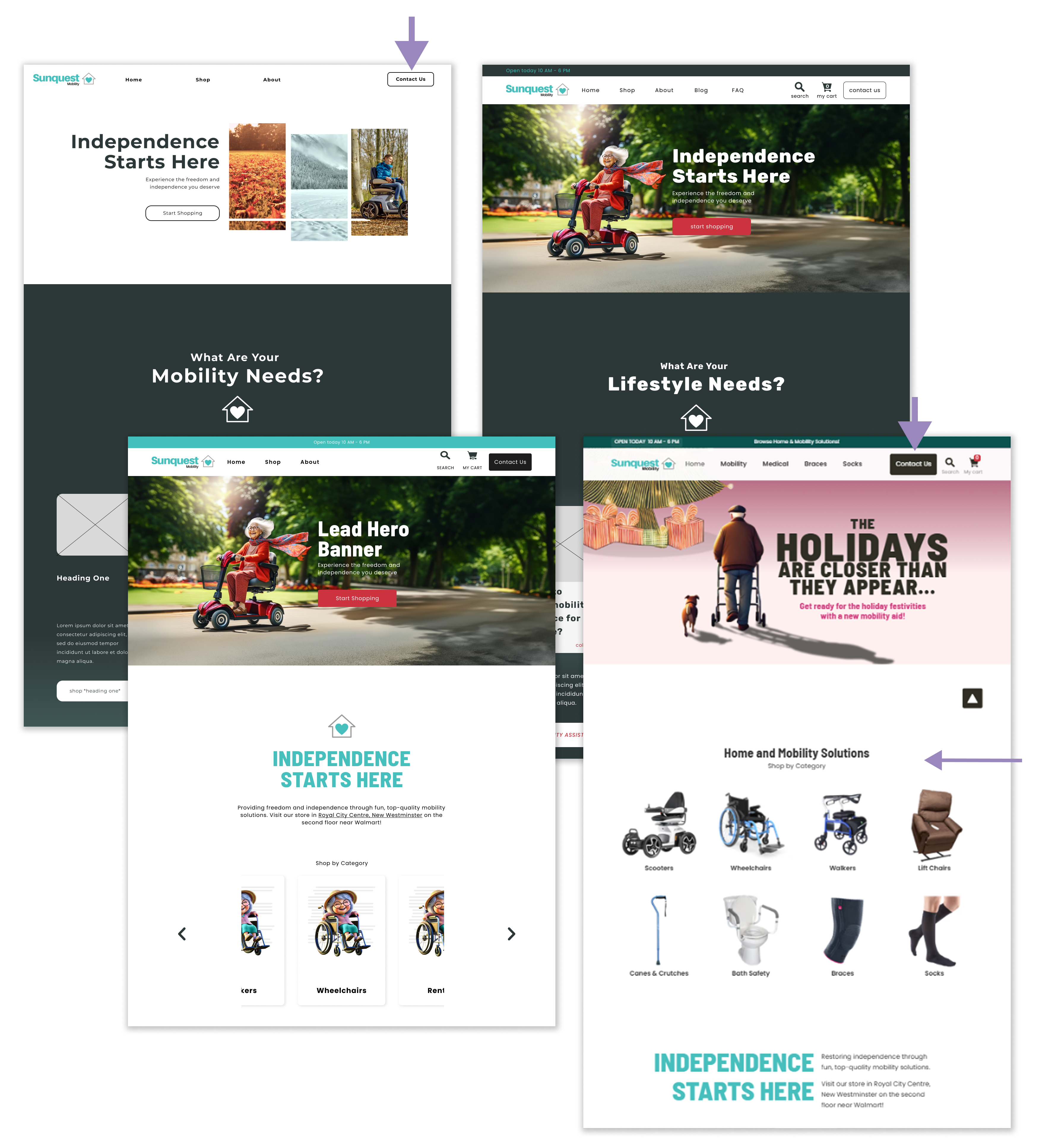
One of the challenges that I faced was designing a home page, as we wanted to maximize chances for users to click further into the site. Below, you can see how I adapted the wireframes overtime to communicate to users where to go.
For example, feedback indicated that the Contact Us button be more obvious for the target audience. As well, the addition of a “shop by category” section directly funnels users into the products they are interested in.
Visual Communication
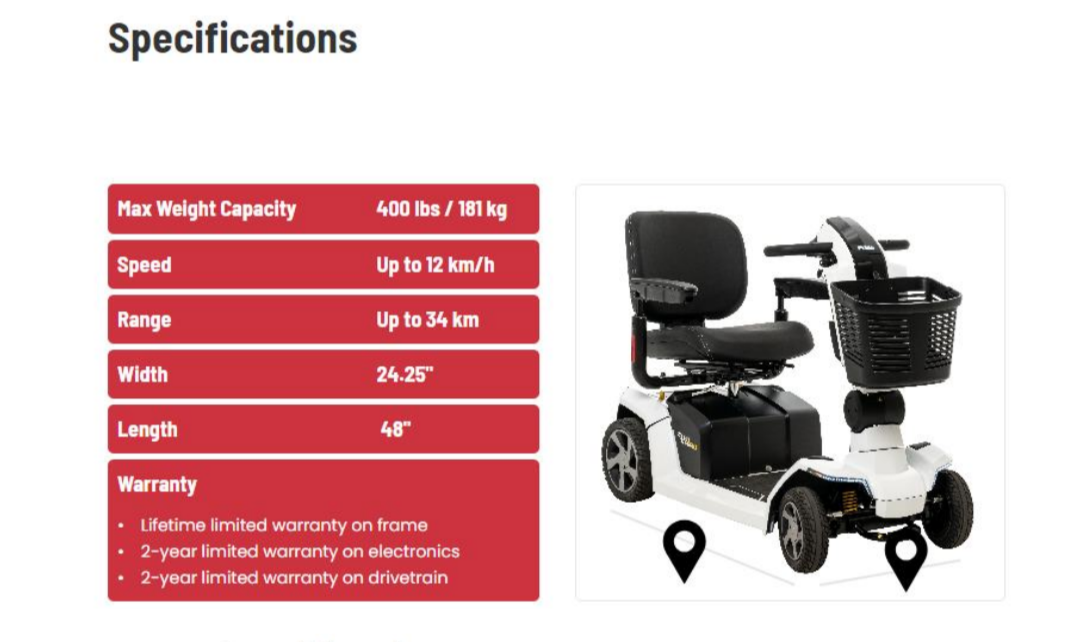
The mobility product specifications offers an example of how my supervisors and I looked at ways to best present information to the users visually. I progressed through three main design iterations.


IN RETROSPECT
During this project, I managed a large volume of information requiring a logical structure. I learned that solutions dont need to be over-complicated to work well. A harmonious layout is often a simple one.
My growth has been centered around being able to communicate my designs with others and receive feedback from a real community. I am appreciative of my supervisors’ feedback because a lot the points they offer are grounded in the target audience’s perspective. I can say now that when designing, if you don't know much about your audience’s needs, seek out what others have experienced.