Section 1.14 Small Number Around the World
Written by: Veselin Jungić
Illustrated by: Lila Mohammed
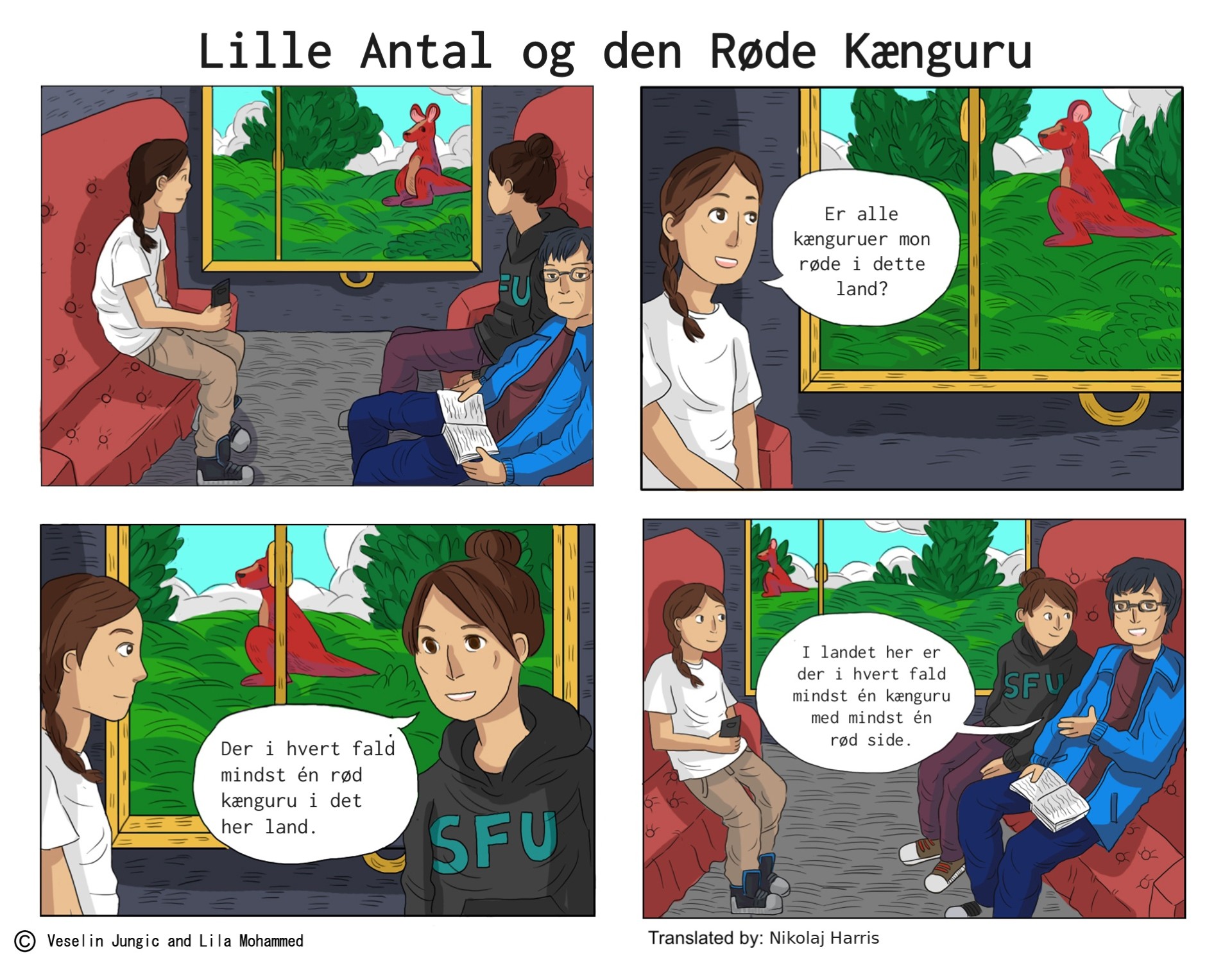
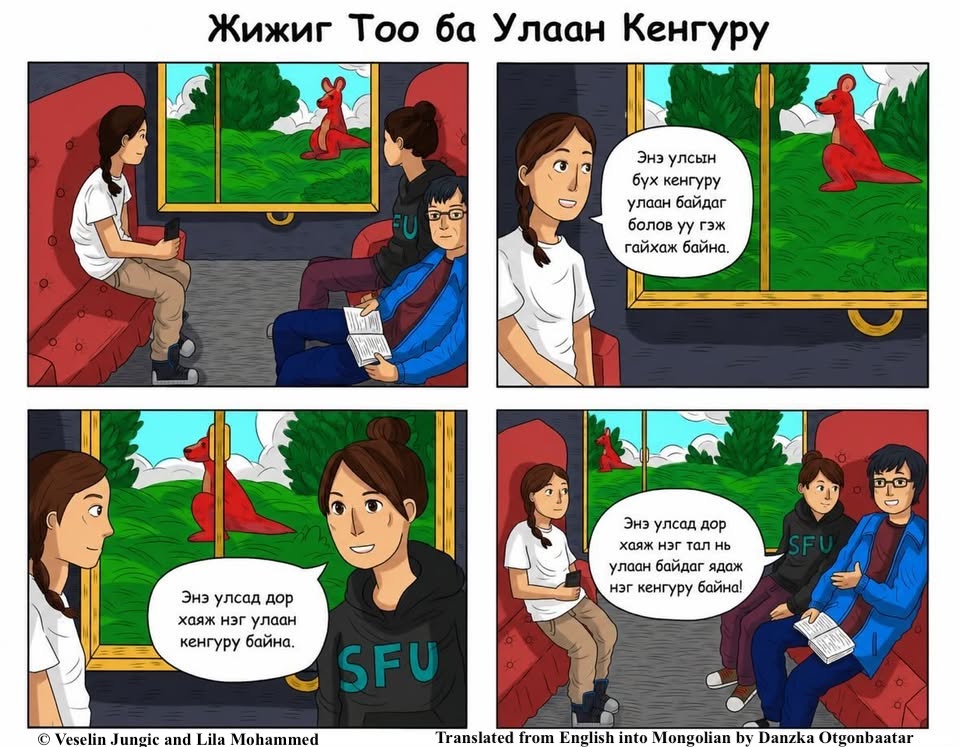
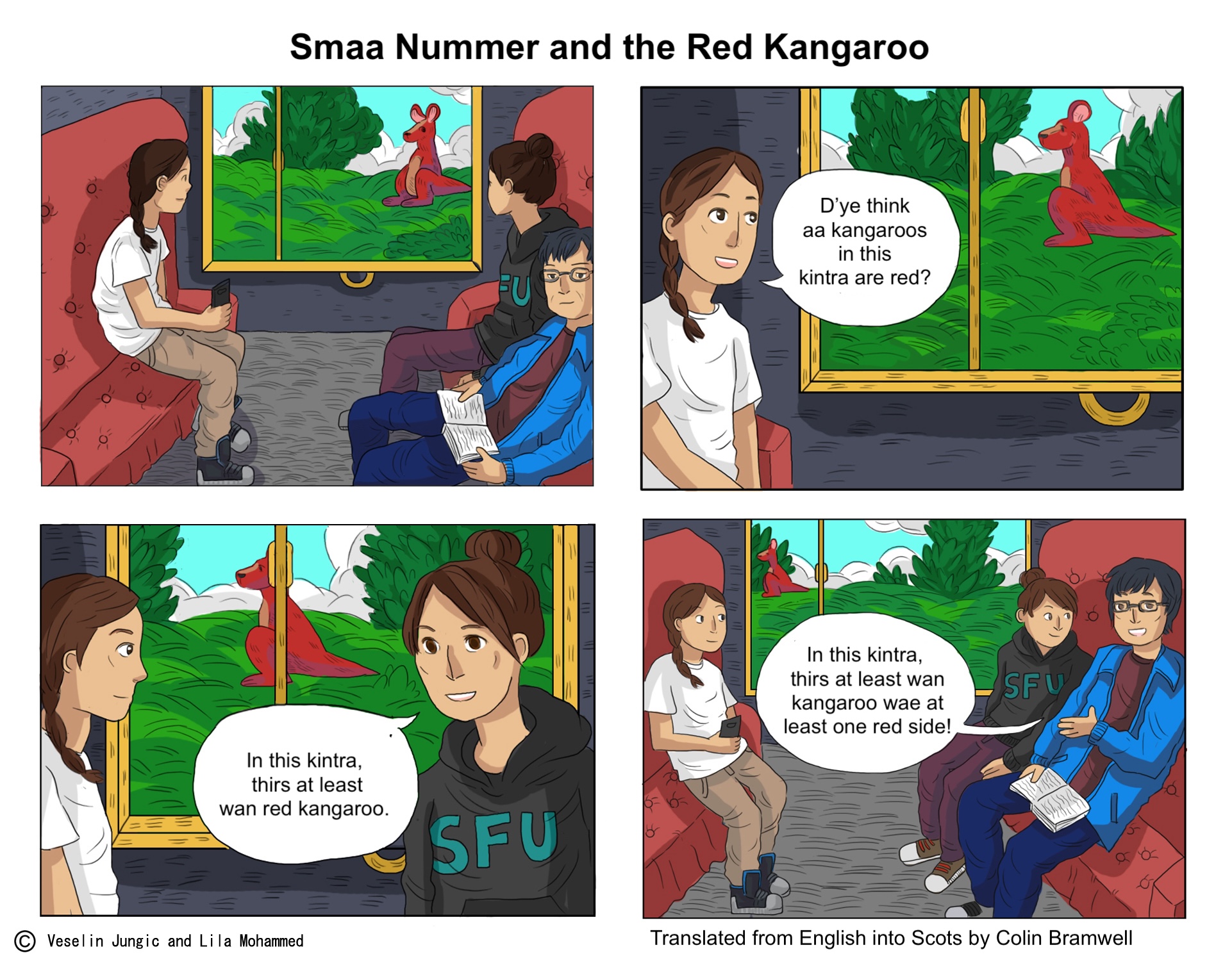
Collection of retellings of a mathematical-thinking-related story in various languages
In early September 2024, I started inviting my colleagues, collaborators, and my former students to help me “make a collection of the cartoon in various languages” by sending me their “mother tongue translation of the English text.” Of course, I contacted only those people who previously shared with me this kind of information.
In my message, I explained: “The point that I'd like to make is that love for mathematics and storytelling unite us across continents, cultures, ages, genders, and ranks.”
What followed was a two-month-long emotionally intense learning journey.
The outcome was a collection of seventy-seven authentic retellings of the story narrated in the following sixty-one languages: Albanian, Amharic, Arabic, Bahasa Indonesia (2), Bemba, Bengali, Bosnian, Bulgarian, Catalan, Chinese (Regular and Simplified), Croatian, Czech (2), Danish, Dutch, English, Finnish (2), French, German (3), Gikuyu, Greek, Gurmukhi, Haida, Hebrew, Hindi (3), Hungarian, Italian (2), Irish (Gaelic) (2), Japanese (2), Kazakh, Kiswahili, Korean, Luhya, Macedonian, Mohawk, Mongolian, Nepali, Norwegian (2), Persian, Polish, Portuguese, Punjabi, Romanian (2), Russian (2), Scots, Serbian, Shona, Sindhi, Sinhala, Slovak, Slovenian, Spanish (2), Swahili, Swedish, Tagalog, Tamil, Tla'amin, Turkish (2), Ukrainian, Urdu, Vietnamese, and Wolof.
For more details about the project, see Jungić, V., On the Language Diversity in the Mathematical Community, Maple Transactions, 4(4), 2024.
Thank you to everyone who, directly or indirectly, contributed to the project!
- Veselin Jungić
Click on images to enlarge them.








“I just finished translating the comic in Sindhi with my mom and grandmother. They both were able to read and approved it to be correct. Thank you so much for giving me a platform to write this educational comic in a language that is so dear to me.”


