

x
close
Earthquake
British Columbia has seen some of the world’s biggest earthquakes, and research shows there’s a 1 in 4 chance we could experience another major one in the next 50 years. These earthquakes could be so strong that you might be knocked to the ground, making it hard to walk, run, or even crawl. The best thing you can do is protect yourself as quickly as possible, no matter where you are.
Procedures
Inside &
in class
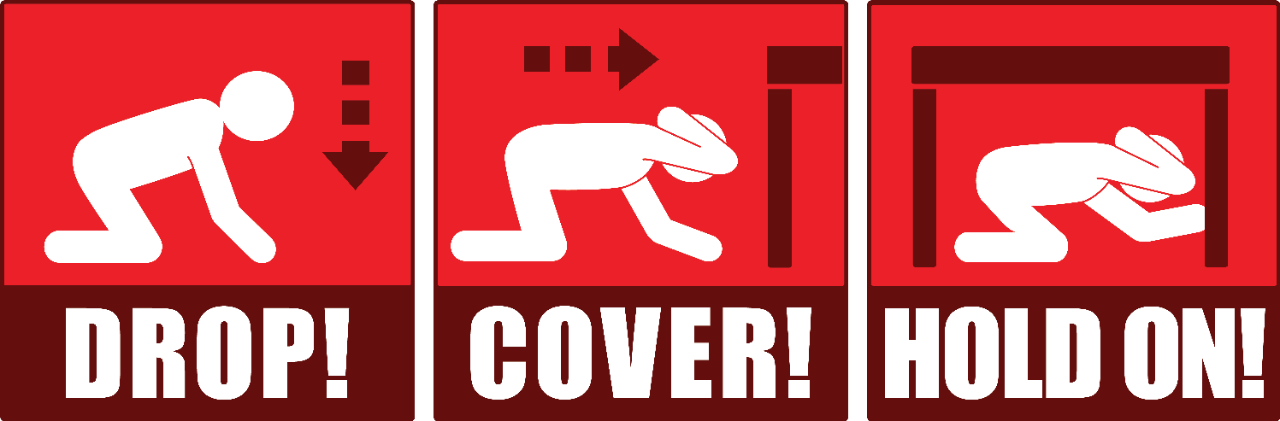
- Drop, cover, and hold on under a desk, table, interior wall or corner
- Wait 60 seconds after the shaking stops
- Proceed with caution to the designated assembly area and monitor SFU Alerts and the SFU Safe app for further instruction and updates
Outside
|
In transit
- In a car - Pull over. Avoid overhead structures (i.e. bridges and overpasses). Set the parking brake and stay inside.
- On a bus - Stay seated until the bus stops. Drop, cover and hold on until the shaking stops. Stay inside if it is safe.
Mobility
challenges
- If you can, follow the drop, cover, hold-on procedure
- If you are in a wheel chair, move to an inner wall if safe to do so. Lock the brakes and cover your head with your arms
- If available use a blanket or pillow to shield your face from falling debris/glass
- When the shaking stops move to refuge areas
Before an earthquake
- Avoid storing heavy objects on high shelves
- Secure bookcases, cabinets and equipment
- Install restraints on laboratory chemical shelves and store glass cylinders in designated racks
- Be familiar with emergency plans and procedures
- Have an emergency kit in your home, office and car
- Practice earthquake response often and participate in annual earthquake drills
After an earthquake
Aftershocks could occur
- Drop, cover and hold on if you feel shaking
- Wait for the shaking to stop then count to 60 before getting up
Check for damage and hazards
- Move carefully and check for unstable objects and other hazards above and around you
- If you smell gas or rotten eggs, leave the building immediately and call 9-1-1
- Do not use elevators
- Do not re-enter buildings until advised by first responders/SFU Safety personnel
- If there are no visible signs of damage where you are inside, shelter-in-place and await further instruction
- If you are unsure, take your grab-and-go bag and evacuate to somewhere safer
- If you're able, report damages and hazards to Facilities Services
Listen to instructions
- Follow all directions from local authorities and first responder personnel. Continue to monitor SFU Alerts and the SFU Safe app for further instruction and updates
- Local officials will provide further instructions, if required
- Only call 9-1-1 if a life is at stake
- Do not leave SFU until you have checked in with your supervisor to let them know you are safe. If you do not check-in they may think you are injured and responders will look for you
Report the earthquake
- Report the earthquake at Earthquakes Canada, if you felt it
- Don’t call 9-1-1 to report the earthquake
- Do not call CPS urgent and non-emergency lines to report an earthquake
F T I