Research Statement
As a philosopher, my central interests lie in philosophy of mind broadly construed. For the most part, the questions that interest me are very old and traditional philosophical problems—how we should understand the mental representation and intentionality (how we come to have thoughts that are about the world and ourselves); the nature of perception, the emotions, consciousness, persons, and embodiment.
What unifies my approach to these topics is a neuro-philosophical approach. I begin any project with the problem as traditionally conceived by philosophy; then I look at what recent neuroscience has to say about the same topic. The task is then to use the empirical literature to re-conceive of the traditional philosophical problem or what would constitute an answer to it—while at the same time using the philosophical insights to drive forward the experiments in neuroscience. I regard my work as essentially interdisciplinary and that means that my work is sometimes more philosophical, sometimes more empirical or scientific depending upon the current project.
Below I've listed a number of current research projects. I call them "projects" instead of "papers" because, first, some are in fact empirical, laboratory projects that I have either initiated (The SFU Czech-English Synaesthesia Survey) or am doing in conjunction with other researchers. A second reason is that all of these research interests, whether empirical or neurophilosophical, take a number of years to complete. This is because each new subject—such as neonatal imitation or echolocation in bats—usually requires that I and my collaborators first 're-tool' in the relevant areas of neuroscience, a process that usually takes about year. Thereafter, the results of, on average, several hundred journal articles must be cossetted and kneaded into a sensible story line, an original take on the issue at hand.
As you can see, most of these projects are collaborative, either with colleagues or with students, and we have a lot of fun with the freedom that neurophilosophy allows us — to 'roam' the neurosciences, looking for the latest interesting and pertinent results. (One of my former professors described neurophilosophers as '"(damned) parasites on a legitimate discipline". Well, O k a y. I myself prefer to think of neurophilosophers as 'opportunistic', which makes us a bit more like, oh, flesh-eating bacteria than fleas, ticks and tapeworms.)
Current Research Projects

The SFU Czech-English
Synaesthesia Project
For information about this project, please click HERE.
_____________________________________________
Re-thinking Neonatal Imitation:
The Aerodigestive Development Hypothesis
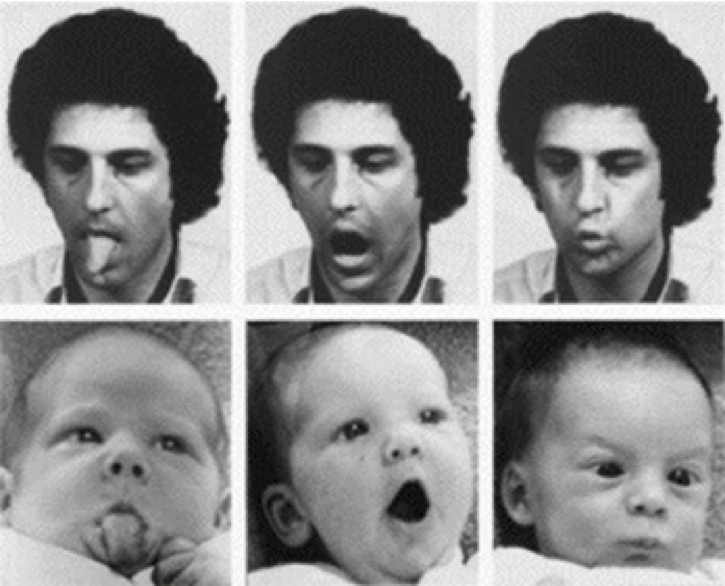
For more information on this project, please click HERE
______________________________________________
The Homogenous Pink Project
Yup, I'm afraid so. A project on Wilfred Sellars and the development of colour vision in children.
For more information about this project, click HERE
______________________________________________
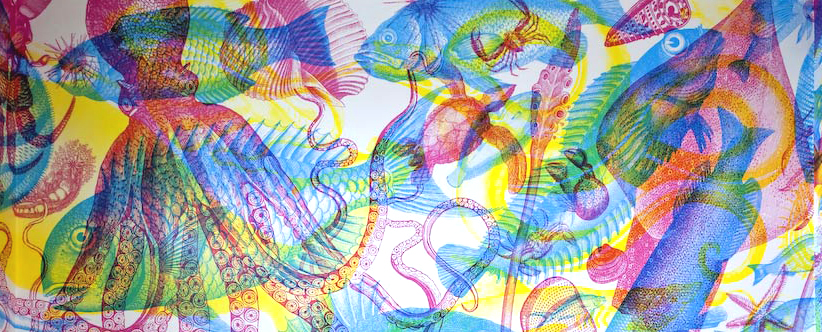
The Colour Project
This is a series of essays all related to a single theory of human colour visoin, one based a novel interpretaion of the role of chromatic information in human visual processing. For more information, click HERE.