
The Pollination Ecology Lab at SFU
Areas of Research
Garden Ecology
Elizabeth's current research aims to better understand how gardener's practices impact the diversity of flower visitors in their backyards. For more on this work, and to learn about best practices for gardens and habitat restorations, visit her external website.
Determinants and Impacts of Pollinator Diversity
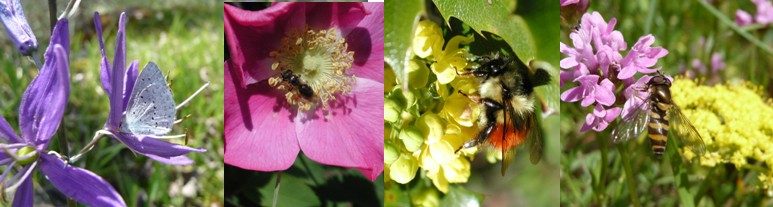
The lab has done multiple projects to investigate how habitat fragmentation, landscape attributes like forest vs. urban land , and management practices like cattle grazing and habitat restorations impact pollinator diversity and the attributes of pollinator interaction networks. Much of this research has been in the Garry Oak Ecosystem, but we have also worked in the South Okanagan and in and around Metro Vancouver.
See Elizabeth's publication list in Google Scholar; note that Guzman, Kelly, and Elle 2023 includes most of our data from across the years.
Pollinator Diversity and Crop Pollination
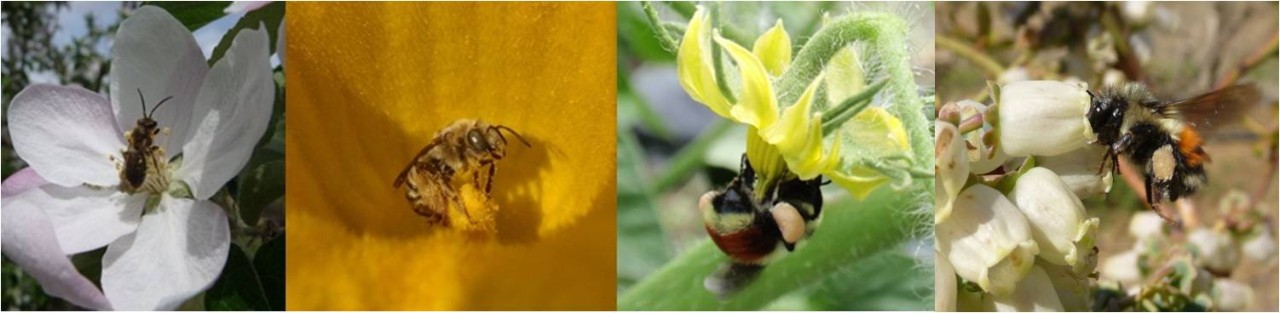
Our main contribution in this area was towards an improved understanding of blueberry pollination in British Columbia. Farmers are losing thousands of dollars per hectare to insufficient pollination. Some varieties have flower shapes that are unattractive to honeybees, and the landscape surrounding farms supports an insufficient number of bumblebees to do the work.
The Evolution of Selfing
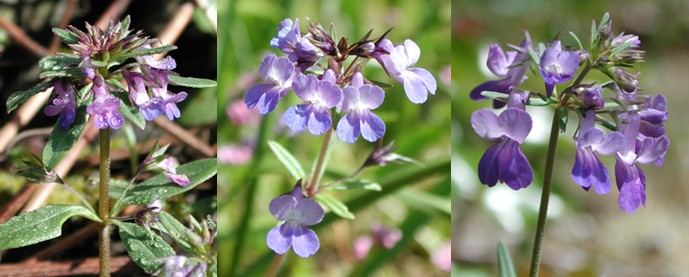
Elizabeth's early work at SFU was aimed at understanding how among-population variation in flower size in Collinsia parviflora (Blue-eyed Mary) determined selfing rate. Small flowered populations tended to occur in drier environments with limited time available for growing large flowers and waiting for pollinators, and so this work linked climate, development, and pollination ecology.