


What is Reach?
What is REACH?
The Global Relational Futures Consortium (GRFC), operating publicly as the REACH Global Initiative, is a transnational and transdisciplinary research consortium focused on understanding and advancing inclusion, belonging, opportunities, and valued futures for forcibly displaced youth and other young people experiencing complex life circumstances. REACH brings together researchers, practitioners, community organizations, educators, students, and people with lived experience to conduct collaborative research across diverse cultural, social, institutional, and geopolitical contexts. Our work emphasizes inclusive and contextually responsive approaches, reciprocal international partnerships, and the meaningful participation of people and communities whose lives and experiences are connected to our research.
Our Research
REACH conducts and supports traditional, comparative, participatory, community-engaged, and action research examining inclusion, belonging, relationships, education, wellbeing, and opportunities across diverse contexts of displacement and complexity. Our research has evolved from an initial focus on the educational experiences of refugee children with disabilities toward a broader program of inquiry examining how people, communities, institutions, and systems can collaboratively create inclusive conditions that strengthen belonging, participation, opportunity, and valued futures across changing contexts and transitions.
Our Partnership
REACH grew from an international research partnership initially established through a Social Sciences and Humanities Research Council of Canada Partnership Development Grant. That partnership has since expanded and evolved into the Global Relational Futures Consortium. Today, the Consortium connects researchers, universities, community organizations, practitioners, students, and people with lived experience across countries and disciplines. Rather than centring the partnership within a single institution or national context, REACH works through distributed expertise, reciprocal relationships, and locally meaningful collaboration. Together, our partners develop research, knowledge, frameworks, methodologies, and research-informed approaches that respond to substantial human and contextual diversity while contributing to a shared international community of learning.
Guiding Principles
R
efugee
We believe in the self-worth and dignity of ALL people, where the individual’s independence, voice, and right to informed consent is valued, and we commit to support all cultural perspectives regarding education.
E
quity
We recognize economic or developmental factors that affect access to education, and we are committed to reducing educational inequities through our activities and advocacy.
A
ccess
We believe that all people, regardless of gender, race, ability, sexual orientation, ethnicity, age or other economic or developmental factors should have access to an appropriate and wide range of integrated education and social services.
C
ommunity
-based
We recognize the role that community plays in the livelihood of its residents and the importance of developing community partnerships of engagement, encouraging community development, and providing community education.
H
umanity
We believe in human collectivity and its power. “The power of humanity” is the strength of individual commitment and the force of collective in order to relieve suffering, ensure respect for human dignity and ultimately create a more humane society.
OUR research
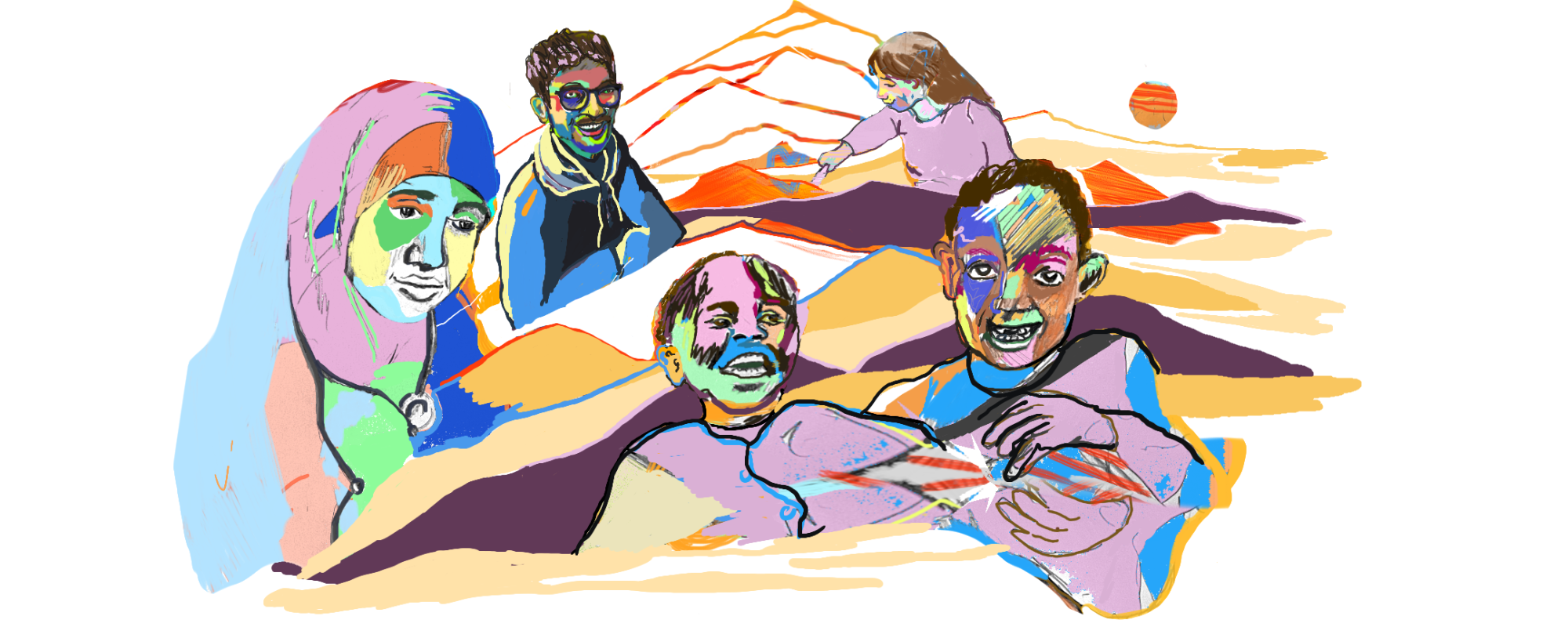
REACH research seeks to advance understanding of the educational challenges faced by forcibly displaced\refugee children with dis/abilities (RCDs) and the educators who support them. REACH also recognizes and values the experiential learning that occurs throughout displacement journeys, seeking ways to evaluate and honour such non-traditional learning. Emphasizing the practical application of findings, REACH prioritizes the timely translation of research into strategies that enhance inclusive academic and social outcomes appropriate to the complex and diverse contexts of displacement.
OUR PARTNERSHIP
Learn more about the individuals, organizations, and universities that contribute to co-developing repositories of practical knowledge and resources aimed at providing actionable support for forcibly displaced/refugee children with dis/abilities (RCDs).
Keep in touch
