
Chapter Contents

Previous

Next
|
Chapter Contents |
Previous |
Next |
| Details and Examples |
| See PARETO9 in the SAS/QC Sample Library |
During the manufacture of a MOS capacitor, different cleaning processes were used by two manufacturing systems operating in parallel. Process A used a standard cleaning solution, while Process B used a different cleaning mixture that contained less particulate matter. The failure causes observed with each process for five consecutive days were recorded and saved in a SAS data set called FAILURE4.
   data failure4;
      label cause = 'Cause of Failure' ;
      input process $ 1-9 day $ 13-19 cause $ 23-36 counts 40-41;
      datalines;
   Process A   March 1   Contamination    15
   Process A   March 1   Corrosion         2
   Process A   March 1   Doping            1
   Process A   March 1   Metallization     2
   Process A   March 1   Miscellaneous     3
   Process A   March 1   Oxide Defect      8
   Process A   March 1   Silicon Defect    1
   Process A   March 2   Contamination    16
   Process A   March 2   Corrosion         3
   Process A   March 2   Doping            1
   Process A   March 2   Metallization     3
   Process A   March 2   Miscellaneous     1
   Process A   March 2   Oxide Defect      9
   Process A   March 2   Silicon Defect    2
   Process A   March 3   Contamination    20
   Process A   March 3   Corrosion         1
   Process A   March 3   Doping            1
   Process A   March 3   Metallization     0
   Process A   March 3   Miscellaneous     3
   Process A   March 3   Oxide Defect      7
   Process A   March 3   Silicon Defect    2
   Process A   March 4   Contamination    12
   Process A   March 4   Corrosion         1
   Process A   March 4   Doping            1
   Process A   March 4   Metallization     0
   Process A   March 4   Miscellaneous     0
   Process A   March 4   Oxide Defect     10
   Process A   March 4   Silicon Defect    1
   Process A   March 5   Contamination    23
   Process A   March 5   Corrosion         1
   Process A   March 5   Doping            1
   Process A   March 5   Metallization     0
   Process A   March 5   Miscellaneous     1
   Process A   March 5   Oxide Defect      8
   Process A   March 5   Silicon Defect    2
   Process B   March 1   Contamination     8
   Process B   March 1   Corrosion         2
   Process B   March 1   Doping            1
   Process B   March 1   Metallization     4
   Process B   March 1   Miscellaneous     2
   Process B   March 1   Oxide Defect     10
   Process B   March 1   Silicon Defect    3
   Process B   March 2   Contamination     9
   Process B   March 2   Corrosion         0
   Process B   March 2   Doping            1
   Process B   March 2   Metallization     2
   Process B   March 2   Miscellaneous     4
   Process B   March 2   Oxide Defect      9
   Process B   March 2   Silicon Defect    2
   Process B   March 3   Contamination     4
   Process B   March 3   Corrosion         1
   Process B   March 3   Doping            1
   Process B   March 3   Metallization     0
   Process B   March 3   Miscellaneous     0
   Process B   March 3   Oxide Defect     10
   Process B   March 3   Silicon Defect    1
   Process B   March 4   Contamination     2
   Process B   March 4   Corrosion         2
   Process B   March 4   Doping            1
   Process B   March 4   Metallization     0
   Process B   March 4   Miscellaneous     3
   Process B   March 4   Oxide Defect      7
   Process B   March 4   Silicon Defect    1
   Process B   March 5   Contamination     1
   Process B   March 5   Corrosion         3
   Process B   March 5   Doping            1
   Process B   March 5   Metallization     0
   Process B   March 5   Miscellaneous     1
   Process B   March 5   Oxide Defect      8
   Process B   March 5   Silicon Defect    2
   ;
In addition to the process variable CAUSE, there are two
classification variables in this data set: PROCESS and DAY.
The variable COUNTS is a frequency variable.
This example creates a series of displays that progressively use more of the classification information.
   title 'Pareto Analysis of Capacitor Failures' ;
   proc pareto data=failure4;
      vbar cause / freq     = counts
                   last     = 'Miscellaneous'
                   scale    = count
                   anchor   = bl
                   cframe   = ligr
                   cbars    = vigb
                   cconnect = salmon
                   nlegend ;
   run;
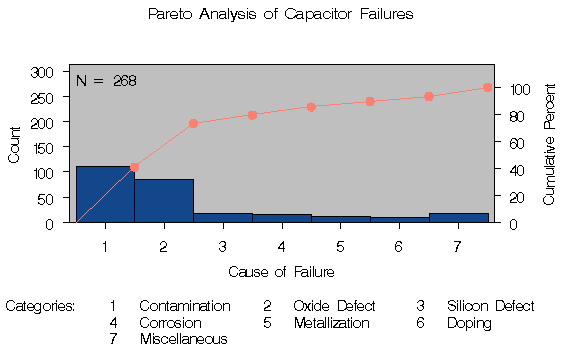
The chart, shown in Output 29.2.1, indicates that contamination is the most frequently occurring problem.
Output 29.2.1: Pareto Analysis without Classification Variables
|
The option ANCHOR=BL anchors the cumulative percent curve at the bottom left (BL) of the first bar. The NLEGEND option adds a sample size legend.
   title 'Pareto Analysis by Cleaning Process' ;
   proc pareto data=failure4;
      vbar cause / class       = process
                   freq        = counts
                   last        = 'Miscellaneous'
                   scale       = count
                   catleglabel = 'Failure Causes:'
                   intertile   = 1.0
                   cframe      = ligr
                   cbars       = vigb
                   cframeside  = ligr
                   nohlabel
                   nocurve
                   nlegend ;
   run;
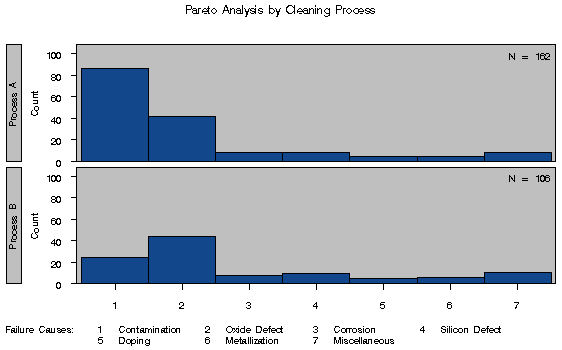
Output 29.2.2: One-Way Comparative Pareto Analysis with CLASS=PROCESS
|
The CATLEGLABEL= option specifies the category legend label Failure Causes:. The NOHLABEL option suppresses the horizontal axis labels. The NOCURVE option suppresses the cumulative percent curve.
The following statements specify DAY as a classification variable:
   title 'Pareto Analysis by Day';
   proc pareto data=failure4;
      vbar cause / class       = day
                   freq        = counts
                   last        = 'Miscellaneous'
                   scale       = count
                   cbars       = vigb
                   cframe      = ligr
                   cframetop   = ligr
                   catleglabel = 'Failure Causes:'
                   intertile   = 1.0
                   nrows       = 1
                   ncols       = 5
                   vref        = 5 10 15 20
                   lvref       = 34
                   nohlabel
                   nocurve
                   nlegend ;
   run;
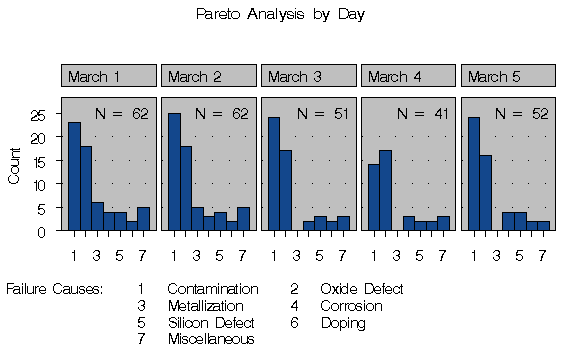
The NROWS= and NCOLS= options display the cells in a side-by-side arrangement. The VREF= and LVREF= options add reference lines. The chart is displayed in Output 29.2.3.
Output 29.2.3: One-Way Comparative Pareto Analysis with CLASS=DAY
|
   title 'Pareto Analysis by Process and Day' ;
   proc pareto data=failure4;
      vbar cause / class       = ( process day )
                   freq        = counts
                   nrows       = 2
                   ncols       = 5
                   cbars       = vigb
                   cframe      = ligr
                   cframetop   = ligr
                   cframeside  = ligr
                   last        = 'Miscellaneous'
                   scale       = count
                   catleglabel = 'Failure Causes:'
                   intertile   = 1.0
                   nohlabel
                   nocurve
                   nlegend ;
   run;
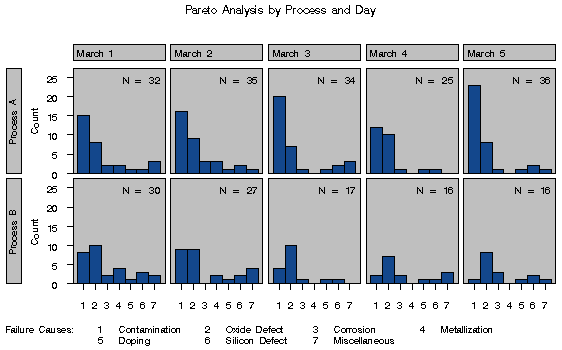
The chart is displayed in Output 29.2.4.
Output 29.2.4: Two-Way Comparative Pareto Analysis for PROCESS and DAY
|
|
Chapter Contents |
Previous |
Next |
 Top |
Copyright © 1999 by SAS Institute Inc., Cary, NC, USA. All rights reserved.