Conclusion

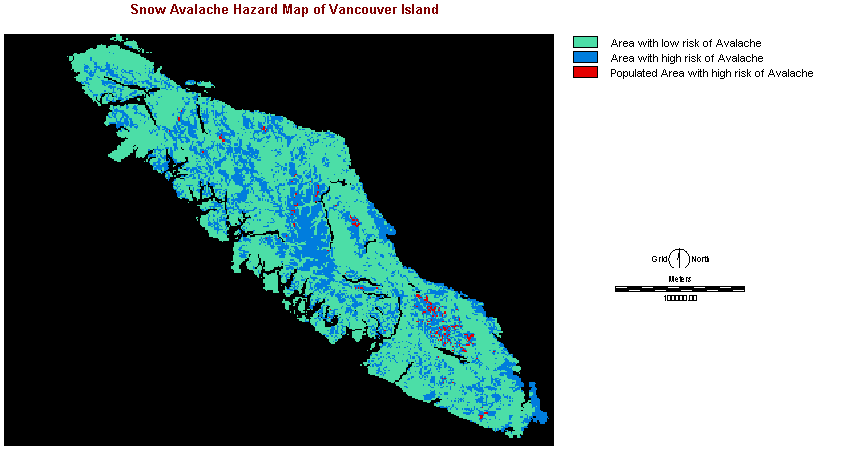
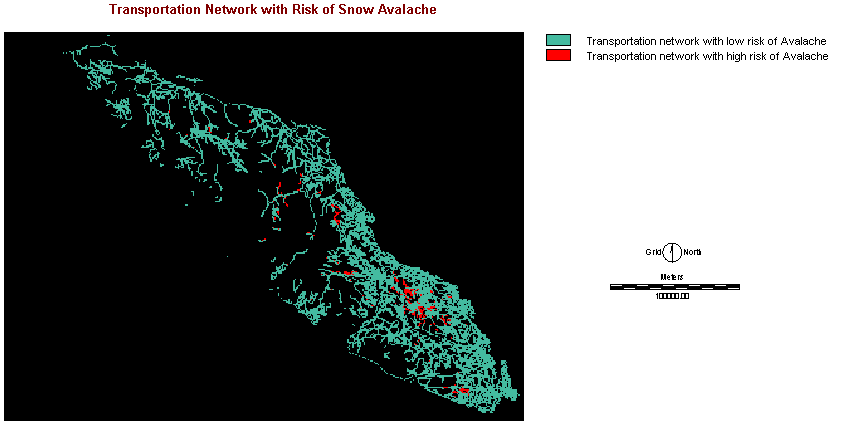
Text Box: Based on the spatial analysis, it suggests that some populated areas and transportation networks have high risk of snow avalanche. We can notice that the distribution of snow avalanche on both populated area and transportation network are very similar. On the "Snow Avalanche Hazard Map of Vancouver Island", the red area would have the greatest risk of snow avalanche because those areas are populated and have the greatest chance a snow avalanche occur. Area in blue would consider as areas that snow avalanche would occur, but is not highly concern because of their low population. There would be no or less avalanche at the green area, so those area are safe from snow avalanche hazard. On the "Transportation Network with Risk of Snow Avalanche" map, the transportation network in red would have the higher risk of snow avalanche than area in green. Finally, we reach the goal to model the area that snow avalanches may occur potentially on Vancouver Island by using GIS. However, it is not exactly that snow avalanche might occur in those areas. Wind speed, temperature and slope angle are also needed to be considered. There are problems on acquiring the data of wind speed, temperature and slope angle. You would ask why I didn't generate the slope angle from the DTM. The reason is that the interval of the contours are too large (200m) and it cause the DTM to be rough. The resolution of the DTM is not detail enough for calculating slope angle accurately. I did try to generate the slope angle out but it gave out a mis-leading result that all the slope on Vancouver Island are less than 45 degree. You and me know that is not possible to have such fact, so I give up the slope angle data. As the result, what we can conclude is that site in the high risk of avalanche area with slope angle 30 - 45 degrees, wind speed >25km/h, and temperature > 0oC; would have a greater chance to have a snow avalanche occurred. Therefore, mitigations are needed at those sites.


Introduction        Data Collection          Methodology         Spatial Analysis       Conclusion
Text Box: Introduction        Data Collection          Methodology         Spatial Analysis       Conclusion
Next
Text Box: Next
Back
Text Box: Back