

- About
- People
- What We Do
- Public Programming
- Initiatives
- When the Map Is Useless
- Democratic Renewal and Resilience
- Moving in a Livable Region
- The Dialogue on Technology Project (DoT)
- Urban Resilient Futures Burnaby
- Action on Climate Team
- Clean Energy Canada
- Hey Neighbour Collective
- New Economy Canada
- Renewable Cities
- Renovate the Public Hearing
- SFU Demshot Challenge
- Mitigating Wildfire Initiative
- Signature Events
- Jack P. Blaney Award for Dialogue
- Award Recipients
- Dr. Amal Elsana Alh'jooj
- 2024/25: Bringing Justice Home with Judge Abby Abinanti
- 2021/22: Reimagining Social Justice and Racial Equity with adrienne maree brown
- 2019/20: Climate Change and Human Rights with Sheila Watt-Cloutier
- 2017/18: Peace, Pluralism and Gender Equality with Alice Wairimu Nderitu
- 2015/16: Climate Solutions with Tim Flannery
- 2013/14: Reconciliation with Chief Robert Joseph
- 2011/12: Twelve Days of Compassion with Karen Armstrong
- 2009/10: Widening the Circle with Liz Lerman
- 2005: Corporate Social Responsibility and the Right to Health with Mary Robinson
- 2002: Environmental Sustainability with Maurice Strong
- Nomination Details
- History of the Award
- Award Recipients
- Bruce & Lis Welch Community Dialogue
- The Economics of What's Possible: An Evening with Stephanie Kelton
- 2026: Economics for the People: Inside Inequality with Mohsen Javdani
- 2024: AI: Beyond the Hype—Shaping the Future Together with Stephanie Dick and Daniel Barcay
- 2022: Facing the Flames: New and Old Ways of Co-Existing with Fire with Joe Gilchrist and Paul Hessburg
- 2021: All My Relations: Trauma-Informed Engagement with Karine Duhamel
- 2019: Power of Empathy with Kimberly Jackson Davidson
- 2019: Rethinking BC Referendums with John Gastil
- 2017: Strengthening Democratic Engagement with Valerie Lemmie
- 2015-16: THRIVE! Surrey in 2030
- 2014: Citizen Engagement and Political Civility with Dr. Carolyn J. Lukensmeyer
- 2013: Building a Culture of Participation with Dave Meslin
- 2012: Riots and Restorative Justice with Dr. Theo Gavrielides
- 2011: Growing Out of Hunger with Will Allen
- 2010: The Age of Unequals with Richard Wilkinson
- Jack P. Blaney Award for Dialogue
- Student Engagement
- Consulting Services
- Services
- Workshop and Training Offerings
- Our Projects
- Burnaby Community Assembly
- Centering Equity and Inclusion in an Engagement Framework
- Framework for Diabetes in Canada
- COVID-19 and Public Health: The Faith and Spiritual Leaders Dialogue Series
- Burnaby Business Recovery Task Force
- CleanBC Job Readiness Workshops
- Your Voice. Your Home.
- Perspectives on Reconciliation
- Establishing a Chinese-Canadian Museum
- Citizen Dialogues on Canada’s Energy Future
- Clients and Partners
- Get in Touch
- Knowledge & Practice
- Resources
- News
- Give
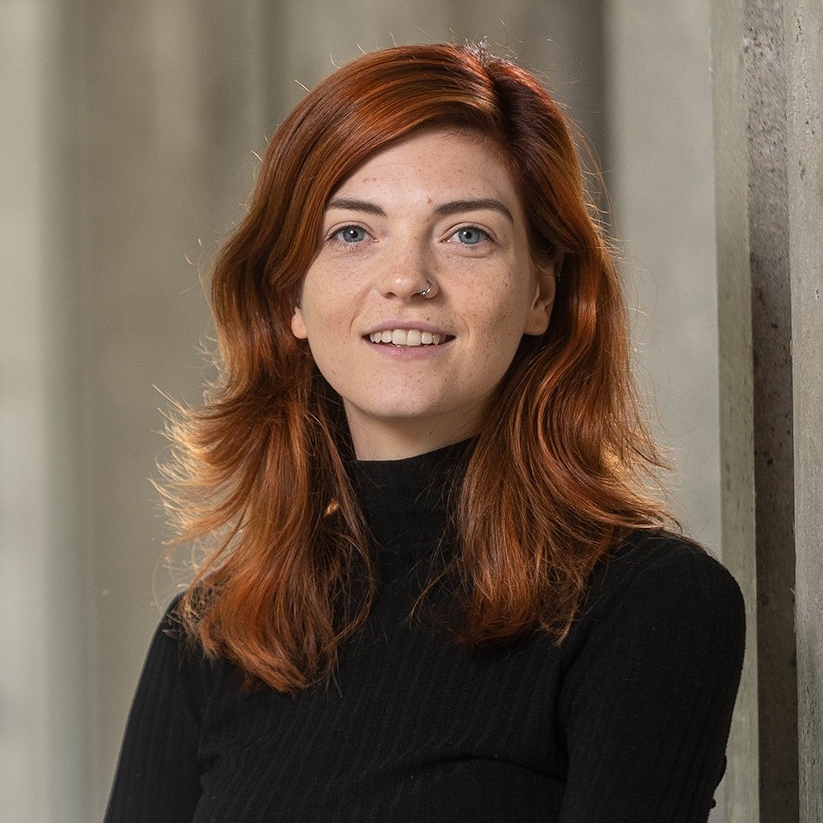
Claire is the Senior Analyst in the Office of Knowledge and Practice at the Centre For Dialogue. She provides research, evaluation, and capacity-building support across a diverse range of dialogue and engagement projects.
She holds a Master of Urban Studies from Simon Fraser University, an undergraduate degree in English Literature and Political Science from the University of Glasgow, and has experience using a wide range of research, and engagement methods and tools. At the Centre, Claire supports the Office of Knowledge and Practice in building capacity and creating systemic change in the fields of dialogue and participatory democracy. Claire extensively contributed her knowledge of housing policy and urban planning to advance the CMHC-funded Renovate the Public Hearing Initiative and has supported numerous other projects at the Centre. Prior to pursuing her Master's, she had six years of strategic communications experience in various public sector organizations in Vancouver and in Edinburgh, Scotland. She is grateful to be living as an immigrant settler on the unceded territories of the xʷməθkʷəy̓əm (Musqueam), Sḵwx̱wú7mesh (Squamish), and səlilwətaɬ (Tsleil-Waututh) Nations.
What is your role at the Centre for Dialogue?
As part of the Office of Knowledge and Practice, I support Centre for Dialogue initiatives with in a variety of ways including process design, initial research, data analysis, facilitation and reporting and evaluation. I also help to build internal capacity through developing and supporting internal training and opportunities for knowledge exchange, such as our monthly Dialogue Stories sessions.
What does dialogue mean to you?
Dialogue is a relational activity that enables important conversations to happen. Dialogue is not debate, and does not have a winner or loser. Dialogue can be tender, vulnerable, and challenging – but is worthwhile.
What is a common assumption you'd like to de-mistify?
That quantitative data, e.g. “the numbers don’t lie”, inherently holds more meaning or value than qualitative data. Both are important, and hold different meanings and tell different stories.
Affiliated Initiatives
Highlights and Achievements
- Organizer of the National Dialogue on Public Hearings, Land Use and Democracy
- Co-author of the Renovate the Public Hearing Initiative Final Report
- Presenter at the Canadian Institute of Planner 2024 Conference on the findings of the Renovate the Public Hearing Initiative