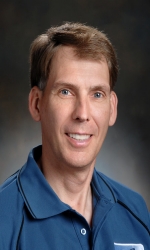
Andrew Blaber, PhD - Director
- PhD Kinesiology, University of Waterloo
- MSc Biophysics, University of Guelph
- BEd University of Western Ontario
- BSc Marine Biology, University of Guelph
- Email: ablaber (at) sfu (dot) ca
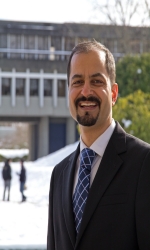
Dr. Kouhyar Tavakolian is an associate professor and the director of the biomedical engineering program at the University of North Dakota. Before joining UND, Dr. Tavakolian was a postdoctoral fellow at the University of British Columbia, Vancouver, Canada. He received his BS in Biomedical Engineering from Tehran Polytechnic, Iran, MS degree in Electrical Engineering from the University of Tehran, Iran, and a second MS degree in Computer Science from the University of Northern British Columbia, Canada. He defended his PhD thesis in 2010 at Simon Fraser University, Canada, and is an SFU Adjunct Professor.
Dr. Tavakolian's particular interest is in biological signal and image processing and biomedical instrumentation and has published more than a hundred forty journals, conference proceedings, patents, and book chapters in these fields.
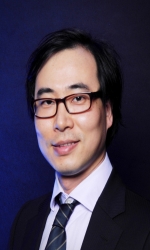
Dr. Xu completed his B.Sc. and M.Sc. degrees in Electrical Engineering and Biomedical Engineering at Fudan University, China in 2003 and 2006 respectively. His Ph.D. degree in Electrical Engineering was completed at Michigan State University, USA in 2010.
His Ph.D. research involved the development and validation of advanced hemodynamic monitoring techniques by physiological system modeling and identification. After completing his Ph.D. degree, Dr. Xu joined the Department of Kinesiology at University of Waterloo as a Postdoctoral Fellow to gain further training on experimental physiology. His work focused on the investigation of human cardiovascular regulatory systems during long-duration spaceflight. He is currently a Research Associate supervised by Dr. Andrew Blaber in Aerospace Physiology Laboratory at Simon Fraser University working on the physiological modeling and signal processing of interactions among cardiovascular, postural, and respiratory control systems.

Catherine received her bachelor’s from The University of British Columbia, majoring in Exercise Physiology for the eventual study of bioastronautics, and her Master’s, Space Studies, from the American Military/Public (APUS) University. Catherine was the APUS’ Inaugural American Institute of Aeronautics and Astronautics (AIAA) Club president (2020-2021), receiving the APUS’ 2020 Outstanding New Student Organization award. Catherine was also one of the first APUS Master’s Students to present at the AIAA’s 2021 Student Regional Conference: APUS Image Processing & Algorithm Development of Near-Earth Objects (MATLAB).
Catherine’s research focused on investigating interdisciplinary human space-health research examining physiological, transcriptomic, haematological, and multi-omic responses to spaceflight and terrestrial spaceflight analogs. She has been a Research Assistant in the laboratory since 2021 gathering data on CSA/NASA-affiliated human space-health research, CARDIOBREATH, and other laboratory projects. Her thesis involves the analysis of transcriptomic, haematological, physiological, and metabolomic datasets from simulated microgravity, isolation/confinement, and spaceflight studies (SIRIUS-21, Vivaldi I, Vivaldi II, and NASA OSDR spaceflight datasets, Inspiration4). Her aim is to investigate immune and homeostatic responses to simulated microgravity and short-duration spaceflight, including neutrophil-associated, inflammatory, antiviral, oxidative, and cellular homeostatic responses within Nuclear Factor kappa B (NFkB) and Conserved Transcription Responses to Adversity (CTRA) select genes.
Catherine developed detailed experimental protocols and supported specialised physiological research instrumentation during CARDIOBREATH as well as prepared and obtained Research Ethics Board approvals for terrestrial analog, Lower Body Negative Pressure, and NASA OSDR secondary-use investigations. Catherine has also collaborated and provided preeentations with researchers in Canada, Austria, the United Arab Emirates, and other international research environments.

Sonya received her Bachelor of Science in Kinesiology from Simon Fraser University (SFU). She is keen in advancing the field of human factors and ergonomics (also known as human factors engineering [HFE]).
Sonya is a Master of Science Student in Human Factors and Ergonomics (healthcare concentration) at the University of Derby (UK) and a Graduate Visiting Research Student with SFU APL where she will assist our team with the Lower Body Negative Pressure (LBNP) study and other research. Sonya also works within the Provincial Digital Health and Information Services portfolio at the Provincial Health Services Authority (PHSA).
As a human factors engineer with immense interest in innovation and partnerships, Sonya is passionate about integrating human-centred design in health technology product development and solutions. Her HFE research interests are in digital health, human-computer interaction (HCI), artificial intelligence (AI), usability engineering and medical device usability/design.

Following highschool, Polly pursued a career as a professional sailboat racer undergoing ocean and Olympic racing. It was during sailing that Polly’s interest in human physiology was developed into a drive to learn more. Polly received her Bachelors of Science in Sports and Exercise science at the University of Exeter (UK). Under the tuition of an Aerospace Physiologist, her interest in Aerospace Physiology rocketed towards solving ‘the problem of Space’. She then went to the Johnson Space Center for an internship NASA, with Airbus Defence and Space, as a biomedical coordinator. After graduating with a first class degree with honors, she took her enthusiasm to King’s College London to undergo a Masters in Human and Applied Physiology. Her Master’s thesis looked at the use of indirect body heating to maintain dexterity in cold environments, which not only has aerospace implications, but also military applications.
Polly left King’s with a distinction and is looking forward to her PhD with the APL looking at orthostatic intolerance following spaceflight.