Skip to content Skip to main navigation
MENU

Our Team

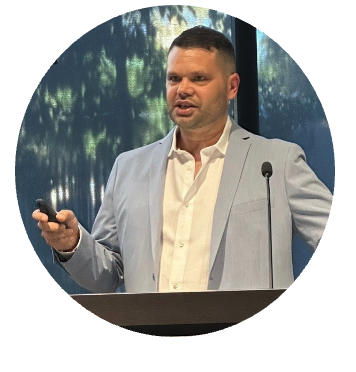
The Centre is Indigenous-led by Indigenous health researcher Dr. Krista Stelkia from the Faculty of Health Sciences at SFU. The Director brings strong leadership within the field of Indigenous health research, mentorship, and community engagement with local Indigenous communities as well as Indigenous peoples globally. With strong partnerships and respectful working relations with Indigenous health systems partners and leaders such as the First Nations Health Authority, the Centre has a shared vision and commitment to advance, advocate, and support Indigenous (First Nations, Métis, and Inuit) peoples and communities through Indigenous governed approaches to health and wellness.

MEET THE TEAM

Dr. Krista Stelkia

Director, Assistant Professor, Faculty of Health Sciences

Dr. Krista Stelkia is an Assistant Professor in the Faculty of Health Sciences at Simon Fraser University and inaugural Director of the Centre for Collaborative Action on Indigenous Health Governance, a partnership between SFU FHS and First Nations Health Authority (FNHA). Dr. Stelkia is also the newly nominated Principal Applicant for the BC Network Environment for Indigenous Health Research (BC NEIHR), which is nested within the Centre. She is Syilx/Tlingit from the Osoyoos Indian Band in the interior of British Columbia, Canada. Dr. Stelkia is an interdisciplinary Indigenous health researcher whose research primarily investigates the structural determinants of Indigenous peoples’ health and wellbeing. With a background in health sciences and criminology, Dr. Stelkia’s research has critically explored structural racism and health, Indigenizing health and wellness indicators in public health reporting, Indigenous health mentorship, connection to land as a determinant of health, and police oversight and accountability. Dr. Stelkia has over 15 years of professional experience working with First Nations communities and organizations, including the Office of the Chief Medical Officer at the FNHA. She joined the Faculty of Health Sciences as an Assistant Professor in September 2022.

Read Profile

Anita Manshadi
(on maternity leave)

Senior Research Manager, MPH

Anita Manshadi is a settler of colour with Persian ancestral ties raised on the Haisla territory. She currently resides as an uninvited guest on the traditional territory of the lək̓ʷəŋən people. Anita received her Masters of Public Health from the University of Victoria, where she specialized in Indigenous Peoples Health and has over 8 years of professional experience working with First Nations communities and organizations, most recently at the First Nations Health Authority (FNHA). With a background in public health and Indigenous health research, Anita continues to critically explore pressing areas within Indigenous-specific racism within the health care system, social justice and health equity, Indigenous health and wellness indicators, and Indigenizing health policies and environments with and for First Nations, Métis and Inuit people and communities.

Read Profile

Elizabeth Hunter

BC NEIHR Program Manager

Elizabeth (Liz) Hunter (she/her) is Stoney Nakoda from Goodstoney First Nation located in Mînî Thnî, Alberta (Treaty 7), with mixed European ancestry. She was raised as a guest on the unceded and occupied territories of the xʷməθkʷəy̓əm (Musqueam), Sḵwx̱wú7mesh Úxwumixw (Squamish), səl̓ilw̓ətaʔɬ (Tsleil-Waututh) Nations. In 2024, Liz became a certified doula through a program hosted by G4 Health (Treaty 7 Nations - Bearspaw, Chiniki, Goodstoney, and Tsuut’ina First Nation) and Zaag’idiwin - Full Spectrum Doulas.

Liz completed a Bachelor of Arts in Health Sciences with a Minor in Indigenous Studies at Simon Fraser University (SFU) in 2025. She is a Master of Science (MSc) student in the Faculty of Health Sciences at SFU, under the supervision of Dr. Krista Stelkia, where her research explores Indigenous (dis)ability and the intersections with Indigenous health and well-being. Her research interests include Indigenous (dis)ability, intersectionality, Indigenous midwifery, and doula-led initiatives. Liz's professional journey is marked by over 6 years of experience working within Indigenous health organizations. Her most recent roles were at the Centre for Collaborative Action on Indigenous Health Governance (CCAIHG) and the First Nations Health Authority (FNHA).

Read Profile

Ogechi Anumba

Research Assistant, Indigenizing Health Research Ethics Study

Ogechi Anumba (she/her) is of Nigerian ancestry on her paternal side and of Cree and Métis ancestry on her maternal side. She currently lives and works as an uninvited guest on the traditional, ancestral, and unceded territories of the xʷməθkʷəy̓əm, Skwxwú7mesh, and Səl̓ílwətaɁɬ Nations, who have been the original caretakers of this land since time immemorial.

Ogechi holds a Bachelor of Science with a Combined Major in Sciences, with concentrations in chemistry, life sciences, and earth and environmental sciences. Through her academic training and community-engaged work, she has developed a strong interest in ethical governance and relational accountability within Indigenous health research. Her experiences have shaped a commitment to research practices that center Indigenous sovereignty, community priorities, and culturally grounded ways of knowing.

She is excited to contribute to the Indigenizing Health Research Ethics Project and continue learning alongside Indigenous communities and Knowledge Holders in ways that support collective well-being and sovereignty.

Read Profile

Kyle Cook

Research Coordinator, Ǎrrǎmat Pathway 10 

Kyle is L'nu (Mi'kmaw) of Qalipu First Nation with mixed European ancestry. He grew up in Bay St. George, Newfoundland and now currently resides as a guest on the Songhees, Esquimalt and WSÁNEĆ people's territory.

Kyle is currently pursuing a master's degree in Indigenous Governance at the University of Victoria. Kyle's graduate research explore community engaged governance structures, planetary health, and land rematriation in partnership with Kānaka 'Ōiwi in Hawai'i. Kyle is interested in learning and supporting transnational Indigenous community solidarity and engagement that uplifts Indigenous knowledges and two-eyed seeing. Kyle recently completed a term as a Visiting Scholar in Indigenous Politics at the University of Hawai'i at Mānoa. 

Through his role as Research Coordinator with the Centre, Kyle will be supporting the Ǎrrǎmat project specifically Pathway 10 - Nurturing Indigenous Medicines and Health Care.

Read Profile

Linaldo Santos

Centre Advisor, CCAIHG

Linaldo Santos is a descendant of Xucuru Nation, from Pernambuco, with mixed African and European ancestry from Brazil. He currently resides on the unceded and occupied territories of the xʷməθkʷəy ̓ əm (Musqueam), Sḵwx ̱ wú7mesh Úxwumixw (Squamish), səl̓ilw ̓ ətaʔɬ (Tsleil-Waututh) Nations. 

Linaldo holds a Bachelor of Arts in Music, a Diploma in Chemistry Technology and is currently developing his studies through a MBA in Project Management and Agile Methodologies. His current role is as an Advisor at the Centre for Collaborative Action on Indigenous Health Governance (CCAIHG).

Read Profile

CENTRE-AFFILIATED RESEARCH TRAINEES

Taylor Atwater

PhD Student, Faculty of Health Sciences

Taylor Atwater is Semà:th First Nations with mixed ancestry and grew up in Pemberton BC.  She brings a diverse background to her work with a foundation in clinical exercise physiology, investigating the effects of high altitude on the coronary vascular system in her undergraduate research to exploring the lived experience of First Nations in BC with diabetes with the First Nations Health Authority. She is currently pursuing her PhD under the supervision of Dr. Krista Stelkia, focusing on First Nations-specific approaches to ethical health research in British Columbia.

Taylor boasts over four years of quantitative and qualitative research experience, using a Two-Eyed Seeing approach throughout various projects. Her dedication to advancing the well-being of Indigenous peoples is evident in her passion for promoting cultural safety and humility, as well as her commitment to exploring structural racism.

She resides on the unceded and occupied lands of the Líl̓wat Nation, where she remains deeply connected to this community.

Read Profile

Everett Brisbin

Undergraduate Student, Faculty of Health Sciences

Everett Brisbin is a First Nations undergraduate student in the Faculty of Health Sciences at Simon Fraser University. Raised in Port Coquitlam and Pitt Meadows, British Columbia, he currently resides on the traditional territory of the Kʷikʷəƛ̓əm (Kwikwetlem) First Nation peoples. Everett is actively pursuing a degree in Health Sciences with aspirations of a career in the medical field as a physician in the future.

His research interests include Indigenous health inequities, particularly the disproportionate prevalence of chronic illnesses in First Nations populations, the impact of environmental pollutants on economically marginalized communities, as well as a broad interest in medical sciences. With a deep dedication to Indigenous health and medical research, Everett aims to contribute to meaningful, community-driven solutions that promote wellness and health sovereignty for Indigenous peoples in Canada.

Read Profile

Andrew Caldwell

PhD Candidate, Individualized Interdisciplinary Studies, Faculty of Arts and Social Sciences

Andrew Caldwell (he/they) is an Interdisciplinary PhD student in the Faculty of Arts and Social Sciences. He is a registered member of the Algonquin (Anishinaabe) First Nations from Kitigan Zibi ("River Desert") Anishinabeg in Maniwaki, Quebec, and also has European settler ancestry. His Anishinaabe name is Wa-Wa-Ti-In-In-Ne, meaning "Northern Lights Man," and he identifies as Nijodoyiye (Two-Spirit in Algonquin).

He holds a Master of Arts in Criminal Justice/Criminology from the University of the Fraser Valley, graduating with distinction. His thesis focused on program and policy updates for incarcerated Two-Spirit individuals within Correctional Service Canada (CSC). His doctoral research examines the experiences of formerly incarcerated Two-Spirit and Indigiqueer individuals in sex-segregated correctional facilities, as well as the Elders who supported them. He is affiliated with the Faculty of Health Sciences, supervised by Dr. TJ Salway, and collaborates with Dr. Krista Stelkia, Dr. Lyana Patrick, and Dr. June Scudeler in Indigenous Studies and Gender, Sexuality, and Women’s Studies.

Read Profile

Katen Kelly

MSc Student in Biomedical Physiology and Kinesiology

Katen Kelly is Woodlands Cree with mixed ancestry. She is from Saskatchewan and belongs to the Lac La Ronge Indian Band. Katen is a Master’s student in SFU’s Biomedical Physiology and Kinesiology department. She recently graduated from the University of Saskatchewan with a bachelor’s degree in Psychology. Katen is specializing in Neuroscience, and her research focuses on brain health in Indigenous groups. Her current study aims to improve access to culturally appropriate care for individuals with Alzheimer’s Disease and Related Dementias. She believes that by creating a safe place for Indigenous people to share their thoughts and opinions on healthcare, we can generate positive change within our community. Katen is passionate and determined to encourage researchers, healthcare professionals, peacekeepers, and other members of the community to listen to the diverse experiences and knowledge of Indigenous peoples.

“ kikiskinowâsohtâkân – you learn by listening to people.”

Read Profile

Karen Edohai Blondin Hall

PhD Candidate, Faculty of Health Sciences

Karen Edohai Blondin Hall is Sahtúgot’ine and a Délı̨nę beneficiary with mixed ancestry, born and raised in Yellowknife, NWT. She holds a Bachelor of Science in Health Promotion from Dalhousie University and a Master of Arts from the University of Victoria, where her research explored Indigenous peoples’ experiences within NWT healthcare settings. 

Starting in 2013, Karen worked with the Government of the Northwest Territories to advance cultural safety and anti-racism across the territorial health system. She co-led a territorial cultural safety action plan, established and led a Cultural Safety and Anti-Racism Division, and developed and delivered cultural safety training grounded in northern and Indigenous perspectives. She more recently served in the NWT Premier’s Office as Director of Policy Innovation, providing strategic advice on reconciliation and Indigenous health equity. Karen has also contributed to national initiatives on cultural safety and health system accountability, including CIHI’s Cultural Safety Measurement Collaborative and CIHR Institute of Indigenous Peoples’ Health (Advisory Board Member), and to The Unforgotten film and workbook with the Canadian Medical Association.

Beginning in Fall 2026, she will pursue a PhD in Health Sciences at Simon Fraser University under the supervision of Dr. Krista Stelkia. Her doctoral research interests include Indigenous health governance, public sector transformation, and Indigenous-defined wellness within northern and Arctic contexts.

CENTRE-AFFILIATED SCHOLARS 

Dr. Evan Adams

Indigenous Scholar, Tla'amin First Nation 

Evan Tlesla Adams is a two-spirit, Coast Salish physician from Tla’amin First Nation near Powell River, BC, Canada.

Dr. Adams completed his Medical Doctorate at the University of Calgary and a residency in the Aboriginal Family Practice program at UBC in Vancouver. Dr. Adams has a Master of Public Health from Johns Hopkins University in Baltimore, Maryland. He was the Deputy Provincial Health Officer for BC (2012 to 2014), the Chief Medical Officer of the First Nations Health Authority (2014-2020), and then the Deputy Chief Medical Officer of First Nations & Inuit Health Branch, Indigenous Services Canada (2020-2023).

He will spend a year (24/25) as a Harkness (research) Fellow at the John A. Burns School of Medicine in Honolulu, HI. On a personal note, Evan is married to Allan, and they have 6 children.

Read Profile

Dr. Chenoa Cassidy-Matthews

Indigenous Scholar, Sachigo Lake First Nation 

Chenoa (she/her) is an anishininewak member of Sachigo Lake First Nation from the Barkman family, with mixed French and Scottish ancestry. She was raised in a small town near Ottawa, ON and moved to Vancouver in 2016 to pursue graduate school. Her doctoral research centred the experiences of urban Indigenous Peoples who use substances amidst concurrent public health emergencies during the COVID-19 pandemic in British Columbia. She is a Population Health Epidemiologist with the Indigenous Health Research Unit at the Vancouver Coastal Health Research Institute, where she is engaged in diverse subject areas including Indigenous food systems, climate change and resilience, and the impacts of COVID-19 and other public health emergencies on Indigenous health and care.

She is a co-investigator on several local, national, and global grant-funded projects in the areas of global Indigenous adolescent health, youth gender and sexual health, Indigenous youth leadership in research, land-based healing, and arts-based methodologies. Outside of work, you can find Chenoa biking, running, or skiing in the mountains with Indigenous Women Outdoors, her husband, and her dog Kya.

Read Profile

Dr. Simon Graham

Indigenous Scholar, Narungga from the Yorke Peninsula, South Australia 

Associate Professor  Simon Graham is an Australian National Health & Medical Research Council (NHMRC) Investigator fellow in the Poche Centre for Indigenous Health, Faculty of Health and Medicine at the University of Sydney. He is a Narungga from the Yorke Peninsula in South Australia. A/Prof Graham is an epidemiologist whose research primarily focusses on sexual health among Indigenous people in Australia. In 2022, he won the NHMRC Sandra Eades Investigator Grant Award for the highest ranked applicant and in 2024 he received the Australasian Sexual Reproductive Health Leader Award. Simon was on the NHMRC Principal Committee Indigenous Caucus which conducted a national consultation to updated the NHMRC Road Map 3 which is a 10-year strategic framework that aims to improve the health of Aboriginal and Torres Strait Islander people in Australia. He is a senior editor at the Lowitja's First Nations Health and Wellbeing Journal and in 2024, he was an invited speaker at the World Health Organization and International AIDS Society session on ‘Mobilize for action on sexually transmitted infections’.

Read Profile 

Dr. Ana Lúcia Pontes

Allied Scholar, Rio De Janeiro, Brazil

Ana Lúcia Pontes is a Brazilian medical doctor specialized in "Education and Health" and "Preventive and Social Medicine" (2003-2006). She holds both a master's degree and a doctorate in "Public Health" from the National School of Public Health Sergio Arouca. Currently, she is a researcher at the National School of Public Health Sergio Arouca, Oswaldo Cruz Foundation/Ministry of Health in Brazil, and a member of the Indigenous Health Thematic Group of the Brazilian Association of Collective Health. She is also a visiting scholar at Simon Fraser University within the Faculty of Health Sciences until july 2025.

With over 20 years of experience, she has been actively engaged in research, education, and technical work in Indigenous health in Brazil, particularly focusing on Indigenous Health Agents and the enhancement of Indigenous Health Policy. Additionally, she is passionate about advocating for and supporting Indigenous organizations and leaders in their fight for health rights and against racism, as well as supporting Indigenous health researchers.

Read Profile

Join our Team

Are you looking for opportunities to join our team as a research associate, practicum student, or collaborator? Get in touch now. 

Contact us