


Career Pathways
Taking Charge
At the School for International Studies, we understand that students are seeking guidance to make sure your time at university meets your longer-term goals. We know that students face a lot of uncertainty, particularly when it comes to career planning. We embrace career guidance approaches that view uncertainty as an opportunity for growth. This perspective helps students envision diverse career pathways and develop a positive attitude towards uncertainty, reducing anxiety and building confidence.
We work to engage students in professional development and career-related activities, access university resources, and connect with faculty and alumni. We are here to help you figure out how to use your time in university wisely, preparing you for your future.
Possible Career Pathways
Learn about the work our former students are doing in each of these categories below.
What can you expect from your degree?
During your time at the School for International Studies, you will have the opportunity to cultivate and refine skills essential for effectively meeting the demands of your post-university life and career path.
The International Studies (IS) degree equips students with knowledge about the world’s complex problems and enables individuals to analyze these realities through an interdisciplinary lens. In IS courses and through our many extracurricular opportunities (in Canada and abroad), students gain in-depth understandings and crucial skills in addressing real-world problems and multiple audiences.
Learning from instructors who are active in policy and research around the world, and with peers from diverse backgrounds, IS students gain rich insights to make informed decisions about how to pursue their career goals.
Skills
Explore some of the key skills you will develop through your IS degree and how they will prove valuable:
Analysis, Problem-solving, and Research
Enhancing these skills empowers students to analyze complex problems, synthesize information from various sources, and evaluate data critically. With these skills, students will become adept at identifying key issues, understanding their underlying causes, and proposing evidence-based solutions.
Decision-making and Implementation
Refining these skills equips students to make informed decisions, develop and evaluate policies, negotiate effectively, and execute plans with precision. These skills are crucial for implementing strategies, managing projects, and driving positive change.
Communication and Presentation
Nurturing these skills enables students to articulate ideas effectively, present research findings, and engage in meaningful discussions. Strong communication skills enable students to elucidate complex concepts clearly and persuasively, facilitating effective connections with diverse audiences across various settings.
Teamwork and Networking
Cultivating these skills enables students to collaborate fruitfully within diverse teams, lead initiatives, support team members, and achieve common goals. Further, networking skills enable students to build valuable professional relationships, establish connections, and create promising opportunities.
Experiential Learning
Experiential learning opportunities encourage students to apply their knowledge and skills in practical contexts and reflect on these events.
Learning through active engagement enriches the university process and contributes to students’ preparation for future careers.
You can find experiential learning opportunities inside and outside the classroom.
Inside the Classroom

IS 497 Field Practice Course
Students earn credits by participating in local or international volunteer or work placements (including co-op). Students reflect on their experiences through written assignments and small group discussions, relating their insights to topics and issues studied in their academic program. This course is available to all IS major, honours, and minor students, and it’s delivered online.
Examples of Hands-On Learning
In our courses, students find many opportunities to practice their skills and knowledge. We use approaches such as simulation exercises, role-playing scenarios, and class excursions to engage students in reflecting on the real-world implications of our studies. Below are a few examples from our classrooms.
IS 101 Global Challenges of the 21st Century: An Introduction to International Studies
Professor Anushay Malik facilitates a hands-on activity that helps students think about how global migration has been influenced by colonial policies. Using case studies of major railway projects in India and Uganda, students engage in a collaborative simulation that encourages collective decision-making and highlights how colonial labour systems shaped migration, fostering a deeper understanding of how historical legacies continue to influence the present.
IS 308 Global Indigenous Futures
Professor Rupak Shrestha invites students to create a digital humanities project to explore Indigenous futurisms and resistance movements. Through a field-based assignment, students visit and reflect on Indigenous local spaces and learn about archival research, visual mapping, and participant observation.
IS 315: Politics in the Middle East
Professor Nazanin Shahrokni coordinates several experiential learning activities that connect theory with lived realities across the region. One of these is a role-playing exercise focused on state-imposed veiling policies in Iran, Turkey, and Saudi Arabia, three distinct cases that represent divergent approaches to regulating (un)veiling. Through assuming the roles of state officials, religious leaders, and citizens, students explore how different political regimes have deployed dress codes to assert control, construct national identity, or implement reform.
IS 322 Central Asia: Conflict and Security
Professor Nicole Jackson runs a simulation and role-playing exercise in which students strive to reach a consensus on a security challenge within a United Nations Committee or Global Canada Affairs.
IS 350W Seminar on Global Problems in Interdisciplinary Perspective
In this capstone course, student produce publishable policy briefs, and receive substantial individualized feedback from the instructor through the drafting process. Students in this course have gone to publish their work in major news outlets.
IS 385 Urban Segregation through a Global Lens
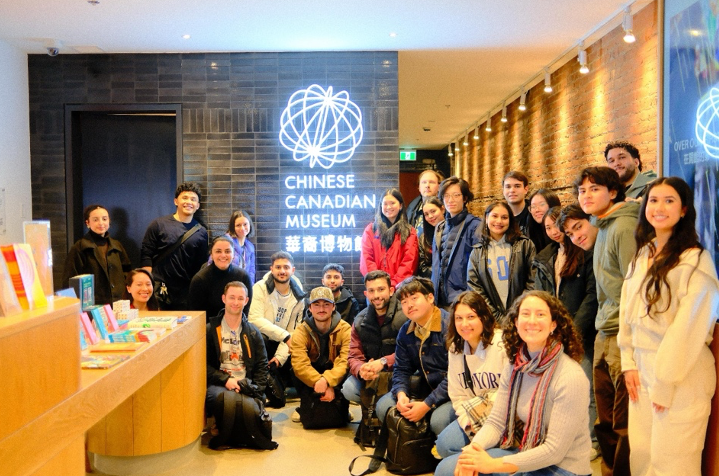
Professor Nazanin Shahrokni weaves multiple components that deepen students’ understanding of urban politics, racialized space and decolonial struggles, while fostering civic engagement and collaborative inquiry. In spring 2025 students visited the Chinese Canadian Museum for a guided tour followed by a student-led discussion. Prepared through targeted readings and an optional documentary screening, the visit culminated in a short written reflection.
Outside the Classroom

United Nations International Internship Programme for Students
Through a partnership with the United Nations Association in Canada, the School for International Studies offers the United Nations International Internship Programme for Students (IIPS), a unique opportunity to gain hands-on experience within the UN system.
The internships place successful candidates in a UN agency as a Junior Professional Consultant (JPC) for 6 to 8 months. JPCs are trained and supported through their internships.
Lark Anderson is a BAIS alumnus who helped to implement life-changing international development projects through the UN Internship Programme. Lark joined the United Nations Office on Drugs and Crime in Lao PDR where she worked as the Alternative Sustainable Development intern.
Co-op
Co-op is an optional program where students can explore career possibilities by alternating between study semesters and paid work. SFU’s Co-op program is a recognized educational strategy that effectively integrates work experiences with the academic curriculum, enhancing student learning and encouraging reflection.
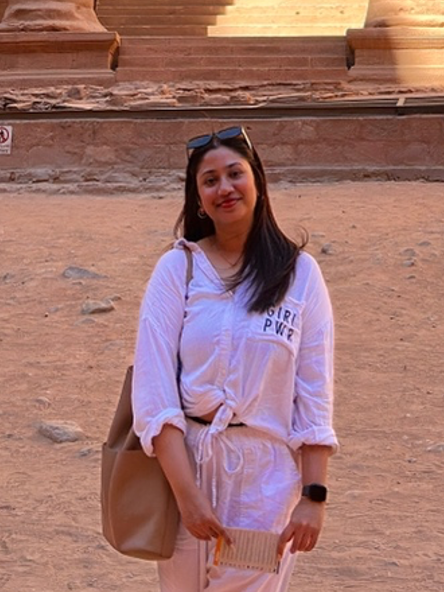
“My advice to students considering a co-op is to expand your search beyond the obvious. Opportunities are everywhere, and exploring through networking events, talking to university staff, or tapping into personal connections can be a great start. These avenues can often lead to unique and rewarding experiences, providing fresh perspectives. Don’t hesitate to reach out, ask questions, and get involved. Your co-op journey can start with a simple conversation, so take that first step!”
René Jack, completed her co-op at Transport Canada

“The most meaningful part of my co-op was getting to apply everything I learned in the classroom to real-world problems. It was amazing to see how the concepts from my textbooks could actually create tangible solutions and add value to a team. That hands-on experience really boosted my confidence and showed me what I'm truly capable of.”
Victor Rodriguez Muñoz, completed his co-op at the Consulate General of Mexico in Vancouver
Past employers of our International Studies majors
- Global Affairs Canada
- Natural Resources Canada
- Consulate General of the United States
- Consulate General of Mexico
- Government of Spain
- BC Ministry of Jobs, Trade and Technology
- BC Ministry of Education
- Chinese Ecosystem Research Network
- Indigenous and Northern Affairs Canada
- Tata Institute of Social Sciences
- Grameen Bank
- Open Media
- Foundation for Agrarian Studies
- Korean Broadcasting System
To learn more about how to qualify and apply to Co-op, please check out the FASS Co-op Program and book an appointment with one of their advisors.
Tanzania Field School
African politics, climate change, and development
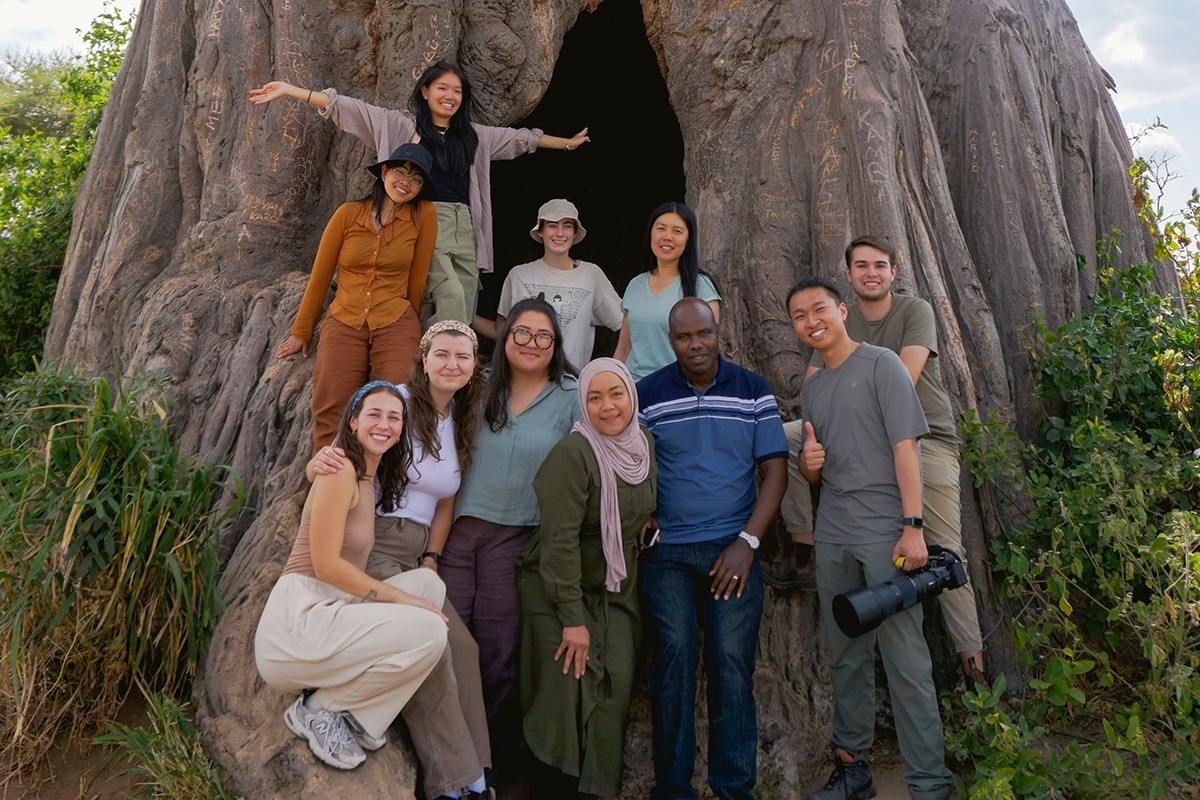
This is a unique 4-week field school offered by the School for International Studies that takes students to Dar es Salaam and Arusha, Tanzania for an immersive experience that combines classroom learning with hands-on engagement.
Participating students will receive 12 upper division IS units that can be used towards their SFU degree.
In Dar es Salaam, students study at University of Dar es Salaam, connect with local women’s cooperatives, visit grassroots worker associations, and meet Canadian development officials to gain broader perspectives on the challenges surrounding economic and social development. In Arusha, students are based at the Arusha Climate and Environmental Research Centre and learn about the real effects of climate change on communities, examine resource conflicts, and engage directly with local communities, NGOs, and government officials through a series of site visits and excursions.

Defence Resources Exploring Alternatives to Militarism (DREAM) Lab
This intensive week-long workshop trains students to critically re-evaluate Canada's military and defense spending, exploring alternative approaches to bolster the everyday security of Canadians.
Megan MacKenzie, Professor and Simons Chair in International Law and Human Security in the School for International Studies, leads this initiative.
“This lab is a great chance for students to hone what I consider to be a vital skill for both students and faculty: dreaming of a better future and creating strategies for fostering that better future”
Megan MacKenzie, Professor and Simons Chair in International Law and Human Security
Students receive training in policy analysis, take part in conceptual discussions about security and military spending, receive insight from guest speakers and collaborate with their peers to produce a report on alternative spending options. At the end of the lab, they present their findings to an academic and policy audience.
Academic and Career Development Advisor
Catalina Bobadilla Sandoval
Harbour Centre Campus, suite 7233
To book a meeting, please use Advisor Link.
Cata offers one-on-one advising to help students with:
- Goal setting
- Career exploration
- Job searching
- Approaches to resumes and cover letters
- Getting ready for interviews
Cata shares relevant information about events and organizes career development workshops for students at different stages of their degree.