

From Access to Belonging in Canadian Education
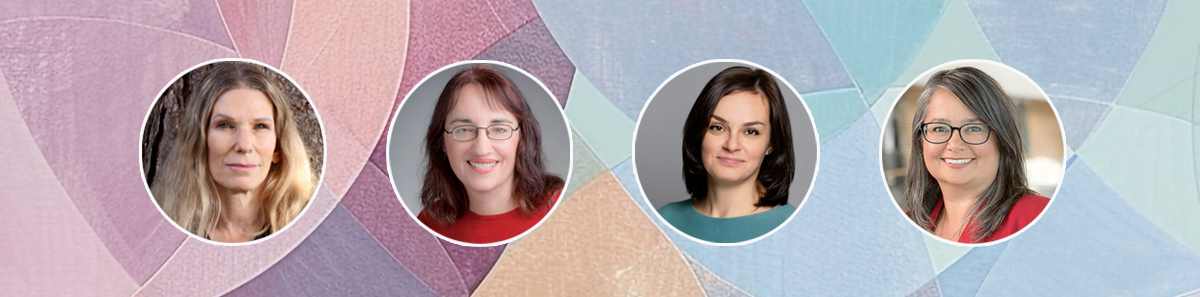
This month’s Education Research Matters highlights studies that rethink equity in Canadian education as a question not only of access but of belonging. While policies in higher education often define equity as opening doors or expanding accommodations, researchers in SFU’s Faculty of Education show that access does not guarantee recognition, participation, or inclusion. Their work illustrates how students with disabilities, refugee learners, and Indigenous students experience the daily realities of schooling, revealing the relational, cultural, and structural conditions that shape whether students feel seen, supported, and valued. Together, these scholars show that equity is a living practice built through pedagogy, policies, and community-grounded approaches that allow learners to flourish with dignity.
Equity in Canadian education is often seen as a matter of access: opening pathways, admitting more diverse learners, and providing accommodations. Yet access alone does not guarantee that students will experience belonging, recognition, or meaningful participation. Scholars at SFU’s Faculty of Education show that equity becomes a reality through the relationships, decisions, and supports that enable students to feel seen and valued.
For students with disabilities in higher education, access is only the beginning. In “From access to inclusion: A call for a cultural shift in higher education” (2025), Drs. Lilach Marom and Jennifer Hardwick examine the experiences of 50 students with disabilities across Canadian universities. Although these students formally “gain access” through institutional accommodations, many encounter system ableism in classroom interactions, administrative processes, and peer relationships. Students describe pressure to “perform” ability, hide disability, and continually self-advocate for basic learning conditions, experiences revealing how ableist norms shape everyday academic life. For Marom and Hardwick, meaningful inclusion requires a cultural shift: redesigning pedagogical structures, rethinking institutional norms, and treating students with disabilities as knowledge-holders whose insights illuminate hidden obstacles.
Insights from “Common misconceptions of disabled students: The construction of ableism in higher education” (2025), Dr. Lilach Marom and Arley McNeney show how ableism is built on assumptions about who counts as a “good” or “ideal” student. Students with disabilities are often seen as less capable, less committed, or seeking “special treatment.” These misconceptions hide the real structural and bureaucratic barriers they face, including heavy paperwork, inconsistent accommodations, and rules that value productivity and independence over care and access. By sharing students’ stories, Marom and McNeney argue that true inclusion means breaking these misconceptions and seeing disability as a valued identity, not a problem to fix.
Nor do current policies address the layers of complexity faced by refugee students with disabilities, as Dr. Inna Stepaniuk and Mr. Olabanji Onipede argue in their “Fostering inclusive futures: Advancing equity in education policy making for refugee students with disabilities” (2025) study. They analyzed federal immigration and provincial K-12 education policies and found that these students are caught within separate, disconnected policy logics. Immigration policies largely overlook how disability is shaped by cultural histories, and K–12 education policies rarely engage with the lived experiences and histories of refugees with disabilities. The absence of this intersectional understanding leads to fragmented, often misaligned supports, and obscures the trauma, linguistic transitions, interrupted schooling, and systemic ableism in schools for refugee students with disabilities. Stepaniuk and Onipede call for intersectional, coordinated policies and supports that recognize the realities of students’ lives rather than professional and administrative silos.
To address the challenges visible in classrooms, Dr. Susan Barber’s arts-based research shows how multimodal, creative pedagogies help newcomer children express identity, process difficult experiences, and engage academically sooner than expected. Her article “From silence to academic engagement” (2025) examines the “silent years” commonly experienced by refugee children with disabilities. These children often spend extended periods on the margins of learning while negotiating trauma, new languages, and unfamiliar school systems. Barber’s findings make a clear point: belonging cannot be produced through access policies alone but grows through relational, emotionally attuned pedagogical practices that respond to students’ social and affective needs.
Relational, culturally grounded practices can also enable students with disabilities to meet the challenges they face. Dr. Michelle Pidgeon and colleagues describe the work of Indigenous Student Centres (ISCs) as “heartwork”—a relational practice grounded in Indigenous knowledges, community care, ceremony, and land-based engagement. Their article “Understanding the heartwork of Indigenous student services during the challenging times of reconciliation, decolonization, and indigenization” (2025) offers insights into how ISC staff cultivate belonging by centring cultural integrity, relational accountability, and kinship-based support systems. Rather than supplementing existing systems, the ISC embodies fundamentally different ways of envisioning educational belonging. Their study suggests that meaningful reconciliation requires non-Indigenous colleagues to take up the work of becoming an “ally,” “co-conspirator,” or “accomplice,” to practise “being welcoming,” and to “be a good neighbour.” This necessitates listening, self-educating, showing up with respect, and acting as a “good relative” who helps share responsibility for transforming institutional spaces and relationships.
Across these studies, equity emerges not as an endpoint but as an ongoing relational and structural practice. Belonging is cultivated through artful pedagogy, intersectional policy, Indigenous heartwork, and critical reimagining of who is recognized as a legitimate knower or professional. These scholars invite us to re-envision equity not as a matter of access alone but as the creation of educational environments in which all students and educators can flourish intellectually, culturally, relationally, and with dignity.
References
Barber, S. (2025). From silence to academic engagement: How refugee children with disabilities access learning through inclusive ‘artful’ schools in Canada. British Educational Research Journal, 51, 1789–1819. https://doi. org/10.1002/berj.4148
Marom, L., & Hardwick, J. (2025). From access to inclusion: A call for a cultural shift in higher education. Higher Education, 89(2), 513–534. https://doi.org/10.1007/s10734-024-01233-x
Marom, L., & McNeney, A. (2025). Common misconceptions of disabled students: The construction of ableism in higher education. Journal of Diversity in Higher Education, 18(S1), S665–S677. https://doi.org/10.1037/dhe0000615
Stepaniuk, I., & Onipede, O. (2025). Fostering inclusive futures: Advancing equity in education policy making for refugee students with disabilities. Critical Policy Studies, 1–16. https://doi.org/10.1080/19460171.2025.2555390
Waterman, S. J., Cunningham, S. M., & Pidgeon, M. (2025). Understanding the heartwork of Indigenous student services during the challenging times of reconciliation, decolonization, and indigenization. Canadian Journal of Higher Education, 55(3), 85–98. https://doi.org/10.47678/cjhe.v55i3.190639
F T