

- Page Not Found
- Research
- Covid-19 Research
- People
- Software
- Events
- Resources
- Blog
- Fundamental Limitations of Contact Tracing for COVID-19
- After vaccination: What happens next in BC
- High transmission variants: The benefits of being proactive
- Vaccinating essential workers
- Are there COVID variants amongst us?
- What if a high-transmission variant takes off?
- What to expect when schools reopen
- Parks and Bars
- Join Us
The MAGPIE Group
Our team is led by Dr. Caroline Colijn and includes researchers who are applying mathematical and statistical tools to answer important questions in the areas of genomics, epidemiology, biology and other interdisciplinary fields.
Faculty

Caroline Colijn
Caroline Colijn is a Professor of Mathematics who works at the interface of mathematics, evolution, infection and public health, and leads the MAGPIE research group. She joined SFU's Mathematics Department in 2018 as a Canada 150 Research Chair in Mathematics for Infection, Evolution and Public Health. She has broad interests in applications of mathematics to questions in evolution and public health. Contact ccolijn@sfu.ca.
Website: carolinecolijn.ca

Paul Tupper
Paul Tupper is a Professor of Mathematics whose research spans mathematical applications in linguistics (phonetics and phonology) and biology (biodiversity and epidemiology). He also works on the theory of diversities, a framework that extends the classical notion of metric space.
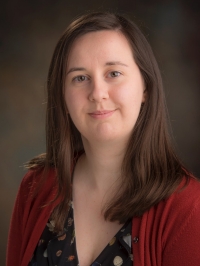
Jessica Stockdale
Jessica Stockdale is an Assistant Professor of Mathematics with interests in mathematical and statistical modelling of infectious disease outbreaks, particularly using genomic data. Before moving to SFU in October 2018, she completed her PhD at the University of Nottingham, UK, working on Bayesian computational methods for stochastic epidemics. Her current projects focus on modelling of pathogen genomic data to better understand transmission and evolution, and predict future infection.

Cedric Chauve
Cedric Chauve is a Professor of Mathematics who holds a PhD and Habilitation in Theoretical Computer Science from Bordeaux University. His research interests include the development of algorithms and software tool for analyzing genomic data, in comparative genomics, cancer genomics and pathogen genomics.
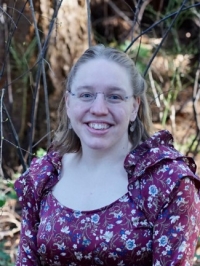
Ailene MacPherson
Ailene MacPherson is an Assitant Professor of Mathematics who uses mathematical and statistical tools to address questions at the intersection of evolution, ecology, and epidemiology. Ailene develops phylodynamic (phylogenies+ epidemiological dynamics) methods to understand and control ongoing epidemics. In particular, Ailene's research focuses on quantifying how both host and pathogen genetics shape disease spread and severity. Additionally, Ailene strives to understand how these complex coevolutionary interactions shape the biological diversity of the natural world by studying the genetics and evolutionary dynamics of long-term associations between hosts and their infectious pathogens.
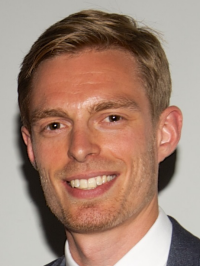
Ben Ashby
Ben Ashby is a Professor of Mathematics. He is a mathematical biologist interested in the ecology and evolution of hosts and parasites. He uses mathematical models to study how parasites spread through populations and how traits such as infectivity and virulence evolve, and in turn how this affects the evolution of host traits such as resistance or mating strategies. His research covers a broad range of topics in biology, including infectious diseases, the evolution and maintenance of diversity across space and time, sexual selection and reproductive strategies, and niche evolution.

Lloyd Elliott
Dr. Lloyd T. Elliott is an Assistant Professor of Big Data in the Department of Statistics and Actuarial Science at Simon Fraser University, and an Honorary Academic Visitor at the Nuffield Department of Clinical Neuroscience at the University of Oxford. His research interests include machine learning, brain imaging genetics, phylogenetics and Bayesian nonparametrics. Dr. Elliott collaborates with the MAGPIE group on COVID-19 epidemiological modelling. He also serves with CGEn's HostSeq project for SARS-CoV-2 host genetics.
Postdoctoral Researchers

Tanu Saroha
Tanu is a Postdoctoral Fellow with a primary interest in investigating pathogen transmission using genomics. She received her Ph.D. in Microbial Genomics at CSIR- Institute of Microbial Technology, Chandigarh, India where she studied the genomic characterisation and evolution of antibiotic-resistant bacterial pathogens. She employed whole-genome sequencing, comparative genomics, and phylogenetic analysis to trace the evolutionary pathways of resistant strains, identify genetic signatures of horizontal gene transfer, and uncover the broader evolutionary dynamics shaping microbial populations. She joined the MAGPIE group to work on various projects, mainly focusing on genomic analyses in S. pneumoniae and M. tuberculosis.

Renny Doig
Renny is a Postdoctoral Fellow whose primary area of research is the design of statistical methods to aid in the genomic surveillance of pathogens. His current focus is on lightweight tools that can be applied to a variety of pathogens and can be easily fit into genomic surveillance pipelines. He joined the MAGPIE group in 2025 as a member of the ARTIC2 network. Prior to this he received his PhD in Statistics from Simon Fraser University under the supervision of Liangliang Wang where he researched advanced Monte Carlo methods for Bayesian computation.

Lars Berling
Lars is a Postdoctoral Fellow who develops methods and software in the area of phylogenetics.
His work has focused on understanding distributions of phylogenetic time trees.
A major goal of this work is to improve the way phylogenetic inference of trees is performed,
particularly in the context of BEAST2 but applicable to all tree inference software.
https://lars-b.github.io/

Laurinne Balstad
Laurinne is a Postdoctoral Fellow working in theoretical ecology. She studies how management actions shape eco-evolutionary outcomes and how managers can account for and leverage ongoing evolution to achieve their goals. Her work spans the basic-applied spectrum and explores various wildlife host-pathogen systems. She uses a mix of quantitative approaches including mathematical models, simulations and statistical analysis. As a member of the King (UBC) and Ashby (SFU) Labs, she develop models to understand how pathogens evolve might in the Anthropocene.
https://lauriebalstad.github.io/
Google Scholar

Aniket Mane
Aniket is is a Postdoctoral Fellow whose interests primarily lie in the fields of discrete mathematics, combinatorial optimization. He works on designing optimization-based techniques to address questions posed in bioinformatics.

Bradley Jones
Bradley is a Postdoctoral Fellow who develops and analyzes methods and software for understanding the dynamics and evolution of human pathogens between and within host. These range from estimating integration dates of HIV proviral sequences in the HIV persistent reservoir, characterizing transmission in tuberculosis outbreaks, and data visualization. The unifying feature of Bradley’s research is the use of phylogenetic trees, which encode the evolutionary relationships of sequences. By exploiting the evolutionary characteristics of these pathogen systems, we can get a grasp on their dynamics ultimately leading to insights for drug and vaccine discovery and to inform policy makers towards the care and management of infectious diseases.

Alex Beams
Alex is a Postdoctoral Fellow working in mathematical biology with interests in connections between the epidemiology of infectious diseases and their evolution. Current projects are concerned with bacterial infections such as tuberculosis (TB), and he has long-standing interests in respiratory viruses (including SARS-CoV-2). He uses dynamical systems models and leverages genomic data through the lens of statistical phylogenetics.
PhD Candidates

Simon Gamboa Levi
Simon is a Ph.D. student in the Department of Biological Sciences at SFU. His research uncovers the hidden costs of agricultural intensification, specifically the erosion of insect genetic diversity. By bridging macroecology with causal inference, he leverages massive public genetic repositories to track species resilience at a continental scale. His goal is to advance conservation macrogenetics and provide the evidence needed to safeguard biodiversity in human-dominated landscapes.

Javad Meghrazi
Javad is a theoretical biologist interested in a broad range of problems, from physiological constraints organisms face to the application of economic theory to interspecies interactions. In his Ph.D. he aims to investigate the evolution of association and dependence between different species, particularly hosts and their symbionts. He completed his B.Sc. in biotechnology back home in Iran, followed by an M.Sc. in Zoology at UBC, where he developed models of cell growth that can help us predict the effect of environmental change on the cost of traits. Outside work, you can find him reading about religions and politics, walking in the woods, and teaching his friends how to cook Persian dishes.

Mina Moeini
Mina is a PhD student in the Department of Mathematics. Prior to this, she completed her Master's degree in Operations Research at SFU. Driven by a passion for creating meaningful social impact, her research focuses on applying operations research methods to real-world healthcare challenges. She works on a range of equity-driven problems, including improving housing pathways for individuals experiencing homelessness, enhancing healthcare access for Indigenous communities, and improving long-term care placement processes. Mina aims to make a meaningful impact on healthcare systems and improve outcomes for those who need it most.

Shab Molan
Shab's research interests center on infectious disease epidemiology and genomic surveillance, with a focus on integrating phylogenetic methods with epidemiological data to understand pathogen transmission dynamics. She applies Bayesian phylodynamic tools and molecular clustering approaches to reconstruct transmission networks from whole-genome sequencing data. She is interested in combining genomic and epidemiological evidence to evaluate public health interventions, particularly vaccination programs, and to identify factors driving outbreak spread. Her work leverages real-world outbreak data to generate actionable insights that inform disease prevention strategies.

Jennifer McNichol
Jennifer is a PhD candidate in Applied Mathematics. Her research focuses on statistical methodology to infer pathogen transmission from genomic data.

Mahdi Salehzadeh
Mahdi's work involves using epidemiology and evolutionary approaches to examine bark beetle infestations. he is interested in exploring multi-scale questions that occur in a variety of fields, broadly speaking falling under the following categories:
- Investigating the dynamics within the host (tree) using computational fluid dynamics approaches.
- Creating a brand-new model to depict an outbreak of the bark beetle while refining the presumptions made in earlier literature studies. and evaluating the severity of many parameters to limit the outbreak.
- Examining issues brought up in the study of evolution, such as local adaptation.

Yexuan Song
Yexuan's interests lie in Ancestral State Reconstruction methods which are widely used in phylogenetics for identifying the character states of evolutionary ancestors. He is also interested in using mathematical models of infectious diseases to study their spread and the ways in which this connects to coalescent theory.
Amin Afshari
MSC Students

Jamie Nordio
Jamie is a master’s student in Applied and Computational Mathematics. His research interests are in evolutionary epidemiology, particularly in how stochasticity leads to coherence resonance in epidemic models eliciting quasi periodic behaviour and how it affects evolutionary outcomes. As a research assistant in his undergrad, he developed mathematical models describing the population dynamics of the HIV/AIDS epidemic in Panama which were used to measure the impact and cost of targeted treatment intervention programmes.

Olivia Reiter
Olivia is an MSc student in applied and computational mathematics at SFU, under the supervision of Ailene MacPherson and Ben Ashby. Her focus is on quantifying the “disease-diversity relationship” across different forms of global change. She aims to identify which forms of global change trigger an amplification effect (i.e., more biodiversity implies more disease) and which trigger a dilution effect (i.e., more biodiversity implies less disease).

Javad Valizadeh
Javad's research interests lie in mathematical modeling of infectious diseases, particularly competition between populations. He also studies biodiversity measures and their properties, with the goal of improving how we quantify and interpret biological diversity.
Pegah Aryadoost
Oliver Fujiki
Rene Roy
MohammadReza Sadeghian