

- About
- Research
- Prospective Students
- Current Students
- News & Events
- News
- Events
- News & Kudos Archives
- 2025 Archives
- Thesis Defence - Congratulations to Negin Shooraj
- SFU Geography Alumni Sean Orr wins Vancouver council seat in byelection
- Rosemary Collard awarded 2024 SFU Excellence in Teaching Award
- SFU Students Designed and Developed a GeoApp as a Living Wage Calculator
- Undergraduate students team secures third-place in Canada-wide GeoApp competition
- SFU Geography Wins Big at 2025 CAG Annual Conference
- Thesis Defence - Congratulations to Alex Sodeman
- Thesis Defence - Congratulations to Tintin Yang
- In Memory of Leonard "Len" Evenden, Professor Emeritus
- Gabrielle Wong awarded 2025 Gordon M. Shrum Medal
- Dr. Bright Addae awarded 2025 Graduate Dean's Convocation Medal
- Congratulations to Alysha van Duynhoven for Teaching Assistant Excellence Award
- Wildfires to waterways: SFU Geography grad takes action to protect the environment
- Making a difference on and off-campus: student leader and changemaker, Gabrielle Wong, awarded SFU convocation medal
- 2025 Alumni Newsletter
- Kira Sokolovskaia wins the 2025 SFU ECCE GIS Scholarship Award
- Mapping a path to City Hall: SFU alumnus shares journey to becoming Mayor of New Westminster
- Thesis Defence - Congratulations to Alysha van Duynhoven
- Thesis Defence - Congratulations to Hannah Harrison
- Thesis Defence - Congratulations to Jade Baird
- Thesis Defence - Congratulations to Ashley Tegart
- Rethinking the World Map: Dr. Shiv Balram featured on CBC
- Thesis Defence - Congratulations to Véronique Emond-Sioufi
- SFU Geographers at the 2025 International Cartographic Conference in Vancouver
- When academic curiosity meets environmental purpose: new global environmental systems grad builds interdisciplinary foundation at SFU
- Alysha Van Duynhoven wins the 2025 SFU ECCE in GIS Student Associate Achievement Award
- Thesis Defence - Congratulations to David Swanlund
- Congratulations to Our 2025 Warren Gill Award Recipients!
- Thesis Defence - Congratulations to Baharak Yousefi
- Thesis Defence - Congratulations to Tara Jankovic
- Thesis Defence - Congratulations to Christine Leclerc
- Thesis Defence - Congratulations to Kira Lamont
- Terri Evans: Researching homelessness in suburban communities
- Mapping change for people and the planet
- GIS Month: What is Geographic Information Science (GIS)?
- SFU GIS undergraduate develops real-time earthquake monitoring and hospital alert system
- Physical Geography student returns to SFU, dives into marine ecology, soils and GIS to map a new path forward
- SFU study searches Strava to reveal secrets to happier runs
- GIScience Students Become SFU’s First Team at National Geomatics Competition
- 2025 Archives
- Alumni
- GEOG 162 - Canada
Anthony Lee - Co-op Q & A
1. Where did you work?
TransLink (Infrastructure Program Management Department)
2. What type of work did you do during your co-op placement? What were some of your responsibilities?
I worked for TransLink within the Infrastructure Program Management Department. My official title at TransLink was “Student Transportation Planner – GIS” but I can basically be seen as a GIS Technician. My role at TransLink has had me doing all kinds of work. I have had to create data inventories, create map styles & designs, perform updates on existing maps, create web maps and the list goes on. I am basically responsible for assisting my supervisor in providing GIS services for workers all over TransLink. Most of my work has required me to use ArcGIS, Microsoft Excel, and Google Earth.
3. How did the skills/knowledge developed in the classroom apply to your job? What did you learn?
My position mainly made use of the skills and knowledge that I learned in two of my Geography classes: GEOG 255 (Geographic Information Science I) & GEOG 383 (Regional Development & Planning). In GEOG 255, I learned basic concepts and theories of GIS and how to use GIS-related software (mainly ArcGIS). During my time at TransLink, I have made heavy use of ArcGIS. I was also able to hone my ability with ArcGIS during a previous co-op placement.
GEOG 383 taught me about the concepts of regional governance and the regional authorities (of which, TransLink is an example of). I also learned about the organizational structure of TransLink, what its responsibilities are, and how decisions are made. It really saved my supervisor from doing a lot of explaining back when I first started.
4. What was your most memorable co-op experience?
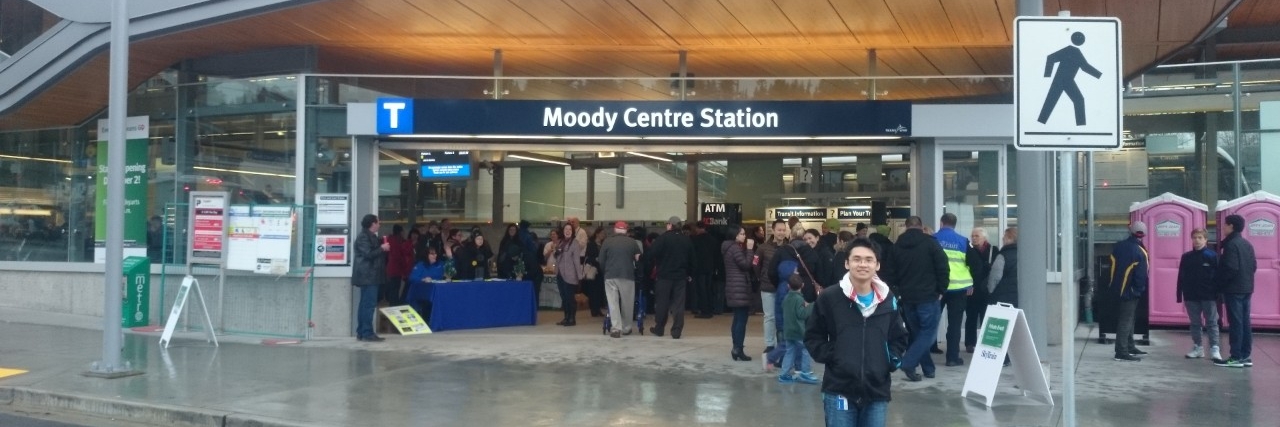
With the opening of the Evergreen Extension, TransLink hosted an employee-only viewing of the extension about a week ahead of the actual opening. Employees were even allowed to bring a limited number of guests or family members. It was really cool to know that I was one of the first among the general public to be on the Evergreen Extension. I even got a commemorative coin just for attending the event!
Another memorable experience was when I got to tour the Burnaby Transit Centre (one of the facilities where our buses are stored and maintained). It was really interesting to be able to see the insides of the buses and learn about all the work that’s necessary to keep them running every day of the week
5. Any words of advice for future co-op students?
My first piece of advice is to start early! I applied for co-op during my first year at SFU and I got my first job offer before I had even completed 20 credits worth of courses. I wouldn’t say that I was the most qualified for the position at the time (before I got the offer, I was previously an ice cream vendor and a data entry technician). Starting early exposes you the hiring process that companies typically go through sooner. You can also figure out what you need to do to make yourself more employable while you’re still young. This can be done by reading through job descriptions so that you can figure out what skills and qualifications employers want you to have.
Secondly, even if you don’t think that you’ll qualify for a position, apply for that job anyway! The more interviews you go through, the more experience you get from it and the better you’ll get at going through interviews.
Lastly, for those of you who are currently on work terms, don’t ever stop trying to develop yourself! A lot of people hunker down and take it easy after they get a co-op job. Personally, I think that being on a work term is a great time for you to develop yourself (and your resume) even further. Try volunteering or taking classes (or external classes) as you go progress through your work terms.