

- About
- Research
- Prospective Students
- Current Students
- News & Events
- News
- Events
- News & Kudos Archives
- 2025 Archives
- Thesis Defence - Congratulations to Negin Shooraj
- SFU Geography Alumni Sean Orr wins Vancouver council seat in byelection
- Rosemary Collard awarded 2024 SFU Excellence in Teaching Award
- SFU Students Designed and Developed a GeoApp as a Living Wage Calculator
- Undergraduate students team secures third-place in Canada-wide GeoApp competition
- SFU Geography Wins Big at 2025 CAG Annual Conference
- Thesis Defence - Congratulations to Alex Sodeman
- Thesis Defence - Congratulations to Tintin Yang
- In Memory of Leonard "Len" Evenden, Professor Emeritus
- Gabrielle Wong awarded 2025 Gordon M. Shrum Medal
- Dr. Bright Addae awarded 2025 Graduate Dean's Convocation Medal
- Congratulations to Alysha van Duynhoven for Teaching Assistant Excellence Award
- Wildfires to waterways: SFU Geography grad takes action to protect the environment
- Making a difference on and off-campus: student leader and changemaker, Gabrielle Wong, awarded SFU convocation medal
- 2025 Alumni Newsletter
- Kira Sokolovskaia wins the 2025 SFU ECCE GIS Scholarship Award
- Mapping a path to City Hall: SFU alumnus shares journey to becoming Mayor of New Westminster
- Thesis Defence - Congratulations to Alysha van Duynhoven
- Thesis Defence - Congratulations to Hannah Harrison
- Thesis Defence - Congratulations to Jade Baird
- Thesis Defence - Congratulations to Ashley Tegart
- Rethinking the World Map: Dr. Shiv Balram featured on CBC
- Thesis Defence - Congratulations to Véronique Emond-Sioufi
- SFU Geographers at the 2025 International Cartographic Conference in Vancouver
- When academic curiosity meets environmental purpose: new global environmental systems grad builds interdisciplinary foundation at SFU
- Alysha Van Duynhoven wins the 2025 SFU ECCE in GIS Student Associate Achievement Award
- Thesis Defence - Congratulations to David Swanlund
- Congratulations to Our 2025 Warren Gill Award Recipients!
- Thesis Defence - Congratulations to Baharak Yousefi
- Thesis Defence - Congratulations to Tara Jankovic
- Thesis Defence - Congratulations to Christine Leclerc
- Thesis Defence - Congratulations to Kira Lamont
- Terri Evans: Researching homelessness in suburban communities
- Mapping change for people and the planet
- GIS Month: What is Geographic Information Science (GIS)?
- SFU GIS undergraduate develops real-time earthquake monitoring and hospital alert system
- Physical Geography student returns to SFU, dives into marine ecology, soils and GIS to map a new path forward
- SFU study searches Strava to reveal secrets to happier runs
- 2026 Archives
- SFU study searches Strava to reveal secrets to happier runs
- GIScience Students Become SFU’s First Team at National Geomatics Competition
- 2026 ESRI Canada GIS Scholarship for SFU
- Physical Geography student returns to SFU, dives into marine ecology, soils and GIS to map a new path forward
- SFU GIS undergraduate develops real-time earthquake monitoring and hospital alert system
- GIS Month: What is Geographic Information Science (GIS)?
- Mapping change for people and the planet
- GIS Team Crowned Champions of 2026 National Geomatics Competition
- Second-year MSc Student, Erin Fairley, has made it to the SFU 3MT Finals!
- Thesis Defence - Congratulations to Brandon Drucker
- In Memory of Ivor Winton
- SFU Students Create GeoApp to Reveal Transit Deserts and Oases Across Metro Vancouver
- Andrew Perkins receives 2025 Excellence in Teaching Award
- Krista Macaulay Receives Prestigious Trudeau Fellowship
- Human Geography Student Guneet Kaur Receives SFU Centre for Dialogue Award for Undergraduate Research
- Dr. Baharak Yousefi awarded 2026 Graduate Dean's Convocation Medal
- Thesis Defence - Congratulations to Scott Peters
- Gus Schiele wins the 2026 SFU ECCE GIS Scholarship Award
- GES grad maximizes interdisciplinary learning opportunities to tackle global challenges in conservation and sustainability
- Student Stories: Camille Dela Cruz
- Terrestrial ecosystem researcher joins SFU Geography
- Running dry: Cannabis farming is changing streams in California, experts warn
- Thesis Defence - Congratulations to Erin Fairley
- Thesis Defence - Congratulations to Lilian Yang
- Thesis Defence - Congratulations to Stella Harden
- Thesis Defence - Congratulations to Katie Gravestock
- Distinguished Professor Dr. Kirsten Zickfeld recieves highest national academic honour
- Thesis Defence - Congratulations to Babak Kasraei
- 2025 Archives
- Alumni
- GEOG 162 - Canada
- GIScience Labs
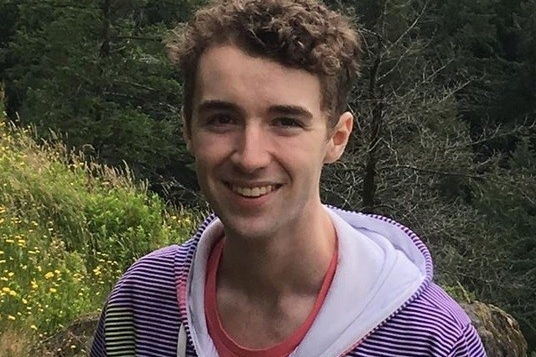
Nathan Zemp - Co-op Q & A
BA Human Geography, Econ Minor, GIS Cert
Co-op Term: Spring and Summer 2020
Where did you work (Department/Organization name and location)?
Vancouver Police Department – Crime Analytics Advisory and Development Unit
What was your role (what type of work did you do)? What were some of your responsibilities?
I acted as a technical assistant to the GIS administrator, carrying out various tasks involving mapping, geoprocessing, and database management. Throughout the term I edited spatial data files, created static and web-based maps, wrote data processing scripts and models, and designed two web apps.
How did the skills/knowledge developed in the classroom apply to your job? What did you learn?
Having lots of practice using ArcMap prepared me well for this co-op. The ability to keep your data organized and clean is essential when you're working with enormous datasets, or creating many backup versions. We used ArcGIS Online in the latter half of the co-op, which was new to me, but I'm already finding that experience paying off in my classes since then.
Can you share a challenge you faced in your Co-op and how you overcame it?
Working from home was a challenge. I was lucky enough to have a job I could continue by connecting in remotely, but I had to be very strict with myself and plan out my tasks to stay motivated. When technical challenges arose I worked on side projects to practice my skills, before returning to the central issue with a fresh outlook.
What was your most memorable Co-op experience?
The best experience as a GIS data analyst is creating a model or script and running the whole thing successfully for the first time. I went from having no prior programming experience to creating a program that could instantly generate a custom map on the fly, tailored to users' needs.
What have you learned through your Co-op experience?
I've learned how much growing opportunity there is for GIS students in a variety of sectors, and how foundational those skills are for working in a geography field. I also learned about the contrasting expectations between a workplace and an academic environment. The most vital takeaway from the experience has been the wealth of skills my supervisors imparted upon me.
What advice do you have for future Co-op students?
For getting hired: Start early (2nd year isn't too soon!). Apply to every position you're remotely interested in. Triple-check every cover letter for mistakes before you send it off. Look outside the Lower Mainland if you can, and apply for fall or spring co-ops if you can; your first co-op term is always the hardest to get and local summer co-ops have the stiffest competition.
For the long-term: Learn a programming language. SFU's GIS certificate places more emphasis on software use than back end work, but programming skills are essential to have once you get into the workplace. The good thing is that once you learn one programming language, it's super easy to learn others. The W.A.C. Bennett Library puts on excellent workshops every semester or so in R or Python; those languages are a good place to start. Online tutorials and forums are also indispensable resources.
Also, seek out friendships with your co-workers! It makes the whole experience much more enjoyable to have people to chat with on your breaks.