

- About
- Events
- Support
- Project Archive
- Amundsen Fellowship Program
- Disrupting Colonialism through Teaching Program
- Exploring Well-being in Learning Environments Program
- Inquiring into Your Multilingual Classroom Projects
- New Ways of Teaching, New Ways of Learning
- Teaching and Learning Development Grant Program
- Scholarship of Teaching + Learning Projects
- Programs
- SoTL 101: Introduction to SoTL and Teaching + Learning Inquiry
- SoTL 102: Formulating an Inquiry Project
- SoTL Thoughts
- Coffee + Conversation
- Tools for Inquiry: Conducting Inquiry Using CES
- Amundsen Fellowship Program
- Decolonial Teaching + Learning Seminar Series
- Decolonizing and Indigenizing Curricula
- Disrupting Colonialism through Teaching Program
- Exploring Well-being in Learning Environments: An Integrated Seminar Series + Grants Program
- Inquiring into Your Multilingual Classroom: An Integrated Seminar Series + Grants Program
- New Ways of Teaching, New Ways of Learning: Supporting Learning in Online Environments
- Teaching and Learning Development Grant Program
- Conferences
- Cfp: 2027 B.C. Open Education Summit [Deadline: October 18, 2026]
- 2026 SoTL Symposium Conference [October 22-24, 2026]
- B.C. Academic Integrity Day [October 23, 2026]
- Digital Learning Forum [Deadline: October 27, 2026]
- 2026 ISSOTL Conference [October 28-31, 2026]
- OnlineEd 2026 Conference [November 4, 2026]
- 2026 STLHE Virtual Conference [November 13, 2026]
- Cfp: International Journal for Students as Partners [Deadline: November 15, 2026]
- Call for chapters - Making up time: Towards a pedagogy of living and resisting the economization of time [Deadline: November 30, 2026]
- For Research Personnel
- News + Stories
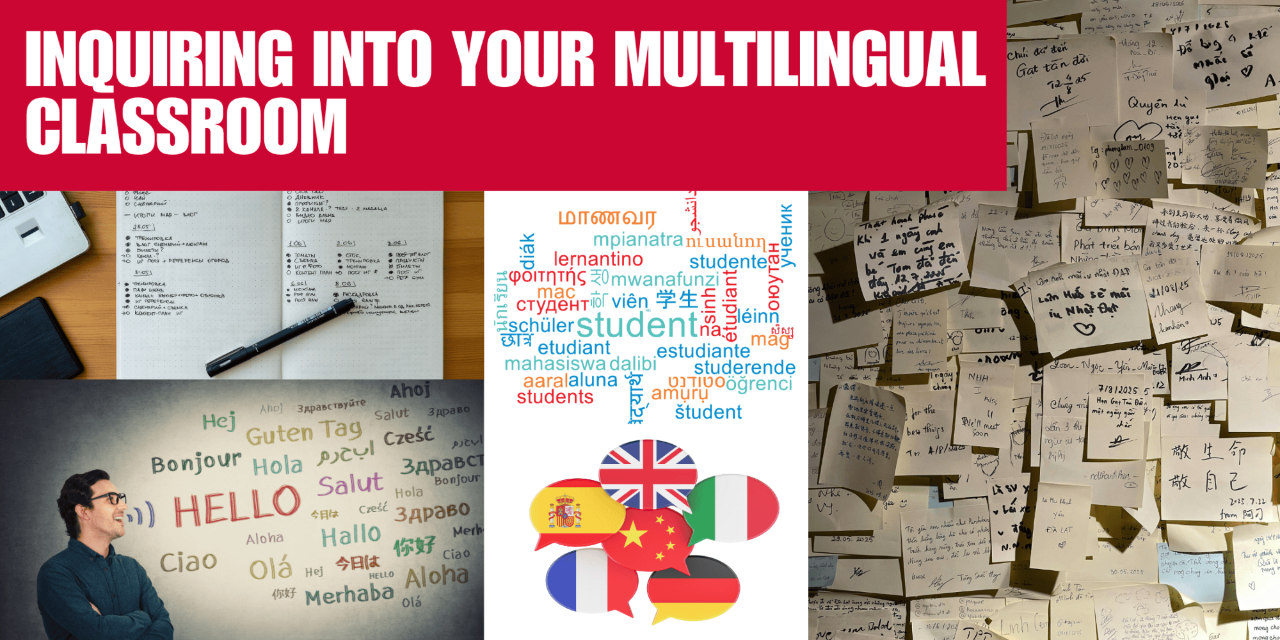
Inquiring into Your Multilingual Classroom: An Integrated Seminar Series + Grants Program
2018-2020
SFU has recognized the need in today’s globalized higher education context, to respond to the multilingual and multicultural composition of the university community. In its work with students, faculty and staff across SFU, the Transforming Inquiry into Learning + Teaching (TILT) team has cultivated and supported research-based teaching and learning practices in disciplinary specific academic language development. Such practices are built upon the recognition and understanding of multilingual students’ unique strengths and needs. To expand our efforts to support the curiosities and concerns of faculty teaching linguistically and culturally diverse students, in collaboration with the Centre for Educational Excellence (CEE), TILT & CEE piloted an Integrated Seminar Series and Grants Program, entitled “Inquiring into Your Multilingual Classroom”. This program will enable participating faculty to gain background knowledge related to working with such students while at the same time crafting an inquiry project to support related changes to teaching and learning in their classrooms.
Seminar participants:
- Gained knowledge about working with multilingual and culturally diverse students to enhance academic success
- Crafted a project proposal on exploring teaching and learning issues related to multilingual and culturally diverse students and/or implementing and evaluating changes they wish to make to their teaching
- Received feedback from fellow seminar participants and facilitators on their inquiry design
- Received up to $6000 to support their design and/or implementation and evaluation work
- Received support finding research assistants to help them with their design, implementation and evaluation work
- Received on-going administrative, curricular and research support throughout the implementation of their projects
Examples of topics addressed in the seminar:
- Myths and realities about language and language acquisition
- Language and content integration in higher education settings
- Additional topics arising from participants’ specific interests and inquiries
Facilitation Team

Roumi Ilieva
Associate Professor in the Faculty of Education working. Roumi's scholarship is in the field of applied linguistics and focuses on language and culture, the internationalization of education, and professional identities. Her most recent study centers on interdisciplinary collaboration for multilingual student success.

Laura D’Amico
Adjunct Professor in the Faculty of Education and former Research Associate with TILT (2015 - 2019). With over 20 years of experience in the development and study of systems for supporting and implementing educational improvement and reform, Laura provides faculty with practical advice on how to conduct their project evaluations. She is versed in a wide-range of educational research methods and approaches.
“Language, whether seen as a discourse, social construction, commodity, or semiotic system, plays a critical role in processes of globalizing and internationalizing education.” (Byrd Clark, Haque, and Lamoreux, 2012)
“In [many] practices in higher education, language issues are often overlooked and dangerously simplified.” (Dafouz, 2017)