

- About
- Research
- Prospective Students
- Current Students
- News & Events
- News
- Events
- News & Kudos Archives
- 2025 Archives
- Thesis Defence - Congratulations to Negin Shooraj
- SFU Geography Alumni Sean Orr wins Vancouver council seat in byelection
- Rosemary Collard awarded 2024 SFU Excellence in Teaching Award
- SFU Students Designed and Developed a GeoApp as a Living Wage Calculator
- Undergraduate students team secures third-place in Canada-wide GeoApp competition
- SFU Geography Wins Big at 2025 CAG Annual Conference
- Thesis Defence - Congratulations to Alex Sodeman
- Thesis Defence - Congratulations to Tintin Yang
- In Memory of Leonard "Len" Evenden, Professor Emeritus
- Gabrielle Wong awarded 2025 Gordon M. Shrum Medal
- Dr. Bright Addae awarded 2025 Graduate Dean's Convocation Medal
- Congratulations to Alysha van Duynhoven for Teaching Assistant Excellence Award
- Wildfires to waterways: SFU Geography grad takes action to protect the environment
- Making a difference on and off-campus: student leader and changemaker, Gabrielle Wong, awarded SFU convocation medal
- 2025 Alumni Newsletter
- Kira Sokolovskaia wins the 2025 SFU ECCE GIS Scholarship Award
- Mapping a path to City Hall: SFU alumnus shares journey to becoming Mayor of New Westminster
- Thesis Defence - Congratulations to Alysha van Duynhoven
- Thesis Defence - Congratulations to Hannah Harrison
- Thesis Defence - Congratulations to Jade Baird
- Thesis Defence - Congratulations to Ashley Tegart
- Rethinking the World Map: Dr. Shiv Balram featured on CBC
- Thesis Defence - Congratulations to Véronique Emond-Sioufi
- SFU Geographers at the 2025 International Cartographic Conference in Vancouver
- When academic curiosity meets environmental purpose: new global environmental systems grad builds interdisciplinary foundation at SFU
- Alysha Van Duynhoven wins the 2025 SFU ECCE in GIS Student Associate Achievement Award
- Thesis Defence - Congratulations to David Swanlund
- Congratulations to Our 2025 Warren Gill Award Recipients!
- Thesis Defence - Congratulations to Baharak Yousefi
- Thesis Defence - Congratulations to Tara Jankovic
- Thesis Defence - Congratulations to Christine Leclerc
- Thesis Defence - Congratulations to Kira Lamont
- Terri Evans: Researching homelessness in suburban communities
- Mapping change for people and the planet
- GIS Month: What is Geographic Information Science (GIS)?
- SFU GIS undergraduate develops real-time earthquake monitoring and hospital alert system
- Physical Geography student returns to SFU, dives into marine ecology, soils and GIS to map a new path forward
- SFU study searches Strava to reveal secrets to happier runs
- 2026 Archives
- SFU study searches Strava to reveal secrets to happier runs
- GIScience Students Become SFU’s First Team at National Geomatics Competition
- 2026 ESRI Canada GIS Scholarship for SFU
- Physical Geography student returns to SFU, dives into marine ecology, soils and GIS to map a new path forward
- SFU GIS undergraduate develops real-time earthquake monitoring and hospital alert system
- GIS Month: What is Geographic Information Science (GIS)?
- Mapping change for people and the planet
- GIS Team Crowned Champions of 2026 National Geomatics Competition
- Second-year MSc Student, Erin Fairley, has made it to the SFU 3MT Finals!
- Thesis Defence - Congratulations to Brandon Drucker
- In Memory of Ivor Winton
- SFU Students Create GeoApp to Reveal Transit Deserts and Oases Across Metro Vancouver
- Andrew Perkins receives 2025 Excellence in Teaching Award
- Krista Macaulay Receives Prestigious Trudeau Fellowship
- Human Geography Student Guneet Kaur Receives SFU Centre for Dialogue Award for Undergraduate Research
- Dr. Baharak Yousefi awarded 2026 Graduate Dean's Convocation Medal
- Thesis Defence - Congratulations to Scott Peters
- Gus Schiele wins the 2026 SFU ECCE GIS Scholarship Award
- GES grad maximizes interdisciplinary learning opportunities to tackle global challenges in conservation and sustainability
- Student Stories: Camille Dela Cruz
- Terrestrial ecosystem researcher joins SFU Geography
- Running dry: Cannabis farming is changing streams in California, experts warn
- Thesis Defence - Congratulations to Erin Fairley
- Thesis Defence - Congratulations to Lilian Yang
- Thesis Defence - Congratulations to Stella Harden
- Thesis Defence - Congratulations to Katie Gravestock
- Distinguished Professor Dr. Kirsten Zickfeld recieves highest national academic honour
- 2025 Archives
- Alumni
- GEOG 162 - Canada
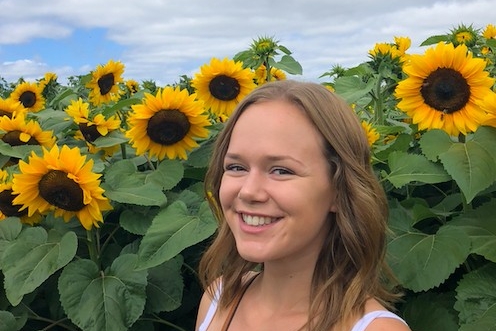
Abby Herd - Co-op Q & A
BEnv GES Major
Co-op Term: Spring & Summer 2021
1. Where did you work (Department/Organization name and location)?
Disposal at Sea, Environment and Climate Change Canada, Pacific and Yukon Region (Vancouver, BC)
2. What was your role (what type of work did you do)? What were some of your responsibilities?
My role was officially titled Data Technician. However, my work extended well beyond data compilation and analysis. I worked with all facets of the DaS program, from permitting, to environmental monitoring, to Indigenous consultation. Some of my major projects included the development of an automated and relational sediment chemistry Excel data sheet, collaboration with Forests, Lands, and Natural Resource Operations (FLNRO) on reducing wood waste inputs to freshwater and marine environments, and mapping Statement of Intent (SOI) boundaries of First Nations in BC overtop a BC basemap for Disposal at Sea consultation purposes.
3. How did the skills/knowledge developed in the classroom apply to your job? What did you learn?
My GIS and Excel skills developed in courses such as GEOG 214, GEOG 251, GEOG 255, GEOG 355, and GEOG 351 were instrumental to my role. GIS skills developed in the classroom ensured I could create basic maps, plot disposal sites in ArcGIS Online, and convert files between shapefile and KML. Meanwhile, I performed statistical analyses on various datasets (e.g. sediment chemistry samples) using skills developed in GEOG 251 – Quantitative Geography.
4. Can you share a challenge you faced in your Co-op and how you overcame it?
One challenge I faced during co-op was difficulty connecting with fellow co-op students. Working entirely remotely generally made developing connections challenging at times, especially with co-op students in other departments. However, I overcame this by just reaching out to co-op students on Microsoft Teams! This allowed me to join and work briefly with a student network in Environment Canada as well.
5. What was your most memorable Co-op experience?
One of my most memorable co-op experiences was attending and helping to lead a ground-breaking workshop on the future of dredged and excavated material re-use in British Columbia. This workshop was attended by First Nations, NGOs, government officials, industry, and consultancy firms. It was a fantastic opportunity to learn about how future legislation and regulations are shaped by public opinions.
6. What have you learned through your Co-op experience?
I have learned that co-op is much more than a summer job, it is one of the best learning opportunities available to students. Coming into co-op, I was nervous about the work and forgot that co-op was also a learning opportunity. But it really is a phenomenal learning opportunity, especially in an organization such as Environment and Climate Change Canada, where there is no shortage of activity going on. I have learned to get comfortable asking questions, to take the lead on projects, and to seek out opportunities for mentorship.
7. What advice do you have for future Co-op students?
Step outside the realms of your official title. There is likely much more going on at your workplace than what is written into your title. So, explore it! Plus, doing so will demonstrate your initiative as well as your desire to learn as much as you can during co-op.