- People
- Leadership & Staff
- Research faculty
- Gabriela Aceves-Sepúlveda
- Alissa N. Antle
- Sheelagh Carpendale
- Parmit Chilana
- Jon Corbett
- Steve DiPaola
- Halil Erhan
- Brian Fisher
- Marek Hatala
- Kate Hennessy
- Alireza Karduni
- Sylvain Moreno
- Carman Neustaedter
- Will Odom
- Philippe Pasquier
- Niranjan Rajah
- Bernhard Riecke
- Gillian Russell
- Thecla Schiphorst
- Chris Shaw
- Wolfgang Stuerzlinger
- Ron Wakkary
- Ö. Nilay Yalçin
- Palashi Vaghela
- Teaching faculty
- Emeritus
- Adjunct Faculty
- Alumni
- Work at SIAT
- Opportunities
- Research
- Programs
- News & Events
- Spaces & Equipment
- StudioSIAT
- Media
- Showcase
- Showcase Submission Form
- Spring 2025 Project Showcase
- Fall 2024 Project Showcase
- Summer 2024 Project Showcase
- Spring 2024 Project Showcase
- Fall 2023 Project Showcase
- Spring 2023 Project Showcase
- Fall 2022 Project Showcase
- Spring 2022 Project Showcase
- Fall 2021 Project Showcase
- Spring 2021 Project Showcase
- Fall 2020 Project Showcase
- Contact
- Staff & faculty resources
Alumni, Research
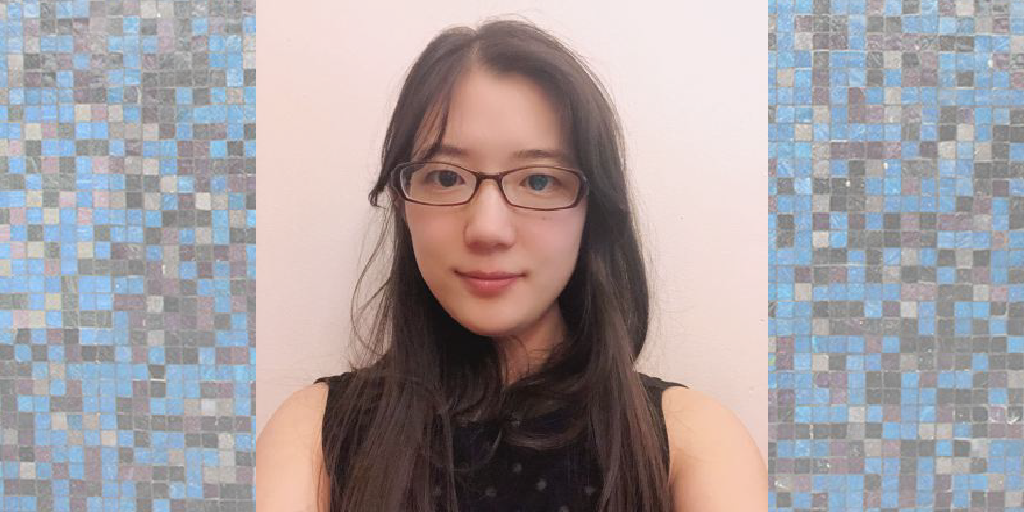
SIAT graduate Dr. Xin Tong receives postdoc at Stanford University
by Clare Slipiec
Dr. Xin Tong, who successfully defended her PhD dissertation in April, chose the School of Interactive Arts & Technology (SIAT) for both her Master’s degree and PhD degree for two reasons: the interdisciplinarity of the school; and the faculty members, mentors, and graduate students with whom she would be working.
Through her PhD research, Tong has contributed to a larger understanding of how patients and people with psychosocial disorders such as autism or depression experience and interact with technology. Her work largely centres on understanding, designing, and developing interactive systems, such as games and VR environments, to support people’s physical, psychological, and social needs.
“I entered into this research domain primarily because of my supervisor, [SIAT professor] Dr. Diane Gromala and the projects I did in the Pain Studies Lab,” explained Tong. “Her work inspired me a lot, and I’m impressed by how much we could do as researchers to resolve real-world challenges, particularly for pain patients and vulnerable populations.”
As part of her research, Tong frequently collaborates with clinicians, caregivers, and patients to help solve patients’ health problems and reach their individual goals through a user-centred framework.
“Since health remains a permanent issue for all human beings, technology has the potential to be a treatment tool for patients,” says Tong.
Tong has been involved in numerous notable projects at SIAT. In one of these, Tong explored how an embodied virtual avatar (an avatar seen from a first-person perspective in VR) affected phantom limb pain perception.
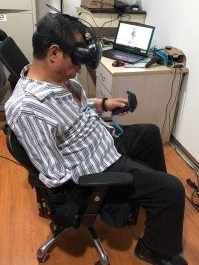
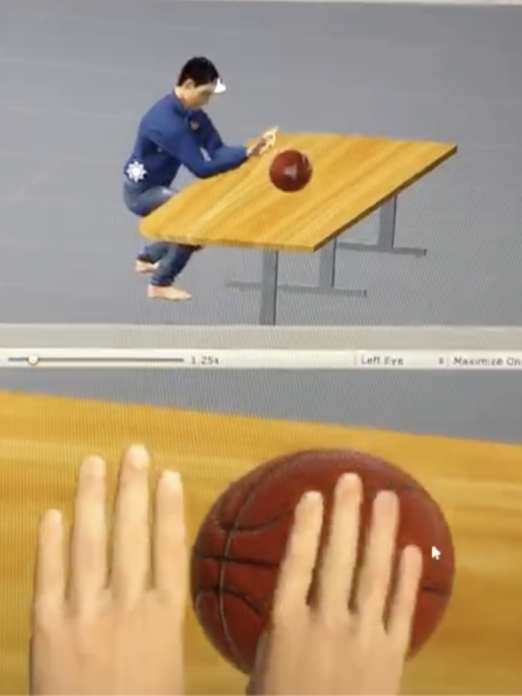
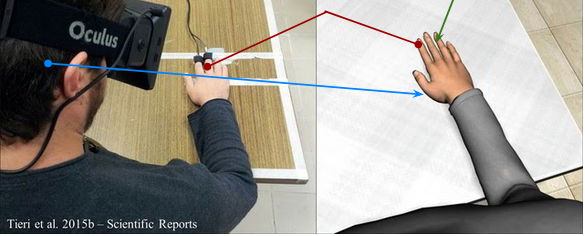
Tong and her colleagues used VR to enable participants in the study to see both their intact hand and the phantom one virtually, with the phantom hand mirroring the movement of the intact one. The study findings were very promising and suggest that VR sessions significantly reduce participants’ long-term phantom pain levels.
“The most meaningful part of my research is that it could make an impact in the real world by addressing challenges and empowering people,” says Tong. “Seeing my research improve patients’ quality of life is motivating.”
Tong hopes to continue to make an impact with her research at Stanford University where she has joined the Pervasive Wellbeing Technology Lab funded by an NSERC postdoctoral fellowship. Tong and researchers at the lab are working on projects that examine how the design and use of technology can be leveraged to better monitor and improve mental health and happiness.
“Winning the NSERC postdoctoral fellowship award definitely means a lot to me,” says Tong. “It’s a recognition of my prior research from the experts in the field, particularly my work that has been done in SIAT.”
Following her post-doctoral work at Stanford University’s Pervasive Wellbeing Technology Lab, Tong will join Duke Kunshan University, an international partnership of Duke University and Wuhan University, as an Assistant Professor in Computation and Design this fall.
Learn more about Tong and her research here.