

- Faculty & Staff
- About
- Departments and programs
- Accelerated Law (SFU-Exeter)
- Anthropology
- Applied Legal Studies
- Cognitive Science
- Criminology
- Economics
- English
- French
- French Cohort Program
- Gender, Sexuality, and Women's Studies
- Gerontology
- Global Asia
- Global Humanities
- Graduate Liberal Studies
- History
- Indigenous Languages
- Indigenous Studies
- International Studies
- Labour Studies
- Linguistics
- Medical Humanities and Social Sciences
- Philosophy
- Political Science
- Psychology
- Public Policy
- Social Data Analytics
- Sociology
- Urban Studies
- World Languages & Literatures
- Undergraduate
- Graduate
- Alumni
- Research
- Teaching
- News & events
- FASS at Surrey
- Next steps for new students (redirect)
- Convocation
Cormack Teaching Awards
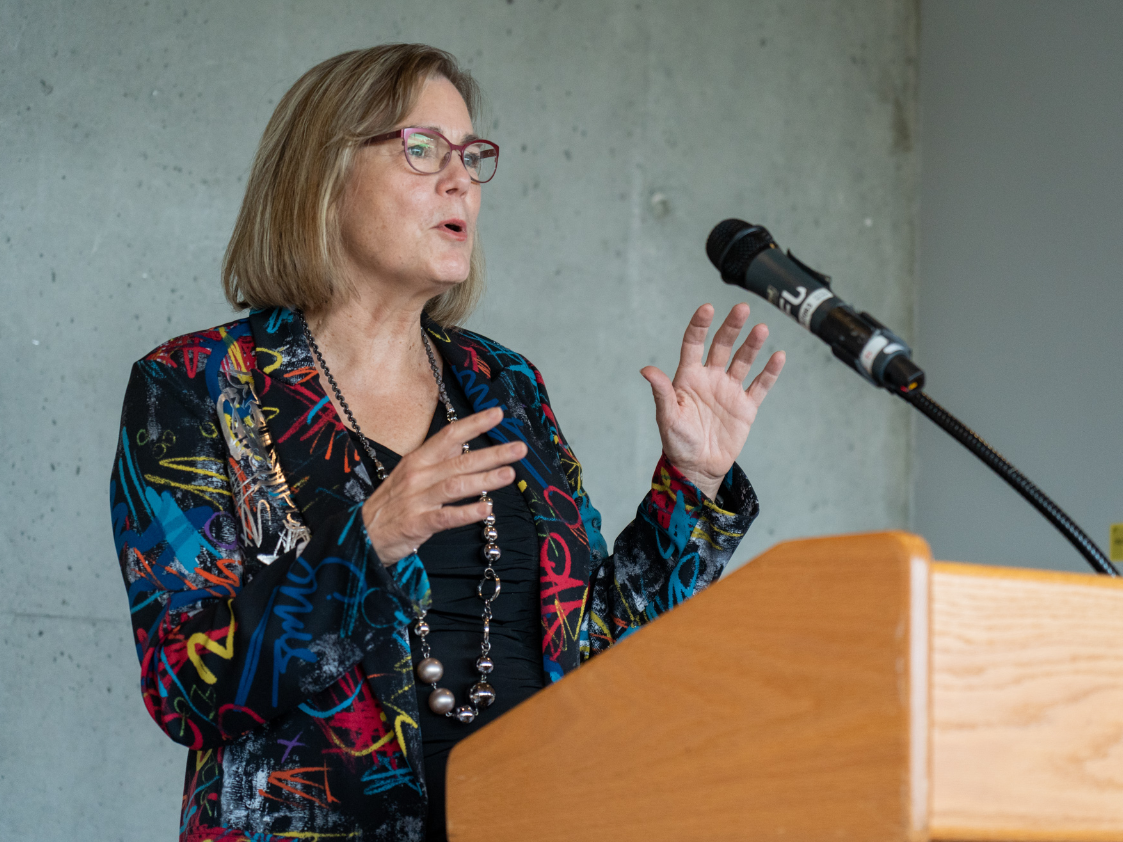
The Cormack Awards were established by former Faculty of Arts and Social Sciences (FASS) Dean Lesley Cormack in 2010 to celebrate excellence and innovation in teaching within the faculty. The award recognizes the passion that faculty members bring to the classroom, their quality of pedagogy, and the value they bring to their students’ education and the FASS teaching community.
The FASS Dean presents up to six Cormack Teaching Awards annually, one for each rank in the teaching stream (lecturer, senior lecturer, and university lecturer) and one for each rank of the research stream (assistant, associate, and full professor).
Award winners shall receive $500 towards professional development and an award recognizing their achievements. They will also be honoured at the FASS Fall Reception.
2026 award winners

Aaron Hoffman
Political Science
Aaron M. Hoffman is professor of Political Science at Simon Fraser University. He holds a PhD in Political Science from the University of Pittsburgh. Hoffman is an expert on international security issues, focusing on the scientific study of strategy, emotions and mass media in terrorism, counter-terrorism, and foreign policy. In 2025, he published a book with University of Michigan Press on terrorism and counterterrorism reporting, entitled The Terrorism News Beat: Professionalism, Profit, and the Press. He is currently working on understanding the reasons Canada and Europe are trying to insulate NATO and the system of free trade from pressures the US is placing on those institutions. Hoffman teaches classes at all levels of instruction, is an enthusiastic user of classroom simulations, and is especially fond of writing courses. In 2017, Hoffman won the Kenneth T. Kofmehl Outstanding Undergraduate Teaching Award when he was a faculty member at Purdue University.

Bryan Myles
Indigenous Studies
Bryan Myles is a settler scholar from Treaty 4 territory in Southern Saskatchewan who has been living as an uninvited relative on Coast Salish territory since 2009. He received his BA Anthropology from the University of Regina in 2006, MA Anthropology from Carleton University in 2008, and completed an interdisciplinary (INS) PhD (Communications, Art, and Technology) at SFU in 2022.
Myles has taught in the Department of Indigenous Studies since 2018. He has designed and delivered courses on Indigenous art and belongings, digital heritage, and cultural heritage stewardship, and has a depth of experience teaching Introductory INDG courses. He also has over fifteen years of experience in the GLAM sector serving in several administrative roles at SFU’s Bill Reid Centre; a small heritage focused initiative that operated between 2005 and 2025. Myles has also co-facilitated SFU’s RESPECT Program since it launched in 2024.
Myles' teaching and academic interests focus on anticolonial methodologies, material culture, visual culture, and the intersections of new media and Indigenous cultural heritage.

Cornel Bogle
English
Cornel Bogle is an assistant professor of English at Simon Fraser University. His research and teaching span Caribbean and Black diasporic literature and culture, life writing, creative writing, and approaches to race, gender, and sexuality. His scholarship has appeared in Canadian Literature, Studies in Canadian Literature, TOPIA, Anthurium, sx salon, and edited collections including the Routledge Handbook of Caribbean Studies and the Bloomsbury Handbook of Poetics, Gender, and Sexuality. He is a poet, with work published in Brick, Arc Poetry Magazine, and PREE: Caribbean Writing. His editorial work includes co-editing the special issue “Recognition and Recovery of Caribbean Canadian Cultural Production” for Canada and Beyond and editing the fortieth-anniversary issue of the Journal of West Indian Literature, where he serves as Associate Editor and Book Reviews Editor. Across his scholarship, poetry, editing, and teaching, Bogle is committed to expanding how Caribbean and Black cultural production is studied, preserved, and taught.

Holly Andersen
Philosophy
Holly K. Andersen is a professor of Philosophy at SFU. She has a BSc in Physics and a minor in Mathematics from Montana State University, an MSc from the London School of Economics in Philosophy of the Natural Sciences, and a PhD from the History and Philosophy of Science department at the University of Pittsburgh. She works on philosophical issues related to the sciences, especially methodological and conceptual refinements over time in theoretical settings. She has published on causation, explanation, mechanisms, and the experience of time. Her historical work draws out trajectories by which current scientific topics developed into their contemporary forms. Recently, she has published on values-related issues that arise when institutionalized academic science intersects with other knowledge systems, including the kinds of epistemic injustices these may involve, and ways to target these injustices with principles from transformative justice applied to knowledge practices and products. She loves scifi/fantasy that explores philosophical issues.

Shannon Linning
Criminology
An associate professor in SFU’s School of Criminology, her main research interests are in place-based crime prevention and problem-oriented policing. Her newest co-authored book, Cutting Crime Using the Rule of the Few, explores how police can partner with property owners to suppress crime opportunities at and around their properties. Linning teaches courses in place-based crime prevention, police strategies and problem solving, community criminology, research methods, and spatial-temporal criminology. In the classroom, she works to connect with students and create a safe learning environment that fosters student engagement. She also prioritizes teaching students research skills that help them think critically about information. Linning enjoys mentoring honours and graduate students. She also teaches a writing workshop that she developed for students and faculty in the School of Criminology. She earned a PhD from the University of Cincinnati, and a bachelor’s degree and master’s degree from SFU.
Past winners
2025: Clare McGovern (Political Science); David Cox (Psychology); Eline de Rooij (Political Science); Jason Brown (Global Humanities); Kicya7 Joyce Schneider (Indigenous Studies); Molly Cairncross (Psychology)
2024: Janice Matsumura (History); Kathleen Millar (Sociology & Anthropology); Margaret Grant (Linguistics/Cognitive Science); Sabrina Higgins (Global Humanities/Archaeology); Sanjay Jeram (Political Science); Simon Woodcock (Economics)
2023: Amanda Watson (Sociology & Anthropology); Atiya Mahmood (Gerontology); Coleman Nye (Gender, Sexuality, and Women's Studies); John-Henry Harter (History/Labour Studies); Tamara O'Doherty (Criminology)
2022: Heather Bliss (Linguistics); Suzanna Crage (Sociology & Anthropology); Nicolas Kenny (History); Martin Santamaria (Economics); Rylan Simpson (Criminology); Luke Clossey (History)
2020-21: Steven Wright (Psychology); Matthew Hussey (English); Emily O'Brien (History/Global Humanities); Henny Yeung (Linguistics); Yuthika Girme (Psychology); Matthew Sigal (Psychology); Isobel Mayo-Harp (World Languages and Literatures)
2019: Danielle Murdoch (Criminology); Nicolas Fillion (Philosophy); Panos Pappas (Linguistics); Marianne Ignace (Linguistics/Indigenous Languages Program)
2018: Tina Adcock, Assistant Professor (History); Douglas Allen, Professor (Economics); Leith Davis, Professor (English); Dai Heide, Senior Lecturer (Philosophy); Steve Weldon, Associate Professor (Political Science)
2017: Rebecca Cobb (Psychology); Ashley Farris-Trimble (Linguistics)
2016: Lara Aknin (Psychology); Gregory Dow (Economics); Sarah Walshaw (History); Richard Wright (Psychology)
2015: Elise Chenier (History); Alex Moens (Political Science); Bidisha Ray (History); Aaron Windel (History)
2014: David Coley (English); Sheri Fabian (Criminology); Jack Martin (Psychology); Roxanne Panchasi (History)
2013: Jeremy Brown (History); Mike Everton (English); Neil Watson (Psychology)
2012: John Bogardus (Sociology & Anthropology); John Harriss (International Studies); Nicole Jackson (International Studies); Kate Slaney (Psychology)
2011: Alison Ayers (Sociology & Anthropology/ Political Science); Dave Cox (Economics); Alec Dawson (History/Latin American Studies)
2010: Lara Campbell (Gender, Sexuality and Women’s Studies); Nicky Didicher (English); Yue Wang (Linguistics)