

- Future Students
- Current Students
- Programs
- Programs of Study
- Undergraduate Programs
- Teacher Education
- Professional Development Program (PDP)
- Professional Linking Program - Lower Mainland (PLP-LM)
- Professional Linking Program - Peace Region (PLP-PR)
- Helping Ease Access for Returning Teachers (HEART)
- Alaska Highway Consortium on Teacher Education (AHCOTE)
- Bachelor of Education as a Second Degree
- BC Education System Familiarization Program
- Programs in French
- Teacher Education Program Goals
- Graduate Studies
- Masters Programs
- MA, MEd in Arts Education
- MA, MEd in Counselling Psychology
- MA, MEd in Curriculum & Instruction: Educational Theory and Practice
- MA, MEd in Curriculum & Instruction: Equity Studies in Education
- MA, MEd in Educational Psychology
- MA, MEd in Educational Technology & Learning Design
- MA, MEd in Teaching English as an Additional Language
- MEd in Curriculum & Instruction: Contemplative Inquiry & Approaches in Education
- MEd in Curriculum & Instruction: Digital and New Media Literacies
- MEd in Curriculum & Instruction: Ecological Education
- M.Éd. dans Curriculum & Instruction: Enseigner et apprendre en français: plurilinguismes, francophonies et éducation
- MEd in Curriculum & Instruction: Imagination in Teaching, Schooling and Place
- MEd in Curriculum & Instruction: Innovations in Mathematics Education
- MEd in Curriculum & Instruction: Place- and Nature-Based Experiential Learning
- MEd in Curriculum & Instruction: Post-Secondary
- MEd in Curriculum & Instruction: Rethinking STEM In and Beyond Schools
- MEd in Curriculum & Instruction: Science Education and Communication
- MEd in Educational Leadership: Expanding Possibilities in K-12 Education
- MEd in Educational Leadership: Indigenous Resurgence
- MEd in Educational Leadership: Post-Secondary (Surrey)
- MEd in Educational Practice: Indigenous Pedagogy and Indigenous Inquiry
- MEd in Educational Practice: Practitioner Inquiry
- MSc, MEd in Secondary Mathematics Education
- Doctoral Programs
- Areas of Study
- Program Comparision
- Graduate Programs FAQs
- Masters Programs
- Programs in French
- Faculty & Research
- Indigeneity
- Community
- About
- News & Events
- Support Us
- Instructor & Staff Resources
- Work With Us
- Contact
Foundations of Academic Literacy
FAL X99 will provide you with an opportunity to build confidence in your ability to communicate effectively in writing; to understand, develop and practice a variety of ways of presenting your thoughts and ideas; and to receive and apply constructive feedback on your writing and academic literacy skills. These skills will help you in all your SFU courses, and particularly as you take W and B courses. The skills gained in FAL X99 will help you better understand the hallmarks of effective communication in both your discipline and in other disciplines.
DESIGNED FOR
Any new SFU student who does not meet the SFU Literacy Requirement when admitted to SFU is required to take FAL X99 or meet the Literacy Requirement via one of the options listed on the SFU Admissions Standards website.
Any SFU student who feels that they would benefit from an opportunity to become more comfortable and confident in their academic literacy skills is welcome to register in FAL X99.
STUDENTS COMING DIRECTLY FROM GRADE 12 WHO DO NOT HAVE A FINAL ENGLISH 12 GRADE OF 75% OR HIGHER
If you are a British Columbia high school student, your English 12 final grade is provided to SFU by the BC Ministry of Education. Your English 12 final grade is calculated based on a combination of your final grade in your English 12 course work and your provincial exam grade (for more information about your final grades, contact SFU Student Services Academic Advising or the BC Ministry of Education).
If your final grade in English 12 was 75% or higher, you are eligible to register directly into writing intensive (W) courses. If your final grade in English 12 was between 60%-74%, you must meet the SFU Literacy Requirement through successful completion of FAL X99 or through one of options listed on the SFU Admissions Standards website.
STUDENTS TRANSFERRING TO SFU WITHOUT A COMPLETED AND TRANSFERRABLE POST-SECONDARY ENGLISH COURSE WITH A GRADE OF "C-" OR BETTER
If you have completed a post-secondary English course that is transferable to SFU for English credit or one that has been certified by SFU as a transferable writing intensive course with a grade of “C-“ or better, you will be deemed to have met the SFU Literacy Requirement. If you do not meet either of these conditions, you must meet the SFU Literacy Requirement through successful completion of FAL X99 or through one of options listed on the SFU Admissions Standards website.
STUDENTS COMING TO SFU FROM OUTSIDE CANADA
If you have written the IELTS Academic test and have achieved a minimum overall band score of 7.0 or better with no sub-test band score less than 6.5, you have met the SFU Literacy Requirement and achieved FAL Credit. You are, therefore, eligible to register in a writing intensive (W) course.
If you do not achieve the minimum acceptable IELTS Academic test score, you must meet the SFU Literacy Requirement through successful completion of FAL X99 or through one of options listed on the SFU Admissions Standards website.
REQUIREMENTS
If you have not met the SFU Literacy Requirement upon admission to an undergraduate degree program at SFU, you are required to do so before are eligible to register in your first writing-intensive (W) course. If you take FAL X99 in order to meet this requirement, you must register in and successfully complete the course with a grade of “P” during your first three enrolled terms at SFU.
Students who fail to meet the SFU Literacy Requirement by the above deadline will be hard blocked from further course registration until this requirement is met. Please see the SFU Student Services webpage which outlines in more detail the FAL hard block process. For this reason, you are strongly advised to fulfill the SFU Literacy Requirement as soon as possible.
As of Fall 2023, FAL X99 is a for-credit course: the 4 units earned in FAL will count toward your total credits toward graduation. FAL X99 is graded on a pass/fail basis using a SFU’s competency-based grading system, which is "based on satisfactory acquisition of defined skills or successful completion of the course learning outcomes".
A grade of P (satisfactory performance or better) means you have successfully passed the course; it has no numerical equivalent and does not affect your term grade point average (GPA) or your cumulative GPA.
A grade of F (fail, unsatisfactory performance) has the numerical equivalent of 0.00 and would affect your grade point average (GPA) and cumulative GPA as an F in any other course would.
HOW TO ENROLL
Any student who feels they would benefit from some focused time working on their academic literacy skills is welcome to register in FAL X99. Details about the schedule of currently available sections can be located on goSFU by searching for FAL X99. Follow the same search process you use to locate the other SFU courses you are interested in. Then simply access your goSFU account and register yourself in the section of FAL X99 that is most convenient for you.
COURSE REGISTRATION
You will find the FAL X99 listings in the course catalogue under F. You can register in any section of FAL X99 that still has space available through goSFU using the same process that you do for your other courses. FAL X99 is offered every semester at the Burnaby Surrey campus, and occasionally at the Vancouver and/or Surrey campus.
MEET YOUR INSTRUCTORS
The Foundations of Academic Literacy course is led by Dr. Susan Barber, University Lecturer in the Faculty of Education.
-
 Susan Barber University Lecturer
COURSE COORDINATOR AND INSTRUCTOR
Susan Barber is a University Lecturer and has taught Foundations of Academic Literacy (FAL) from the program’s inception in 2005 until present. She has learned a great deal from her students who speak diverse languages and how they approach writing in the FAL classroom. She finds that welcoming students to the course through a personal genre of writing called narrative allows students to express themselves and their ideas with greater confidence, before moving on to other types of writing. She created an academic video entitled, Academic Writing: The Basics, where she used a story structure that all students could identify with as someone who was learning how to do research and write a paper. The video also showcases locations around campus, for instance, the W.A.C. Library, Indigenous sculptures and other beautiful settings. Currently, Susan’s research is focused on how to support new refugees to Canada in more inclusive classrooms through blending language learning with art in the early months, and encouraging translanguaging with same language speakers later, to accelerate a sense of belonging and wellbeing that improves their success in schools.
Contact: educ_ad_acad@sfu.ca
-
 Joel Heng Hartse Director, Graduate Programs
Senior Lecturer
INSTRUCTOR
Joel Heng Hartse is a Senior Lecturer in the Faculty of Education. He has taught FAL since 2015 and is the author of four books including TL;DR: A Very Brief Guide to Reading & Writing in University (On Campus/UBC Press, 2023). His research interests include second language writing, the intersection of academic literacy and academic integrity, and the globalization of academic writing and publishing in English.
-
 Jan Maclean Senior Lecturer
INSTRUCTOR
Jan is a Senior Lecturer in the Faculty of Education. Her research areas include art and literacy, inclusive education, and art and social change. Jan has developed a range of projects and programmes in school and community settings that focus on utilizing the arts as a tool for whole inclusion of students with diverse needs and abilities. Her current research focuses on investigating the ways that emerging and traditional technologies can be utilized to develop and deepen aesthetic awareness and create stronger connection with nature and our communities.
-
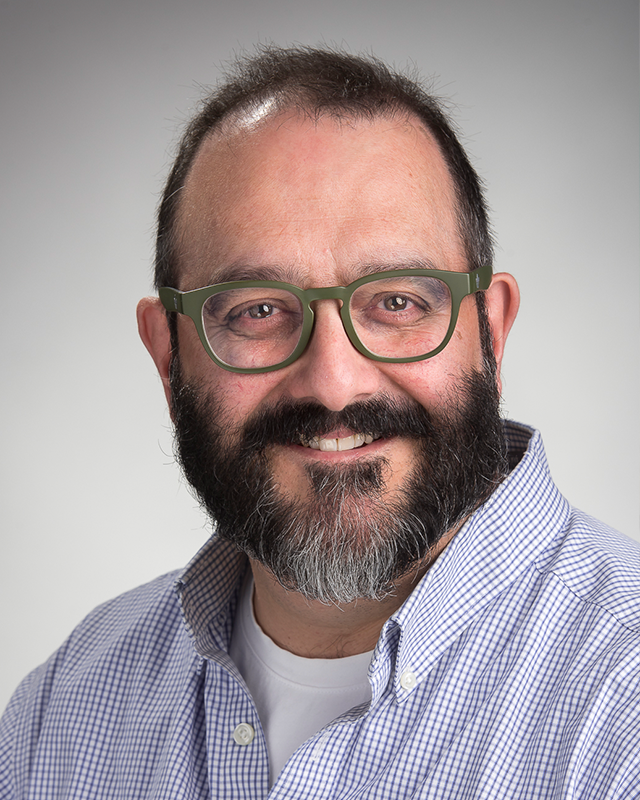 Michael Ling Senior Lecturer
INSTRUCTOR
Michael is a Senior Lecturer in the Faculty of Education, who has taught at SFU for over 30 years. As such, his jokes may be ancient and not entirely as funny as he thinks they are. He has an abiding research interest in the history and future of universities, and therefore, he has an abiding interest in what academic literacy has looked like in the past, what it looks like in the present, and what it might look like in the future, as part of the ever-changing culture of the university. As well, he is interested in how academic literacy is 'in conversation' with other kinds of literacy, which helps us think about the range of ways we 'represent,' communicate, share, and talk about our ideas, both within the university, and beyond.
-
 Olessya Akimenko Instructor
Undergraduate Programs
Instructor
Olessya Akimenko is a PhD candidate and instructor in the Faculty of Education at Simon Fraser University. Her doctoral research, supported by a SSHRC Canada Graduate Scholarship (Doctoral), explores how teachers of English as an Additional Language (EAL) negotiate their professional identities in Canadian educational contexts. Her other research and teaching interests include dialogic pedagogy and the pedagogy of multiliteracies. In addition to teaching FAL X99, Olessya has taught several Education courses at SFU. Before beginning her doctoral studies, she spent more than 10 years teaching EAL/ESL and English for Academic Purposes (EAP) to students from diverse linguistic and cultural backgrounds. These experiences continue to shape her approach to supporting students as they develop confidence in academic reading, writing, and communication.
-
 Ru Yao TA
Undergraduate Programs
TA
Ru Yao is a PhD candidate in the Languages, Cultures, and Literacies program in the Faculty of Education at Simon Fraser University. Before coming to SFU, she studied Applied Linguistics at University College London. Her research interests include academic writing in the era of generative AI, translanguaging and plurilingualism, multiliteracies, and multimodality. She is particularly interested in how emerging technologies, languages, and diverse modes of communication shape students’ learning, writing practices, and meaning-making.